

























































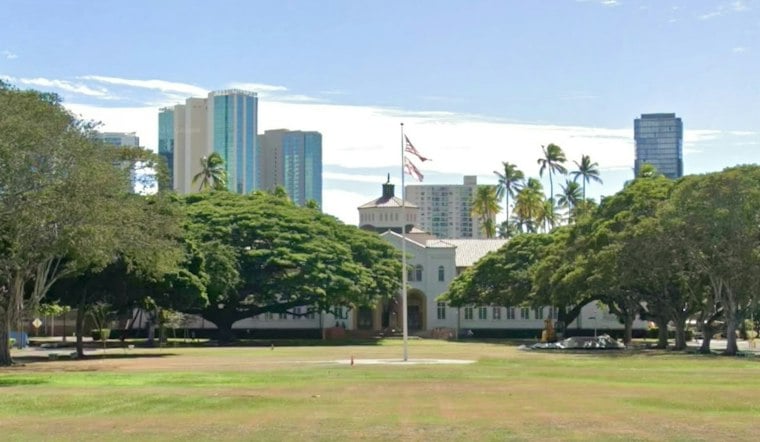
Four hālau are coming together on Sunday, Nov. 8, to honor the music and memory of Hawaiʻi's royal siblings, known as Nā Lani ʻEhā, in a concert set for the McKinley High School auditorium in Honolulu. The Nā Lani ʻEhā Hawaiian Music Concert and Hula Performance is scheduled for Nov. 8 from 3 p.m. to 6 p.m., bringing together dancers, chanters and musicians to celebrate Kalākaua, Liliʻuokalani, Likelike and Leleiōhoku, the siblings whose compositions remain woven into Hawaiʻi's cultural legacy.
According to Hawaii News Now, the four hālau operate under a four-year contract structure in which each group receives a new aliʻi to honor every year, then presents a hula, an ʻoli and a mele tied to that royal. For this year's program, Nā Pua ʻĀhihi Lehua Mai Pihanakalani is represented by Kumu ʻAuliʻi Heine Hirahara, Kilipohe Nā Lei Lehua by Kumu Liko Cooke and Kumu Sky Gora, Kaleilehuaikealoonālani by Kumu Nani Dudoit, and Nā Pualei o Likolehua by Kumu Niuliʻi Heine.
A Tradition Rooted in Family Legacy
Niuliʻi Heine, who previewed the concert on Hawaii News Now Sunrise, is the kumu hula of Nā Pualei o Likolehua and continues the work her mother, Leinaʻala Kalama Heine, started with Nā Lani ʻEhā. Kalama Heine founded Nā Pualei o Likolehua in 1976, according to Nā Pualei O Likolehua, and the hālau is now under her daughter's direction. The Aloha State Daily has reported that Nā Pualei o Likolehua was born on Feb. 24, 1976, placing the hālau's 50th anniversary this year, and that Niuliʻi Heine assumed leadership after her mother passed away in 2015.
Over the decades, the hālau's reach has extended well beyond its own dancers. The Aloha State Daily notes that Nā Pualei has graduated 16 kumu hula and produced eight new hālau, a lineage that threads directly into events like Nā Lani ʻEhā, where multiple schools now share responsibility for keeping the royal siblings' music alive.
Music Honoring the Heavenly Four
Each hālau taking part is tasked with chanting an oli, performing a hula, and singing an a cappella arrangement either composed by or dedicated to its assigned aliʻi, according to Kamehameha Schools. The format underscores how central the royal family's own compositions remain to the performances, rather than treating the siblings as mere historical figures.
A related program description from the University of Hawaiʻi at Mānoa describes Nā Lani ʻEhā, or the Heavenly Four, as a concert honoring the music of Queen Liliʻuokalani and her siblings. That university-hosted version of the concert has featured the group Walea alongside guest artists Alan Akaka, Bobby Ingano, ʻAlewa and Isaac Woodward, with mele such as “Aloha ʻOe” and “Ke Aloha ʻO Ka Haku” performed on kingdom-era instruments collected by the Hawaiʻi State Archives, per the University of Hawaiʻi at Mānoa.
Decades of Honoring the Royal Siblings
Nā Lani ʻEhā has long been framed as an annual celebration of Kalākaua, Liliʻuokalani, Likelike and Leleiōhoku, and a prior account from Hawaii News Now described the presentation as being in its 18th year, a sign of how long the tradition has run in Honolulu. That earlier version of the program listed Nā Pualei o Likolehua, Ka La ʻOnohi Mai o Haʻehaʻe and Hālau Hula Ka Lehua Tuahine among its performers, showing how the roster of participating hālau has shifted over the years while the core mission has stayed the same.
The royal siblings' music has also found audiences far from the hālau stage. PBS Hawaiʻi produced its own related program, “Nā Lani ʻEhā from ʻIolani Palace,” featuring contemporary performances of monarchy-era compositions, with past artists including Nina Kealiʻiwahamana, Marlene Sai, Robert Cazimero, Haunani Apoliona, Kuʻuipo Kumukahi, the Hawaiian Music Hall of Fame Serenaders, Aaron Mahi and the late Dennis Kamakahi, according to PBS Hawaiʻi. Whether on a public television set inside the historic palace or on the McKinley High School stage, the throughline remains the same: keeping the Heavenly Four's compositions, and the stories behind them, in front of new generations.




