

























































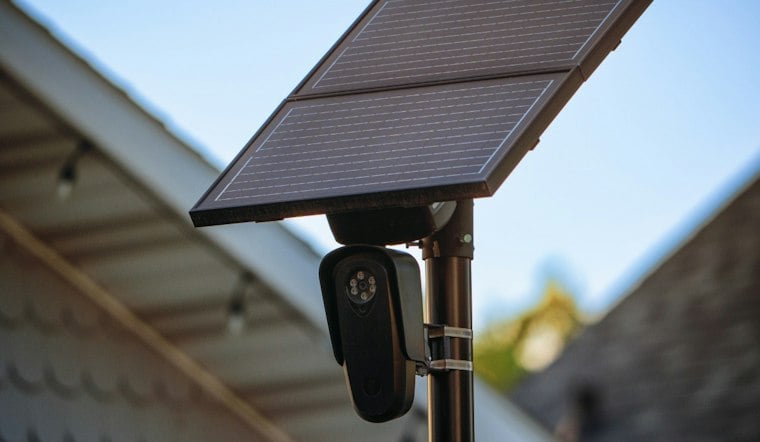
A Franklin County sheriff's deputy has been suspended for 30 days without pay and stripped of his patrol duties after an internal audit found he used the office's Flock license plate camera system in a way that was not permitted by his assigned duties. Deputy Robert Tischler, 39, who has worked for the sheriff's office since 2015, will also be reassigned from patrol to the Corrections Division and barred from accessing the Flock system going forward.
The findings come from an audit the Franklin County Sheriff's Office completed of its Flock camera system, according to ABC6. The station reports the review determined Tischler used the camera system in a manner inconsistent with his authorized duties and responsibilities. Sheriff Dallas Baldwin said the review was launched proactively, not in response to a specific complaint, after he heard about Flock misuse happening elsewhere, as reported by The Columbus Dispatch.
Baldwin has framed the Flock system as a valuable but narrowly purposed tool. Per ABC6's reporting, he said the Flock camera system is an important investigative tool and must be used only for investigative purposes. The sheriff's office said in a release that Baldwin said the office initiated a proactive review to ensure the technology is used appropriately, responsibly, and only for legitimate law enforcement purposes, and that maintaining public trust and community safety remains his top priority.
New Oversight Rules Follow the Audit
In the wake of the finding, the sheriff's office has introduced new oversight measures. The station's report notes the office will now assign a major in each division to monitor who can access automatic license plate reader data and when, paired with regular audits of the system. Franklin County has no contract for Flock's stationary roadside cameras, according to Heritage Headlines, which reports the office instead uses mobile Flock cameras in limited cases, including homicide investigations and missing-person work.
Tischler's case lands amid a run of similar controversies across central Ohio. Two Reynoldsburg police officers resigned over possible misuse of that department's Flock system, according to NBC4, which found one of the officers had searched the same license plate number 53 times between January 2 and June 26. The Dispatch also reports that Columbus shared Flock data with the Franklin County Sheriff's Office before pausing its own system in early September amid evidence of abuse by some of its officers.
Ohio's Patchwork of Rules and Reactions
The scrutiny extends beyond law enforcement misuse to how little statewide regulation exists for the technology at all. State law excludes images and data captured by automated license plate recognition systems and maintained in a law-enforcement database from the definition of a public record, according to Cleveland.com. The outlet also reports it did not identify any statewide provision specific to ALPR systems setting how long police may keep the data, though it notes the Fourth Amendment, other generally applicable laws and individual agency policies may still limit use. A bill that would restrict commercial collection and sharing of ALPR data while exempting law enforcement activity, House Bill 725, remained stuck in the House Public Safety Committee as of September, per the same outlet.
Some agencies are responding by pulling back altogether. Cleveland Metropolitan School District recently decided not to renew its Flock contract and directed the company to suspend all 201 cameras on district property, Ideastream reports, after an audit found 141,032 network searches in June 2026 alone, including 10,832 by the Cleveland Division of Police. Cleveland's police department, by contrast, operates under a city ordinance requiring a public transparency portal and quarterly written reports on ALPR use and monitoring, according to a separate Cleveland.com report, and its policy generally limits data stored on the department's server to 30 days while requiring at least annual audits.
Not every agency is backing away from the cameras. In Dayton, the police department is halting use of Automated License Plate Readers indefinitely while an independent review is conducted over the coming months, according to a notice posted by the City of Dayton. Franklin County's handling of the Tischler case suggests a different path: tightening internal oversight rather than abandoning the technology, as the sheriff's office continues to defend Flock's narrow investigative use even as neighboring jurisdictions debate whether the cameras should be used at all.





