

























































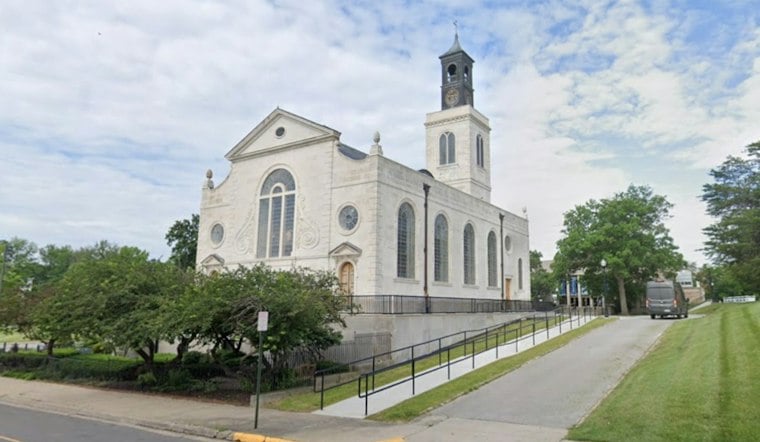
The U.S. Senate voted unanimously to designate America's National Churchill Museum in Fulton, Missouri as a National Historic Landmark, sending the bill to President Donald Trump's desk for a signature that would cement the site's place among the nation's most protected historic properties. The vote came Tuesday, capping a yearslong push by Missouri lawmakers to elevate the museum, which sits on the campus of Westminster College, roughly 100 miles west of St. Louis.
According to St. Louis Post-Dispatch political correspondent Joe Holleman, Westminster College is now one presidential signature away from housing a national landmark. The measure was introduced in the Senate by Missouri's senior senator, Josh Hawley, who brought the bill forward two years before this week's vote, with Missouri's junior senator, Eric Schmitt, co-sponsoring the effort. A companion measure, H.R. 1945, secured passage in the U.S. House in March, carried by the Missouri delegation after the effort stalled in an earlier congressional session, according to the Office of Senator Josh Hawley.
Beyond the symbolic landmark title, the legislation directs the National Park Service to conduct a Special Resource Study examining potential future federal designations or management partnerships for the museum, per the Office of Representative Bob Onder. Such studies analyze whether historic sites meet the criteria for inclusion or direct support within the National Park System, meaning the question of deeper federal involvement remains open even as the landmark designation itself moves forward.
A Campus Already Steeped in Cold War History
The museum building would become the second National Historic Landmark on the Westminster College campus, joining the college's historic gymnasium, where Winston Churchill delivered his Iron Curtain speech on March 5, 1946, alongside President Harry S. Truman. That gymnasium earned its own landmark status back in 1968, according to KCUR, meaning Fulton's campus would hold two separate national landmarks tied to a single historic address. In that speech, Churchill warned about the growing influence of the Soviet Union, a moment that helped define the opening of the Cold War.
Westminster College opened the Churchill Museum itself in 1968. At its center sits the restored Church of St. Mary the Virgin, Aldermanbury, a 17th-century structure originally designed by Sir Christopher Wren after the Great Fire of London and later damaged during the London Blitz of World War II. The church was dismantled in London, shipped across the Atlantic, and reassembled stone by stone on the Fulton campus between 1964 and 1969, a project detailed by Westminster College.
Where Reagan and Gorbachev Both Took the Stage
The museum grounds later became a stage for the Cold War's closing chapters, too. Former President Ronald Reagan dedicated the museum's Breakthrough sculpture on November 9, 1990, the one-year anniversary of the Berlin Wall's opening, in what the PBS American Experience notes was one of Reagan's final major public addresses after leaving office. The sculpture, titled Breakthrough, was created from eight original panels of the Berlin Wall by Edwina Sandys, Churchill's granddaughter.```
Less than two years later, former Soviet leader Mikhail Gorbachev delivered a major foreign policy address at the museum, standing in front of that same Berlin Wall memorial. The Streaming Museum describes the moment as symbolically marking the end of the Cold War at the same campus where Churchill had heralded its beginning 46 years earlier.
Fulton's Place in a Short List of National Landmarks
If signed, the designation would place the Churchill Museum among just 36 National Historic Landmarks across Missouri, joining sites such as Mark Twain's boyhood home in Hannibal and Laura Ingalls Wilder's home in Mansfield, according to the U.S. National Park Service. Nationwide, fewer than 2,500 historic places, roughly 3% of the more than 90,000 properties on the National Register of Historic Places, hold National Historic Landmark status, underscoring how selective the designation remains.
The timing follows closely on the heels of the museum's own commemorations. Westminster College and the museum marked the 80th anniversary of Churchill's “Sinews of Peace” address in March, with special public exhibitions displaying near-final drafts of the speech Churchill delivered alongside Truman eight decades earlier. With the bill now awaiting the president's signature, Fulton's campus is positioned to add a second layer of federal recognition to a site that has already hosted some of the 20th century's defining Cold War moments.



