

























































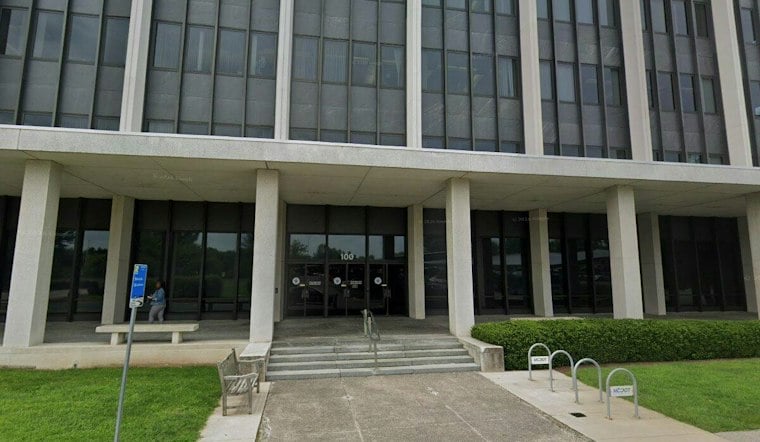
Montgomery County cut the ribbon Thursday on a new Public Safety Joint Operations Center in Gaithersburg, a 12,000-square-foot hub designed to pull police, fire and rescue, EMS, emergency management and homeland security teams into one room. The facility sits inside the county's Public Safety Headquarters and now doubles as the home base for the police department's drone pilots. The center will operate around the clock.
A Single Room for Five Agencies
The center, known as the PSJOC, held its ribbon-cutting ceremony on Thursday, October 29, according to FOX 5 DC. It is physically separate from the county's emergency communications 911 center, the station reports, and parts of it have actually been running since March. Officials say the goal is to improve situational awareness, inter-agency coordination and emergency responses, the kind of close, rapid coordination that matters most when seconds count.
Luke Hodgson, who directs the Montgomery County Office of Emergency Management and Homeland Security, said rapid information sharing, unified decision-making and synchronized operations have demonstrated value during high-risk, time-sensitive emergencies, per the station's report. County planning documents describe a similar ambition in more technical terms: the PSJOC is meant to centralize critical emergency response functions from the county's police, fire and rescue, and emergency management agencies into a single, modernized facility, according to Montgomery County Council records. Those same records describe the consolidation as a way to enhance 24/7 cross-agency coordination, improve situational awareness and streamline emergency response operations.
What Gets Folded Into One Building
The vision stretches well beyond a shared floor plan. The PSJOC is designed to gather the Police Operations Center, a Real Time Intelligence Center, the Drone as a First Responder program, the Fire and Rescue Operations Center, an EMS Transport Disposition Officer, the Office of Emergency Management and Homeland Security Watch Desk, a Resource Management System and the Public Warning System all under one roof, according to the Maryland-National Capital Region Emergency Response System (MDERS), which frames the project as part of a broader push toward centralized, technology-supported coordination among public-safety agencies.
Montgomery County is not the first in the region to try this model. A County Council staff report identified Washington, D.C. and Anne Arundel County as jurisdictions already running similar centers, per Bethesda Magazine. Anne Arundel County's own version, a Real-Time Information Center, opened in February 2025, while the state's Maryland Joint Operations Center has run around the clock with National Guard and emergency-management staff as what officials describe as the first joint civilian-military watch center in the country.
The Money Behind the Project Doesn't Quite Add Up
The figures attached to the PSJOC's price tag vary depending on which document you consult. FOX 5 DC reported that the county budgeted more than $1 million for the operations center, while council records show the county approved a $2.439 million capital appropriation for the project back in February. Those same records later describe a narrower need: county staff reported that $1,118,337 would be required just to reach functionality, including $640,091 for radio infrastructure and $130,037 for network connectivity labor and parts. A County Executive amendment in April further proposed limiting the county-funded scope of improvements to electrical and cabling infrastructure, according to the council records, leaving the exact relationship between these figures unclear.
Privacy Questions Follow the Drones Through the Door
Because the center now anchors the county's drone pilots, it inherits the privacy debate that has trailed police drone programs across Maryland. Montgomery County's own guidance states that it does not proactively patrol and does not use drones for random surveillance, and that the aircraft lack facial-recognition technology and microphones, with cameras pointed toward the horizon while traveling to and from calls, according to the Montgomery County Police Department. Darren Francke said Montgomery County has long had model policies developed thoughtfully to balance public safety and privacy, adding that the county develops those policies with its communities, and county officials note that policy already covers both automated license plate readers and the Drone as a First Responder program.
Even so, automated license plate reader and Flock camera programs face criticism across the region and the nation, and Montgomery County council records include a direction to strengthen data-governance and transparency safeguards for the PSJOC. Elsewhere in Maryland, scrutiny has only intensified: an uptick in Flock Safety cameras has raised fresh questions about surveillance, privacy and abuse, according to The Capital Gazette, and in Baltimore, police logged more than 279 million plate reads in 2025 across 136 cameras, holding that data for nine months, per WBAL-TV. Maryland Matters has reported that state lawmakers were weighing regulation of police drones because current law may not clearly spell out when drones can serve as first or only responders, noting that Montgomery County's police department spent roughly $773,000 on its drone program in the year the outlet examined.
For now, the PSJOC is designed to improve coordination between Montgomery County first responders, built on a foundation of shared radios, shared intelligence and a shared roof. Whether its surveillance tools get fuller policy scrutiny remains an open question headed into the center's first full year of round-the-clock operation.





