

























































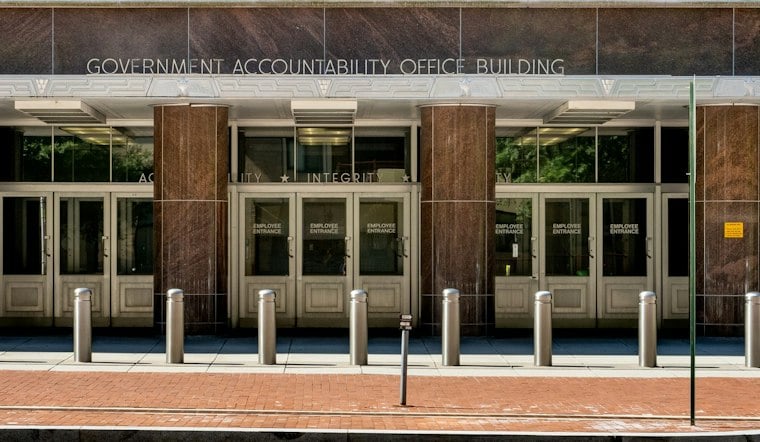
A federal watchdog found gaps in how the Pentagon applies its responsible-AI guidance, but its review did not assess every one of the department’s more than 300 AI projects. The Government Accountability Office based its findings on officials working on 10 projects and recommended that the Pentagon address staffing and clarify the oversight office’s responsibilities.
The projects use AI for battlefield target identification, surveillance processing and tactical decision-making, and included counter-camouflage and target-recognition weapons, according to NPR. Most of the 10 officials surveyed said they had taken at least initial steps toward following the department’s six responsible-AI tenets. Four said requirements for their own projects were not aligned with those tenets.
Alissa Czyz, who directed the GAO review, said the tenets grew out of earlier ethical principles and are widely understood as important inside the department, even though they aren't binding rules. She told the outlet the 2021 memo signals what the Pentagon should implement rather than functioning as a formal department instruction, and noted that some of the projects GAO examined were still in early stages.
Implementation and Accountability Remain Uneven
The review found differences in how project teams tracked risks in operational settings. Six of the 10 officials surveyed said their teams had identified such risks, while three said they did not know whether their projects would be continuously monitored after deployment. The tenets call for oversight, verification and real-time monitoring, as well as cooperation with allies to advance shared global norms.
Staffing appears to be a major part of the problem. The Pentagon authorized its Responsible AI Division to hire 10 people back in 2023, but as of February 2026 the division had filled only three of those positions, according to Defense News. Czyz said that leaves a small number of staff shouldering a large, department-wide responsibility. The outlet's reporting, corroborated by a separate account from Military Times, found that Chief Digital and Artificial Intelligence Officer staffing shortages had hindered the office's ability to implement responsible AI across the force, with officials saying they were unlikely to fill vacant slots while the office undergoes restructuring.
A Council That Went Dark for Nearly a Year
The Responsible AI Working Council resumed meetings in August 2025 after not meeting from late 2024, but still lacked a formal charter defining its responsibilities or meeting schedule, according to Defense News. The GAO also found that 29 of 64 efforts in the Defense Department’s Responsible AI Strategy and Implementation Pathway remained incomplete as of April 2026. Six of the 10 department components surveyed said sharing resources and best practices would help them apply the six tenets. These findings are detailed in the GAO report.
The GAO recommended that the Pentagon address understaffing and clarify the responsibilities and meeting schedule of the office overseeing responsible AI. The department agreed with both recommendations. Yet as of Oct. 22, the changes had not been implemented, a GAO representative told NPR; the Pentagon did not respond to the outlet’s question about when it planned to act.
Hegseth Pushes Speed Over Caution
The governance gaps are unfolding as department leaders push to accelerate AI development. At SpaceX in January, Defense Secretary Pete Hegseth said staffing and committee procedures should not slow the work, arguing that the risks of moving too slowly outweigh the impacts of imperfect alignment in military AI, according to NPR. That month, the Pentagon issued a memo setting a goal of becoming an AI-first warfighting force. In September, Hegseth announced a new warfare command focused on autonomous weapon development, including drones, and has encouraged rapid autonomous innovation across the department while dismissing caution around AI tools.
At the Association of the US Army's annual conference in Washington, D.C., on Oct. 14, Hegseth and service leaders discussed broad plans to scale autonomous weapons, according to Breaking Defense. The Pentagon has laid out plans to spend nearly $55 billion through its Defense Autonomous Working Group, the outlet reported — a scale of investment that underscores how much is riding on oversight systems that, by GAO's own account, are still catching up.
AI researchers and international organizations have warned that weapons with little human control can endanger soldiers and civilians and risk rapid escalation of wars. That warning sits uneasily alongside a department developing more than 300 projects with AI while its own watchdog says the guardrails meant to govern them remain thinly staffed and unevenly applied.





