

























































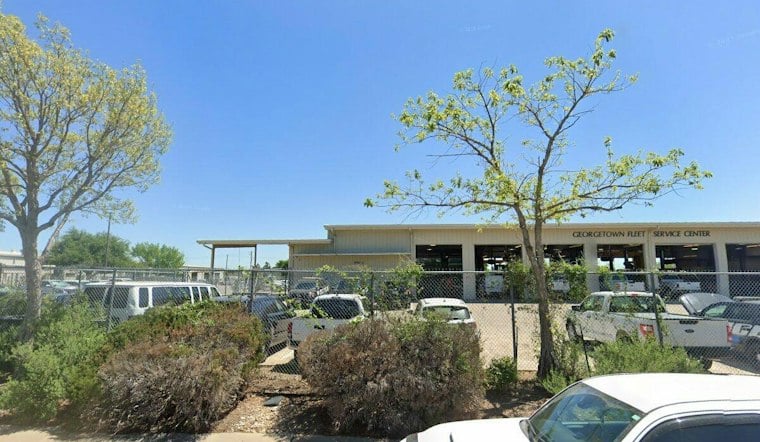
Georgetown City Council approved the use of $46 million in Texas Water Development Board bonds last Tuesday to help pay for a new pipeline that will carry water from Circleville in eastern Williamson County into the northern part of the city. The financing is part of a broader push to lock in new supplies before demand is projected to outstrip what the city can deliver.
The bonds break down into two pieces, according to Community Impact: a $29 million low-interest loan known as Series 2026B, carrying a 4.29% interest rate, and a $17 million Series 2026C bond at 3.75% interest with a deferred payment structure. Interest payments on the 2026C bonds won't begin until 2031, the outlet reports, a structure city documents say will let utility rates climb gradually rather than jump all at once. The Williamson County Sun likewise confirmed the city issued a total of $46 million in utility system revenue bonds to fund construction of the new transmission pipeline.
Georgetown officials applied for the financing through the Texas Water Development Board's State Water Implementation Fund for Texas, or SWIFT, program, which offers low-cost financing for water infrastructure. The city plans to repay the bonds using recently approved utility rates, according to the same city documents cited in the Community Impact report.
A Pipeline Built for a Growing City's Thirst
The new transmission line is one piece of the larger Georgetown Regional Water Initiative, a set of projects meant to secure and deliver new water supplies as the city keeps growing. According to city documents, the line will strengthen water security and help meet rising demand as it carries water from Circleville into northern Georgetown.
That urgency traces back to projections that have worried city planners for years. Water demand in what was described as the country's fastest-growing city is on pace to surpass supply by 2030, according to Texas Standard. A 2022 report cited by KUT had already warned Georgetown would need to find a new water source by that same year to avoid shortages, and the station notes that several Williamson County cities, Georgetown included, have struggled to keep pace with customer demand in recent years.
A Larger State-Funded Project Takes Shape
The $46 million bond package connects to a much bigger financing effort. The Texas Water Development Board approved up to $274 million in SWIFT financing for Georgetown's water supply project in July, according to a Texas Water Development Board announcement distributed via EIN Presswire. That funding is earmarked for planning, design and construction work, including treatment and pumping facilities at two primary sites and transmission infrastructure to feed treated water into the city's drinking-water distribution system, the board said.
Figures on how much Georgetown stands to save by financing through the state program differ depending on the source. City documents cited by Community Impact put the expected savings at about $3.44 million in total interest payments. The Texas Water Development Board's own announcement, by contrast, said the city could save approximately $3.2 million over the life of the loan through the SWIFT program. Both figures come from city or state sources, but the two accounts don't match exactly.
Part of a Broader Scramble for Water Across the Region
Georgetown's bond deal lands amid a wider regional effort to line up new water sources. Williamson County and several cities, including Cedar Park, Leander and Round Rock, formed a water group late last year to study long-term supply and infrastructure needs, per KUT's reporting. Across the state, cities are chasing similar solutions as drought and rapid growth strain existing systems, according to KXAN.
Georgetown has also looked beyond its traditional sources, which include Lakes Georgetown, Stillhouse and Belton along with supplemental supplies from Lake Travis and the Edwards Aquifer, Texas Standard reports. The city signed an agreement with EPCOR in 2023 to set aside at least 39,000 acre-feet of groundwater from the Carrizo-Wilcox Aquifer in Robertson County, and KXAN reported that city leaders separately signed a term sheet with Recharge Water LP for up to 34,800 acre-feet of groundwater per year from the same aquifer in Bastrop and Lee counties. Texas Standard also notes the city has ramped up conservation and education efforts alongside its search for new sources, as Georgetown works to stay ahead of a supply crunch that planners have been flagging for years.





