

























































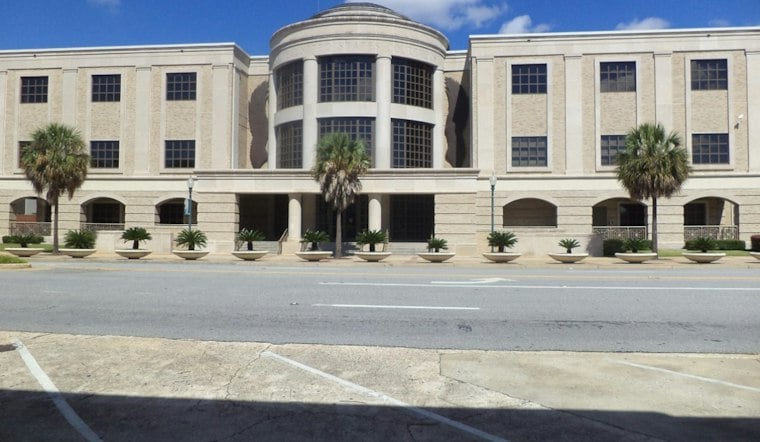
A federal judge in Georgia sentenced two state prison inmates this week to a decade and more than 16 years behind bars for running a nationwide scam from inside their cells, using smuggled phones to pose as police officers and squeeze money out of victims across the country. Joey Amour Jackson, also known as Apes—, received 120 months, while Lance Riddle, known as C-Port, was sentenced to 200 months after a jury convicted both men in January of conspiracy to commit wire fraud and conspiracy to commit money laundering.
U.S. District Judge W. Louis Sands handed down the sentences Wednesday, October 14, 2026, as reported by Now Georgia. Both men will serve three years of supervised release once they finish their federal terms, and that supervision will run consecutively to any state sentence they're already serving, according to the outlet. The court said restitution for both defendants would be determined within 90 days, according to the outlet.
The scheme itself played out over contraband cellular phones and Voice Over Internet Protocol technology that let Jackson, Riddle, and other inmates at Calhoun State Prison spoof the phone numbers of local police departments nationwide, according to WALB. Victims picked up calls that sounded like legitimate law enforcement demanding immediate bond payments to avoid arrest, the station reported.
Fake Jury Duty Warrants and a Bogus Gag Order
According to Now Georgia, callers told victims they had warrants out for missing jury duty and could clear the warrants by paying a bond over the phone, then threatened immediate arrest if the person refused. The callers also claimed a gag order barred victims from discussing the supposed warrants with anyone before paying, the outlet reported, and the callers impersonated both fictitious people and real law enforcement officers in the victims' own local jurisdictions.
Payment usually came through gift cards, with victims reading the card numbers aloud over the phone, though wire transfers were sometimes used as well, Now Georgia reported. After paying, victims were instructed to go to their local police department to verify their bond signatures — and the same report states that some victims were directed to undress and record a self-conducted cavity search in a restroom before that verification step. Some victims later received lewd and sexually explicit messages, including violent threats, according to Now Georgia.
WALB's reporting adds texture to who got targeted: the scheme primarily went after female professionals with prominent online profiles, though a small number of male victims were also identified. Documented losses reached $464,920 from 119 identified victims scattered across Colorado, Florida, Virginia, Nevada, California, Ohio, Georgia and beyond, per the station's report.
Money Moved Outside Prison Walls
Outside co-conspirators managed the group's financial accounts and laundered the stolen proceeds, the same account notes. Now Georgia reported that the stolen money was funneled into personal debts, including house and vehicle loans, as well as drug purchases.
Now Georgia reported that the case was investigated by FBI Atlanta's Columbus Resident Agency, which received fraud tips from law enforcement agencies across the country, including in Colorado, Florida, Virginia, Nevada, California and Ohio. The case was prosecuted by Criminal Chief Leah McEwen, according to the same report.
William R. Keyes said the defendants preyed on citizens through threats and deceit, and that law enforcement remains committed to protecting the public and ensuring fraud offenders face accountability, Now Georgia reported. Marlo Graham said the sentences may offer victims some comfort and help prevent similar scams, adding that the FBI will keep working to address crimes committed by inmates and to cut off access to contraband phones, according to the same report.
A Pattern Playing Out Beyond Georgia
The reach of this type of scam extends well past the 119 documented victims. A DeLand, Florida woman sent scammers $15,000 after they impersonated members of the Volusia County Sheriff's Office and told her she needed to pay to avoid arrest, according to Fox 35 Orlando. Investigators believe inmates at a Georgia prison were behind that operation too, using associates outside prison to help collect or move the stolen money, the station reported. The Volusia County Sheriff's Office's Financial Crimes Unit ultimately recovered nearly all of that victim's money, per Fox 35, and the outlet described the arrest in that case as at least the third person brought to Florida in connection with the scheme.
The FBI's Internet Crime Complaint Center issued a September 17, 2026, public service announcement describing ongoing widespread impersonation fraud. Between January 2025 and July 2026, the IC3 received 1,809 complaints, with losses totaling more than $140 million, involving scams targeting people associated with foreign nations or ethnic communities through impersonation of foreign law enforcement or U.S.-based foreign diplomatic officials, according to the Internet Crime Complaint Center.





