

























































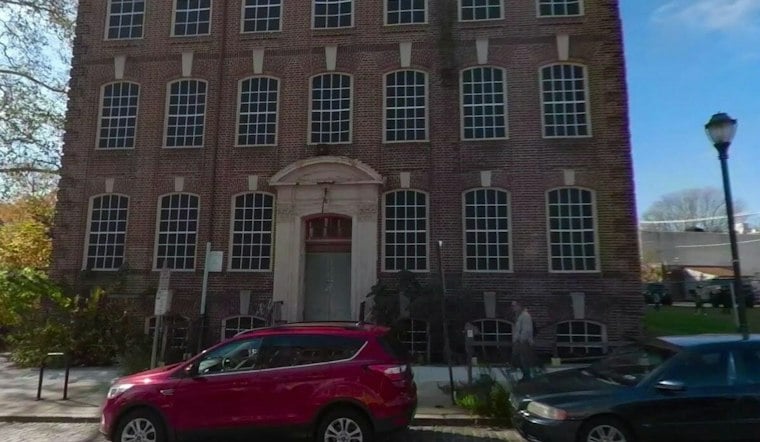
For the Germantown YWCA, the next milestone is a financing decision—not a construction date. The building has been vacant for more than two decades, and KBK Enterprises, selected in 2016 to redevelop it as affordable housing, has yet to begin construction. The project now depends on a tax-credit decision expected by the end of 2026.
According to WHYY, KBK needs low-income housing tax credits to make the apartments affordable. After the Pennsylvania Housing Finance Agency did not approve KBK’s application for the more competitive 9% credits in 2024, the company began pursuing 4% credits. KBK president and CEO Keith Key said the subsidy would help the project move forward and attract additional equity investment. Any 4% award still requires approval from the PHFA board.
What the tax-credit decision would—and would not—settle
The reporting cited above describes the 9% program as more competitive, but does not detail how PHFA’s 4% application process differs. It identifies two remaining financing conditions: PHFA board approval of any 4% award and additional equity investment, which Key said the subsidy would help attract.
The project’s original timeline called for completion in 2019, according to a Philadelphia Redevelopment Authority board agenda package. KBK was selected in 2016, but construction did not start. WHYY reported that the authority cut ties with the developer in 2021; KBK has nevertheless remained connected to the site.
Financing and approvals still stand between the proposal and construction
The 2024 denial of KBK’s 9% tax-credit application was one setback. Chestnut Hill Local reported that the redevelopment authority’s commitment letter to KBK expired without renewal, technically allowing other developers to apply. The authority’s board said it had received no new applications by the time the letter expired on Dec. 31. PRA staff have said the agency has no formal process to debar a developer and would consider any completed, qualified application, according to the authority’s board agenda package.
The authority’s planned solicitation of new proposals did not proceed. WHYY reported that Councilmember Cindy Bass, whose district includes the YWCA, opposed moving away from KBK and supported the project and the developer, saying it was “the right thing to do.” WHYY also reported that Bass is a campaign donor to KBK and that her backing helped the developer retain its position on the property.
David Thomas, then chair of the redevelopment authority’s board, wrote in emails obtained by WHYY that a new request for proposals would waste staff effort and burden prospective bidders. The project also faces city-level steps: City Council must pass a resolution before KBK can take ownership, and the city must review the plans, WHYY reported. Bass would need to introduce the enabling legislation.
What KBK Is Actually Proposing
KBK’s proposal, as described to WHYY, would turn the vacant building into affordable senior housing, with studios, one-bedroom and two-bedroom apartments in a four-story structure. Plans also include ground-floor commercial space, an outdoor terrace, a garden and redevelopment of an existing parking lot, though the number of spaces has not been specified. WHYY reported a 51-unit proposal, while KBK’s project listing describes 47 apartments. Earlier WHYY coverage of the funding effort described roughly two dozen apartments with retail and commercial space on the ground floor.
The YWCA’s historic status and another senior-housing plan
The Philadelphia Redevelopment Authority’s 2016 RFP states that the YWCA was built in 1914 and added to the Philadelphia Register of Historic Places in 1984.
A separate proposal offers a point of comparison, but not a substitute for the YWCA rehabilitation: at a Sept. 29, 2026, Germantown Settlement meeting, Resolve Philly reported that PHA planned 17 senior apartments on the already-demolished Blakemore property. That plan was new construction, unlike KBK’s proposed reuse of the existing YWCA.
Proposed rents would be affordable to residents earning 60% or less of the area median income, which WHYY reports is $51,540 a year for an individual. The redevelopment is expected to cost about $20 million. Key said construction could begin six to eight months after KBK secures the tax-credit subsidy. The company has not yet secured funding and is awaiting a decision on what it calls a critical construction subsidy.
A Legal Challenge and Neighborhood Skepticism
The long vacancy has drawn outside challenges to KBK's hold on the property. Ken Weinstein petitioned in 2023 to take control of the YWCA under Act 135, a state law that allows a judge to appoint a property conservator when a site is deemed blighted and abandoned. Weinstein argued that the city allowed the building to deteriorate and that it had become dangerous, according to The Philadelphia Inquirer. A Common Pleas Court judge dismissed the petition in 2024, finding that Weinstein had not established that the property was abandoned or blighted, the Inquirer reported.
The prolonged vacancy has prompted doubts about whether the proposal will come to fruition. Ann Marie Doley told WHYY that neighbors had little confidence in the project’s success. Accounts also differ on when the building passed into public hands: WHYY has reported that the redevelopment authority foreclosed in 2009, while Chestnut Hill Local reported that the authority seized it in 2013 after previous owner Germantown Settlement defaulted on a $1.3 million loan and filed for bankruptcy.
The YWCA remains vacant and publicly owned, while KBK awaits a financing decision and the city approvals needed to take ownership. Whether the 4% tax-credit route succeeds after the failed 9% application will help determine whether the building’s proposed rehabilitation advances.





