

























































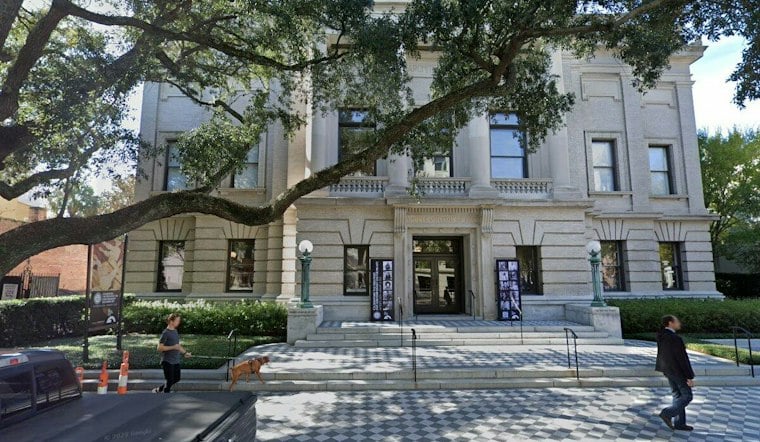
Downtown Charleston's Gibbes Museum of Art turned into a one-night gallery of survival and renewal Thursday evening, as more than 85 original works by local and nationally recognized artists went on display for Walk Through, an exhibition built to raise money and awareness for My Sister's House, the Lowcountry's domestic violence shelter and resource center.
The event ran from 6 p.m. to 10 p.m. at the Gibbes, according to WCBD News 2, with half the proceeds from every artwork sold going directly to My Sister's House, per Walk Through's event site. The show was conceived and curated by CINÉ Creative House, and organizers describe it as moving through three chapters — Reclamation, Resilience and Renewal — a structure also detailed on My Sister's House's own website. Accounts of the exhibition's scale differ: CINÉ Creative House's own materials describe 90 works from more than 50 artists, while a Post and Courier report on the event put the count at more than 85 works by more than 40 artists.
Exhibition creative director and curator Kacey Gustafson said the show was designed to tell a story that resonates with survivors directly. “We decided that the story of the night is really about the hope and beauty of beginning again, which is what My Sister’s House helps survivors of domestic violence do, is begin again and start fresh,” Gustafson said, per WCBD News 2's reporting. One room inside the museum was devoted entirely to the lived experiences of survivors, the kind of stories My Sister's House says it encounters daily in its work.
A Shelter Under Financial Pressure
The exhibition arrives as My Sister's House grapples with what the organization's director, Mary Nemeth, described to WCBD News 2 as approximately $500,000 in federal funding cuts. Those losses have put additional pressure on the nonprofit's ability to provide essential services even as it reports an increase in people reaching out for help. My Sister's House provides shelter, counseling, legal assistance and other resources to survivors of domestic violence and their children, and the organization's own campaign materials describe facing a multi-hundred-thousand-dollar funding loss from state and federal sources in 2026 that is affecting access to shelter, therapy and crisis support.
The squeeze isn't new. A previous Post and Courier investigation found that federal funding had covered the costs of My Sister's House's therapy team, which provided 1,464 hours of therapy in 2023 alone. That same reporting noted a $130,000 grant from Bishop Gadsden had helped the shelter maintain its existing clinical staff rather than add a fourth therapist, after cuts to Victims of Crime Act funding threatened the program.
Why the Stakes Are High in South Carolina
The funding fight is playing out against a grim statistical backdrop. South Carolina ranked among the 10 states with the highest rate of females killed by men for 23 of the 25 years between 1996 and 2020, according to the Post and Courier's reporting. The state records an average of more than 30,000 intimate-partner-violence cases annually, and it logged 59 domestic-violence homicides in 2024 alone, per the South Carolina Coalition Against Domestic Violence and Sexual Assault. The consequences of domestic violence extend beyond the homicide toll.
There has been some relief on the horizon. South Carolina crime-victim support groups were set to receive more than $29 million in combined state and federal grants beginning this month, according to WIS-TV, though roughly 78% of that money comes from federal sources that remain vulnerable to future cuts. Other Lowcountry and Upstate organizations have seen similar awards: Rock Hill's Safe Passage received $721,833 in VOCA funding for emergency shelter and advocacy, the Family Justice Center of Georgetown and Horry Counties was awarded $267,306 for a crisis hotline and counseling services, and the Clarendon County Sheriff's Office received $45,382 to support a dedicated domestic-violence investigator. My Sister's House itself is separately set to receive a $361,245 grant to expand clinical services and rental subsidies for survivors, according to ABC News 4.
Organizers Lean on the Community
Walk Through co-producer Hannah Cassibry framed the exhibition as a chance for ordinary Charlestonians to step up where institutional funding has fallen short. She said community leaders, local businesses and everyday community members can make a meaningful difference for survivors navigating the aftermath of abuse. My Sister's House continues to rely on donor support even as it works to replace lost federal dollars, organizers said.
Nemeth said the shelter's door remains open to anyone who needs it, regardless of the funding landscape. She said people seeking help will be met with compassion. Organizers behind Walk Through said they hope the exhibition does double duty — raising funds while opening up conversations about domestic violence, and reminding survivors that resources are still available to them. People experiencing domestic violence, or concerned about someone who might be, can contact 1-800-273-4673.


