

























































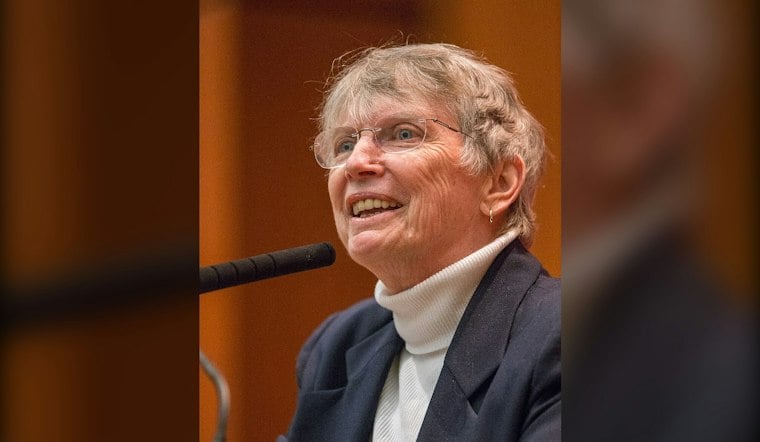
Lois Lowry, the author behind the perennially challenged dystopian classic The Giver, is coming to Albany this week to talk about tyranny, censorship, and her newest novel. The free discussion, titled “Fighting Tyranny with Books,” is scheduled for 7:30 p.m. Wednesday at Page Hall on the University at Albany's downtown campus, and it's open to the public.
Lowry will present her newest book, Building 903, according to NEWS10 ABC. The novel takes place in a tyrannical society in the year 2099 and follows a protagonist named Tessa as she searches for her missing twin brother, discovering the radical power of books along the way, the station reports. Copies of Building 903 will be available for sale at the event, and a book signing will follow the discussion.
A Dystopia Without Art, Music, or Pets
Building 903 imagines a near-future America where books and basic freedoms have been outlawed, according to the New York State Writers Institute, which is hosting the event. The world is ruled by an autocratic leader named Zokiris, and it's a place with no art, pets, music, or books, per an interview with NPR. The novel was published in September.
In its review, The New York Times placed Building 903 in the lineage of classic dystopian literature, noting it follows in the noble tradition of Fahrenheit 451, The Book Thief, and other tales. The Writers Institute describes Lowry as a two-time Newbery Medal winner, also known for The Giver and Number the Stars.
The Book That Made Her Famous — And Frequently Banned
Lowry is best known for her 1993 young adult dystopian novel The Giver, which is set in a society devoid of emotion, color, climate, and terrain, per NEWS10's reporting. The book has been implemented as standard curriculum in many schools but banned in others, and it earned Lowry both a Newbery Medal and a Regina Medal, the station notes.
That dual legacy — classroom staple and banned-books-list regular — isn't unique to one school district. Between 1990 and 1999, The Giver ranked 11th on the American Library Association's list of books most frequently requested for removal, and it placed 23rd during the following decade, according to Slate. The Office for Intellectual Freedom has recorded more than 11,000 reported book challenges since 1990, the outlet reports, with violence and perceived age-unsuitability cited most often as reasons to challenge The Giver specifically. Texas has seen the most recorded attempts to remove the novel, with challenges also reported in Massachusetts and Washington, per the same report.
A Career Built on War, Memory, and Resistance
Lowry also wrote the historical fiction book Number the Stars, published in 1989, which details a Jewish family's escape from Copenhagen during World War II and earned her a second Newbery Medal. The station's report notes she has written dozens of other books as well, including Gooney Bird Greene, the Anastasia series, and Rabble Starkey. A Hawaii native, Lowry is credited by the University at Albany as the author of more than 30 books.
Wednesday's event gives Capital Region readers a rare chance to hear directly from a writer whose work has shaped — and repeatedly unsettled — American classrooms for more than three decades. With Building 903 extending her preoccupation with censorship and survival into a new generation, the Page Hall discussion doubles as both a book talk and a conversation about why stories like hers keep landing on banned lists even as they stay required reading elsewhere.





