

























































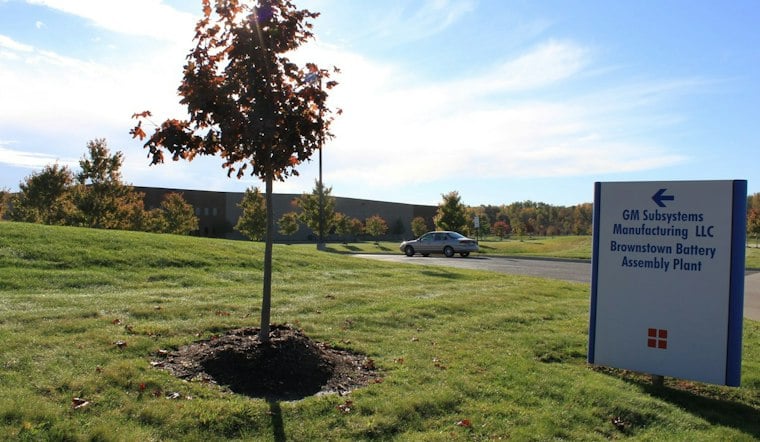
General Motors plans to close its Brownstown Battery Assembly plant while finding a new purpose for a Detroit building that was originally built to house hydrogen fuel cell production, according to new reporting out this week. The move touches two very different corners of GM's Michigan footprint — one a longtime battery hub south of Detroit, the other a newer facility tied to a hydrogen program the automaker has since abandoned.
Brownstown Plant Winding Down After Nearly Two Decades
The closure plan was first detailed by autonews.com, which reported that General Motors plans to close Brownstown Battery Assembly while repurposing a nearby plant in Detroit initially intended for hydrogen production. The same report states that GM has taken over the lease of a 300,000-square-foot building in Detroit that was initially meant to house hydrogen fuel cell production. Crain's Detroit Business also covered the two plant moves.
Brownstown Township has been part of GM's battery story since 2009, when the automaker selected the site for what officials at the time called the nation's first high-volume U.S. automotive lithium-ion battery manufacturing facility, per a Michigan state government announcement. The plant has already seen at least one round of cuts tied to shifting product plans: the station's report on a 2018 layoff round, covered by The Detroit News, noted that the loss of the Chevrolet Volt affected 50 employees at the Brownstown facility at that time.
The plant has also faced job cuts before. A November 2025 update signed by UAW GM Department officials identified Brownstown Battery as Local 174 and said GM had announced an indefinite layoff affecting about 35 members at Brownstown, effective Nov. 3, and that members were expected to receive transfer offers to Toledo Propulsion Systems. That earlier action was distinct from the broader closure plan now reported, but it provides a recent measure of workforce changes at the site. The union’s update did not describe those 35 positions as the full plant workforce.
Brownstown’s work has changed over the years, and GM’s current facility listing identifies products beyond the Volt-era battery packs: the plant makes electric drive units for the Chevrolet Corvette E-Ray and battery packs for the Cadillac CELESTIQ, as well as doing prototyping. That mix underscores why a shutdown could affect work tied to more than one vehicle program, though GM has not publicly specified which operations or workers would be affected by the reported closure. GM’s current description of the plant lists those products.
A Hydrogen Plant That Never Made Fuel Cells
The Detroit building now being repurposed was never used for its original purpose. Crain's Detroit Business reported separately that General Motors canceled its next-generation hydrogen program, scrapping plans for what had been identified as a $55 million Detroit plant. That outlet described the structure as a 292,550-square-foot building planned for a hydrogen fuel cell plant, a figure that differs from the 300,000-square-foot description used elsewhere in coverage of the same facility — the available reporting does not reconcile the two figures.
The planned Detroit building is distinct from GM’s earlier fuel-cell manufacturing operation in Brownstown. GM and Honda’s 50-50 Fuel Cell System Manufacturing venture began commercial production there in January 2024; the companies said at the time that the 70,000-square-foot facility had created 80 jobs. That history places the proposed Detroit plant within a broader regional hydrogen effort, but the two locations were separate projects. GM’s announcement of the Brownstown venture’s production start identified the joint venture and facility.
The hydrogen site sits within a larger redevelopment of the former Michigan State Fairgrounds at Eight Mile Road and Woodward Avenue in Detroit, according to Crain's Detroit Business. That redevelopment has been one of the more closely watched reuse projects on Detroit's northern border, and GM's decision to fold a former hydrogen building into its battery-era real estate plans adds a new chapter to that site's history.
Part of a Broader EV Pullback
The Brownstown and Detroit moves land amid a wider retreat from aggressive electric-vehicle production targets at GM. Reuters reported that General Motors said it would cut U.S. electric vehicle and battery production along with 1,200 factory jobs at its EV plant in Detroit and 550 jobs at an Ohio battery plant, citing a significant slowdown in demand for battery-powered cars. The pullback has also affected GM's Ohio operations, where Reuters reported 550 jobs would be cut at a battery plant.
GM's Michigan footprint has included battery and EV-related projects. The Brownstown closure and hydrogen plant pivot suggest that some of that earlier buildout is now being reshuffled as consumer demand shifts.





