

























































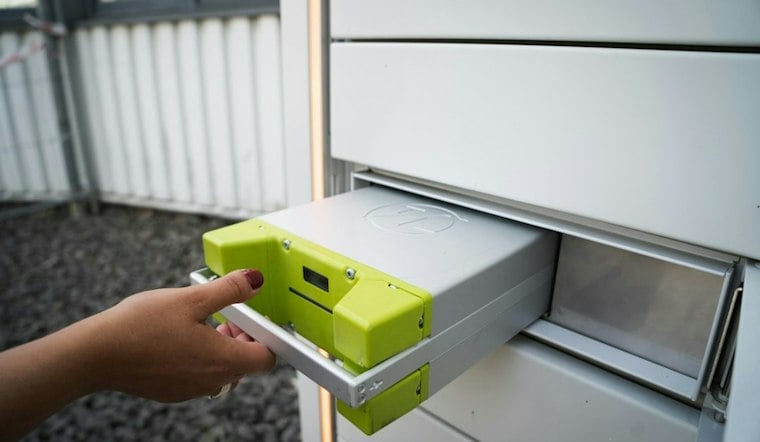
Google and the energy company Voltus announced an expanded agreement this past week to build what they're calling a 1-gigawatt virtual power plant spanning the PJM electric grid region, a network that stretches across 13 states and Washington, D.C. Rather than building a traditional power plant, the tech giant is funding a system that pulls flexibility from inside ordinary homes and businesses — smart thermostats, batteries and changes to how companies run their operations — to ease pressure on the grid when demand spikes.
The project, announced Thursday, builds on a smaller 100-megawatt agreement the two companies signed in June, according to a release from Voltus. Google is funding the virtual power plant, while Voltus is tasked with aggregating thousands of smaller energy resources scattered across homes and businesses into a single, coordinated system, according to Google. The companies have described the scale of the expanded deal two different ways: Google's own announcement calls it a 1-gigawatt virtual power plant, while Voltus has told the New York Times the agreement will provide up to 1,070 megawatts of electric capacity when needed, as reported by the New York Times.
What Counts as a Power Source Here
The resources feeding into the virtual power plant can include batteries, smart thermostats, on-site generation and adjustments to industrial processes, per reporting from Utility Dive. During periods of peak demand, these assets are designed to temporarily reduce energy use or kick in extra power to support grid reliability, according to Google's announcement. In exchange, Voltus has said participating customers can receive direct economic benefits — including cash payments and savings on their electric bills.
Voltus expects to ramp the project up to full capacity over three to four years, then run it under a contract with Google through 2040, Utility Dive reported. That timeline reflects just how long this kind of distributed buildout takes compared with flipping a switch — though the companies have described the additional 1,070 megawatts as one of the largest known distributed capacity portfolios deployed by a hyperscaler to date, according to the Voltus release.
Why the Grid Needs Help Now
Artificial intelligence and the new data centers built to run it are creating enormous electricity demand, and PJM — the regional grid operator covering those 13 states and 67 million people — is feeling it. PJM estimates that data centers account for 30 gigawatts of the 32 gigawatts of forecast electricity-demand growth between 2024 and 2030, according to PJM's Inside Lines. The grid operator projects summer peak load growth averaging 3.6% annually over the next decade, with peak demand expected to hit 222,106 megawatts by 2036 — a jump of more than 65,000 megawatts over 10 years, per PJM's 2026 load forecast report.
That surging demand has driven costs up sharply. The cost of securing enough power to meet peak demand in PJM has risen more than eightfold in recent years, Canary Media reported. Demand-response revenue in the region jumped 240% from 2024 to 2025, reaching $523.5 million, the same Utility Dive report noted — a sign that paying customers to cut usage has become a increasingly lucrative business in its own right.
A Cheaper, Faster Fix — But Not a Full One
Virtual power plants like this one could serve as a faster, cheaper and less-polluting option than building new traditional power plants in the interim, the New York Times reported, citing a 2024 Energy Department study that estimated virtual power plant use could triple by 2030 and save U.S. ratepayers roughly $13 billion annually. Google's deal with Voltus isn't the only one of its kind — Utility Dive also pointed to a 150-megawatt, $500 million project from Budderfly and Schneider Electric, and a smaller 16-megawatt effort from Sunrun, Renew Home and Tesla.
Still, as Cleveland.com reported, Google's approach does not replace the need to address the broader electricity demands created by the data-center boom. Thermostats and batteries can shave peaks, but they don't build the transmission lines or generation capacity that PJM says the region will ultimately need.
Regulators Are Moving on Parallel Tracks
PJM has separately proposed a framework for connecting new large-load customers — like data centers — that bring their own power supplies, including an emergency procedure to reduce or transfer their demand before utilities would resort to shutting off power to traditional consumers, according to PJM's Inside Lines. The grid operator has also floated an Interim Resource Adequacy Service aimed at new large loads that haven't secured their own capacity, tied to a Reliability Backstop Procurement process slated to begin addressing forecasted shortfalls in June 2027, per the same PJM materials.
State-level fights over who pays for all this are already underway. New Jersey lawmakers have taken steps aimed at preventing residents from shouldering infrastructure costs created by large data centers, according to Cleveland.com's reporting. In Michigan, state regulators approved utility contracts tied to a Google data center in Van Buren Township; the Michigan Public Service Commission said its approval of the special contracts between DTE Electric and Google included mandatory protections for other customers, though the commission's announcement did not detail the full conditions attached.
Whether virtual power plants like Google's end up easing the grid strain enough to matter remains to be seen, especially as PJM's own forecasts point to another 30 to 34 gigawatts of new demand from data centers and other large loads by the early 2030s, according to Canary Media. For now, the bet from Google and Voltus is that a thermostat in a living room or a battery in a garage can do a small part of the job traditionally reserved for power plants.





