

























































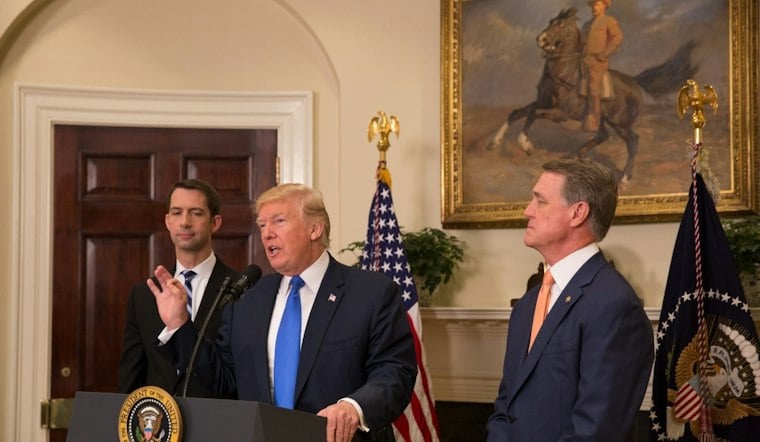
A fight over whether Americans should ever change their clocks again has spilled into something much more personal: President Donald Trump publicly shared what he said was Senator Tom Cotton's cellphone number, and now a fellow Republican is pushing back hard. Sen. John Kennedy of Louisiana says Trump should never have done it, even as he stood by the president's broader frustration with the stalled Sunshine Protection Act.
Kennedy Says Trump Crossed a Line
“I don't think he should have given out Tom's cellphone number,” Kennedy said, according to The Hill. The comment came after Trump posted what he said was Cotton's cellphone number on social media and urged Arkansas residents to call him directly about daylight saving time, as reported by The New York Times. Two officials confirmed to the Times that the number Trump shared did in fact belong to Cotton.
Kennedy did not pull punches describing the president's temperament, either. “He can be tempestuous. He can go from zero to a‑‑hole in about three seconds,” Kennedy said, per the same Hill report. Still, the Louisiana senator made clear his sympathies lie with his Arkansas colleague, calling Cotton “a rock star senator” and warning, “If you get between him and what's best for Arkansas, he'll devour you like a light snack.”
According to Ray Lewis of The National News Desk, the dispute traces back to Trump's demand that Cotton stop blocking expedited consideration of the Sunshine Protection Act, the bill that would lock the country into permanent daylight saving time and end the twice-yearly clock changes. Cotton had responded publicly; his team referred the outlet to his Saturday afternoon statement opposing the bill. The White House had not responded to the outlet's request for comment.
A Bill That Cleared the House but Stalls in the Senate
The Sunshine Protection Act is not short on momentum, at least on one side of Capitol Hill. It passed the House by a lopsided 308-117 vote in July, the Hill reports, though the measure drew opposition from nearly 100 House Democrats. The real obstacle, though, is the Senate, where the bill faces what the outlet describes as uncertain odds, compounded by an unsettled post-midterm legislative agenda.
Senate Majority Leader John Thune has already cast doubt on whether the bill can secure the 60 votes needed to advance, according to a separate report from The Hill. Cotton, for his part, has maintained his opposition to the bill, arguing that permanent daylight saving time would mean Arkansas kids heading to school before sunrise. “Arkansans don't want their kids going to school in the pitch dark, and I'll always put Arkansas first,” he said.
Cotton has also pointed to history as a warning sign. “Congress has enacted permanent Daylight Savings Time multiple times before and repealed it each time once Americans experienced absurdly late sunrises in the winter,” he said. The United States did in fact switch to permanent daylight saving time in the 1970s before quickly reverting to the seasonal system still in use today, a shift that NPR reports “became very unpopular very quickly” after Congress repealed the 1970s law in 1974.
What Health Experts and Polling Say About the Clock Debate
Permanent daylight saving time would mean less morning light and more evening light year-round, a tradeoff health experts generally consider worse for the body's biological rhythms. The American Academy of Sleep Medicine, along with the Coalition for Permanent Standard Time, continues to advocate for ending seasonal clock changes altogether in favor of permanent standard time instead, according to the organization's own statement.
The AASM warns that permanent daylight saving time specifically “would lead to darker mornings, especially during the shorter days of winter, and disrupt sleep patterns, which can increase the risk of motor vehicle accidents.” A separate sleep-medicine position statement notes that daylight saving time can delay the body's circadian phase by increasing exposure to both morning darkness and evening light. Polling has not exactly rewarded the status quo either: a 2025 AP-NORC poll found just 12% of U.S. adults favored the current system of changing clocks twice a year, while 47% opposed it, as reported by PBS NewsHour.
This is not the first time Trump has used a senator's personal phone number as a pressure tactic. PBS NewsHour notes that Trump released Sen. Lindsey Graham's personal cellphone number during the 2016 Republican presidential primary. Back in the current fight, Kennedy does not expect the tactic to work on Cotton this time either, saying Trump's post would not pressure his Arkansas colleague into changing his position on the bill.



