

























































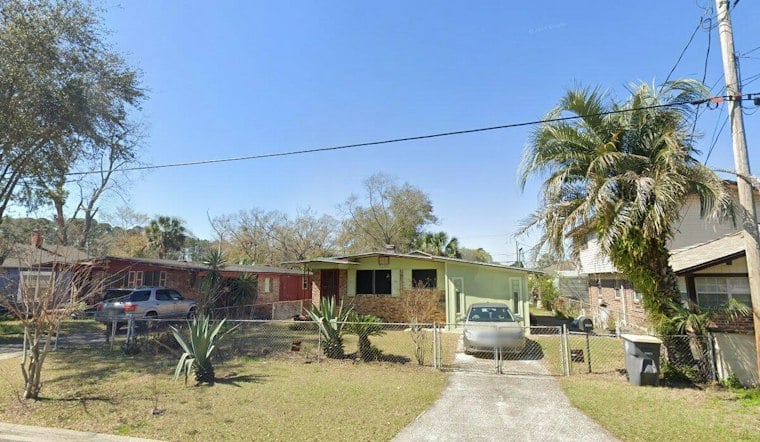
A woman called 911 on September 28 saying a man had smashed her window and had a gun, giving dispatchers a description of his clothing before Jacksonville Sheriff's Office drone operators sent an aircraft to her Grand Park neighborhood. The drone arrived within seconds, spotted a man matching the description, and tracked him as he ran through several streets before officers moved in and arrested a juvenile suspect in under 10 minutes.
According to the Jax Sheriff's Office
, the drone followed the suspect to a home on 15th Street West, where District 5 patrol officers made contact and took the juvenile into custody. The arrest was for criminal mischief, and under Florida Statute § 806.13, penalties for that charge hinge on the dollar value of property damage, ranging from a second-degree misdemeanor for damage under $200 up to a third-degree felony carrying as much as five years in prison if damage reaches or exceeds $1,000, according to
attorney Flaherty & Merrifield's legal summary
. The arrest fell under JSO Patrol District 5, which operates out of a substation at Edward Waters University and covers Northwest Jacksonville communities including Grand Park, New Town, and Riverside, as Hoodline has
previously reported
.
A Program Built for Seconds, Not Minutes
The case is an early real-world test of JSO's Drone as First Responder program, which officially launched July 22, 2026. The program deploys remote-piloted aircraft from automated docks known as hives, sending drones to emergency scenes ahead of ground units, according to Action News Jax. During the program's launch demonstration, JSO reported that DFR drones had reached dispatch scenes in as fast as 42 seconds during early test deployments.
The department's fleet expansion traces back to a $610,000 state budget appropriation secured by Florida Representative Wyman Duggan in 2026, funding 36 new Eagle Eye drones for Jacksonville — 25 interior units, 10 exterior units, and one fixed-wing mapping aircraft, per Jacksonville Today's report on the program. Jacksonville state lawmakers noted at the July launch that JSO's allocation was the only police drone funding request in the entire state of Florida to survive Governor Ron DeSantis's budget vetoes that year.
Officer Safety Cited as the Driving Rationale
Jacksonville Sheriff T.K. Waters said during the July demonstration that DFR drones are meant to help reduce officer-involved shootings by showing whether fleeing or barricaded suspects are armed before patrol officers make contact, First Coast News reported. In the Grand Park case, that same logic played out on the ground: a drone identified and tracked a suspect reported to be armed, feeding information to officers before they approached the home on 15th Street West.
Grand Park has already seen significant law enforcement attention this year. In March 2026, JSO's Narcotics Unit and federal partners executed a multi-agency raid in the neighborhood that dismantled a drug-trafficking ring operating across four residential properties, according to the agency's own announcement.
National Debate Over Drone Surveillance
Jacksonville's rollout fits into a broader national shift. Federal Aviation Administration changes in 2025 streamlined Beyond Visual Line of Sight waivers, prompting dozens of U.S. police agencies to adopt DFR programs while also drawing civil liberties concerns from groups including the ACLU and the Electronic Frontier Foundation over persistent neighborhood surveillance, as the EFF has detailed.
The Grand Park arrest also lands amid JSO's wider push into automated technology. The department proposed a $1.9 million agreement in September 2026 for Peregrine AI investigative analytics software, a deal Hoodline covered in its reporting on council pushback. Together with the drone hives feeding JSO's Real Time Crime Center, the software reflects a department betting heavily on automated surveillance tools to speed up response and investigation across Duval County.





