

























































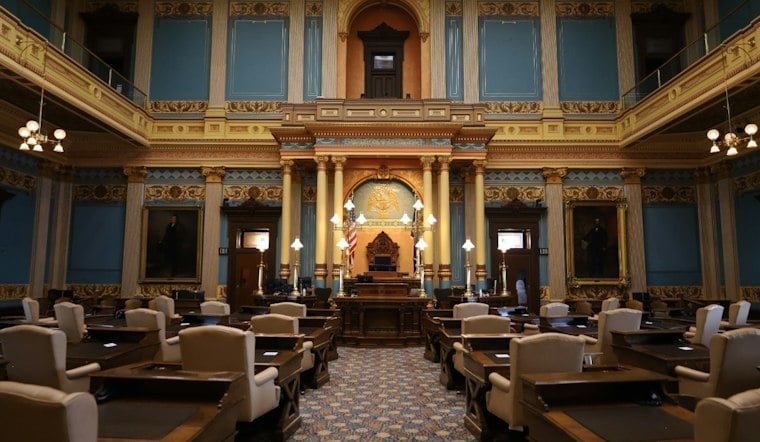
Republican state Sen. Mark Huizenga and Democratic state Rep. Carol Glanville are facing off for Michigan's 30th Senate District seat in a competitive race that could affect control of the Michigan Senate. The district stretches across portions of Kent and Ottawa counties, taking in part of Grand Rapids along with Walker, Rockford and Coopersville, and both parties are treating it as a battleground heading into the Nov. 3, 2026 general election.
A District Both Parties Are Fighting To Win
Huizenga is seeking a second term representing the 30th District, after previously serving as Walker's mayor and as a state representative, according to MLive. Glanville, who has served in the state House since winning a special election in 2022 and previously sat on the Walker City Commission, is looking to unseat him. The district also includes Ada, Alpine, Cascade, Plainfield, Allendale, Polkton, Tallmadge and Wright townships, along with part of Grand Rapids Township, the outlet reports.
Michigan Senate Democrats are targeting the 30th District as one of five seats they're working to protect or expand their 20-18 majority, while Republicans are working to hold the seat, according to the same MLive report. Ballotpedia separately counted five battleground state Senate districts statewide heading into the election, and noted that Ballotpedia News identified the Democratic Legislative Campaign Committee as targeting four Senate races this cycle. Michigan is one of 30 states where both major parties are targeting the state legislature in 2026, per that same report, which also noted these are the first elections run under Senate district lines redrawn in 2024 following lawsuits over the previous map's constitutionality.
Huizenga's Narrow 2022 Win
Huizenga's previous Senate race was close. He won the 2022 contest by 391 votes, per MLive's reporting on the 2026 matchup. That figure differs slightly from unofficial results reported at the time by MLive.com, which showed Huizenga defeating then-Rep. David LaGrand 63,753 votes to 63,348 — a margin of 405 votes — with Libertarian Theodore Petzhold pulling in 2,516 votes. Huizenga had first won the seat in a November 2021 special election before holding it in the 2022 general, the outlet reported at the time.
Money is already flowing into the race. Advertising spending in the race approached $3 million as of late September 2026, according to a Gongwer report citing AdImpact data referenced in MLive's coverage. Glanville and Democratic-aligned groups had spent or reserved roughly $1.7 million, while Huizenga and Republican-aligned groups had spent or reserved about $1.1 million, per that same attribution.
Where The Candidates Stand On Schools
Education has emerged as a central flashpoint. Glanville, who serves as minority vice chair of school aid and has more than 20 years of experience as an educator, says schools need stable, predictable funding and supports fully implementing the state's weighted school funding formula as quickly as possible — a need the School Finance Research Collaborative identified nearly a decade ago, per MLive's reporting. She says the state should focus on formative assessments, professional development, smaller class sizes, and giving educators more support and flexibility.
Huizenga, meanwhile, has pointed to a steep decline in Michigan students' math and reading scores and says educators need more resources. He sponsored SB 715 to provide bonuses to the state's most effective public-school teachers and introduced SB 712, aimed at funding early literacy coaches and early reading intervention, according to MLive's account. The Michigan Legislature has also passed legislation requiring teachers to provide resources to children with dyslexia, the outlet noted.
Taxes, Energy And Infrastructure
On pocketbook issues, Huizenga has said Michigan residents are feeling pressure from inflation and says he's voted against higher taxes and fees more than 20 times. He supported SB 55, which provided a $4,400 working families tax credit, and cosponsored a broader family tax relief plan that would lower income taxes, increase the personal income tax deduction, create a $500 per-child tax credit, and raise the tax exemption for seniors, per MLive's reporting.
Huizenga has also pushed energy-related measures, including amendments to exempt schools and nonprofits from rising energy costs and amendments giving rebates to customers whose homes experienced blackouts or extended power outages. He worked with energy providers to support the home heating credit, which the outlet reports helps more than 250,000 Michigan homeowners, and has advocated for a $4.8 billion infrastructure bill covering water, transportation, broadband and parks improvements, including statewide lead-pipe replacement.
Glanville has staked out different priorities on utilities and the environment, supporting reasonable limits on utility executive compensation and profits so ratepayer money can be reinvested in infrastructure and service, according to MLive. She backs the Affordable Water Now package to expand clean drinking-water access and prevent water shutoffs, along with measures to protect the Great Lakes, wetlands and river buffer zones and hold polluters accountable. She has also voiced support for protecting workers' rights, expanding apprenticeships and job training, and investing in education, along with an affordable-housing proposal through the MI Home program, improved access to childcare scholarships, and lower prescription drug costs.
Diverging Views On Rights And Due Process
The two candidates also differ on civil liberties framing. Huizenga has emphasized support for constitutional freedoms of speech and religion and protection from unreasonable searches, per the outlet's reporting. Glanville has emphasized First Amendment protections for free speech, peaceful assembly and religious freedom, along with Fourth Amendment protections against unreasonable searches and seizures, due process and constitutional rights for all people including noncitizens, and state-law changes she says would strengthen civil liberties, government transparency and equal access to justice.
With the general election set for Nov. 3, voters across Grand Rapids, Walker, Rockford, Coopersville and the surrounding townships will decide a competitive contest.





