

























































Grant County commissioners voted 4-1 Thursday to approve a one-year moratorium on new data center development, freezing any project that would establish, build, expand or operate a data center anywhere in unincorporated Grant County. The pause, which also blocks dedicated power lines, water systems, substations and transmission infrastructure built primarily to serve such a facility, takes effect Nov. 21 and runs through Nov. 21, 2027.
The vote, reported by the Santa Fe New Mexican, was proposed by Commissioner Nancy Stephens and modeled after a resolution already adopted in neighboring Socorro County, according to Searchlight New Mexico. Commissioner Tom Shelley cast the lone dissenting vote. During the moratorium, the county plans to study whether and how to regulate data centers going forward, and commissioners retain the option to repeal or extend the pause once that work is done.
A Legal Notice Tipped Off Residents to the Hachita Plan
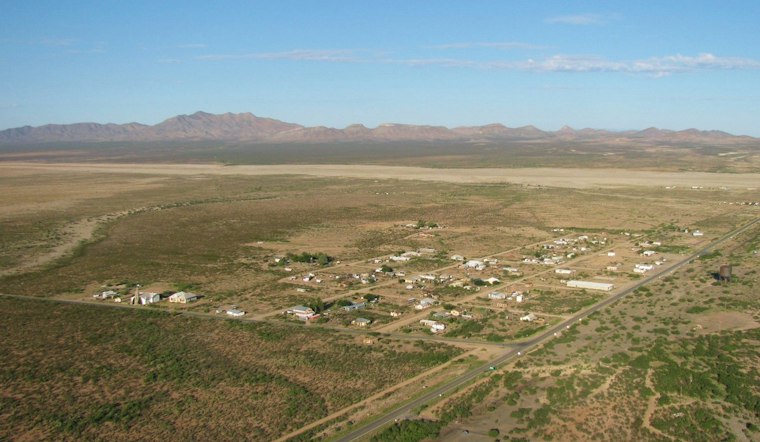
The moratorium followed months of alarm over Site Layer 1 LLC, a company proposing to build a data center near Hachita and Playas on the rural southern edge of the county. Many residents first learned of the project not from a public meeting but from a legal notice published in the Silver City Daily Press on Aug. 27, Searchlight New Mexico reported. That notice stated the facility could consume about 2.3 million cubic feet of natural gas per hour, with annual carbon emissions equivalent to roughly 282,600 cars.
Site Layer 1 is directed by Granite Renewables, a company led by brothers Ian and Blake Marcus that lists a public address on an empty floor of a midtown Manhattan office tower. The developers made their first in-person appearance in southern New Mexico this month after initially presenting remotely to the Grant County commission earlier in October, according to the Silver City Daily Press. At that Oct. 8 presentation, developers said the project would begin as solar generation and battery storage, with potential future natural gas generation and a data center added later, and they projected thousands of construction jobs along with investment in community nonprofits, schools and water restoration.
Residents Say Questions Keep Going Unanswered
Not everyone found those assurances convincing. Chris Ponce said questions raised during the developers' presentation went unanswered, and Sienna Wright said the Oct. 8 session lacked basic information about the project's scope, impacts and timeline, per the Santa Fe New Mexican's reporting. A majority of public commenters at the county meeting supported the moratorium, citing projected health and environmental impacts along with the developers' lack of transparency.
That frustration has also reached state regulators. Thirteen organizations sent a letter on Oct. 15 urging New Mexico Environment Department Secretary James Kenney to withdraw the project's air permit application. Kenney had already written on Sept. 29 that he was concerned about Site Layer 1's lack of community outreach and engagement in relevant New Mexico communities, and the department has said it does not plan to act on the permit until developers complete an acceptable level of community engagement, according to New Mexico Environment Department records.
Conflicting Numbers on Water, Power and Permits
Basic facts about the project remain disputed. Developers have said the data center would rely on a closed-loop cooling system using fewer than 25 acre-feet of water annually, the Silver City Daily Press reported, while environmental advocate Allyson Siwik has estimated the facility could draw as much as 6,500 acre-feet from the Hachita Basin, according to the Santa Fe New Mexican. The project's power capacity is similarly murky: Blake Marcus said the developers hold a valid cube position for a 715-megawatt solar project and a 715-megawatt storage system, while the Silver City Daily Press separately described the 8,000-acre project as centered on 714 megawatts of solar and battery storage.
The status of the air-quality permit has also been reported inconsistently. An earlier account said Granite Renewables had not yet submitted an air-quality permit application to the state, while SWCA Environmental Consulting, representing the project, told the Silver City Daily Press the application had been submitted to the New Mexico Environment Department. Blake Marcus said Site Layer 1 had completed environmental diligence and filed the air permitting application, and that the data center's exact size depends on the outcome of a large load application. Developers plan to submit that application to the Tri-State/Columbus High Impact Load cluster process on Oct. 28, seeking permission to connect to the electrical grid, with results expected in February 2027. Granite Renewables has not responded to repeated requests for comment, including questions about how the moratorium affects its timeline.
The Proposed Site and a Local Landowner's Objection
The project is planned for the Hurt Cattle Co. ranch, which spans almost 35 miles from the U.S.-Mexico border toward Hachita and runs parallel to the Alamo Hueco Mountains. Lawrence Hurt opposed the moratorium, arguing that industrial revenue bond money generated by such a project would go to the county rather than to Santa Fe.
Grant County's pause arrives as data centers have become a flashpoint across New Mexico and beyond. Granite Renewables CEO Ian Marcus has described the Hachita proposal as still in a feasibility phase, telling the Silver City Daily Press that only about 1 in 10 such projects ultimately reach completion. Meanwhile, Lea County commissioners have agreed to consider more than $134 billion in industrial revenue bonds for a proposed Google data center spanning 1,890 acres, a project Searchlight New Mexico reports could generate about 1,700 construction jobs and 125 permanent operations jobs, with a one-time cooling-system fill of 9.6 million gallons of water, per the Santa Fe New Mexican. Statewide lawmakers are pushing for a broader pause on data center development, and an Albuquerque Journal poll found 75% of respondents favored a temporary halt to establish environmental and economic standards before more projects move forward. Similar fights are playing out beyond New Mexico, including in Virginia, where lawmakers are debating a proposed three-year statewide moratorium amid rising concern over electricity costs, water use and strain on local infrastructure, according to Conduit Street.




