

























































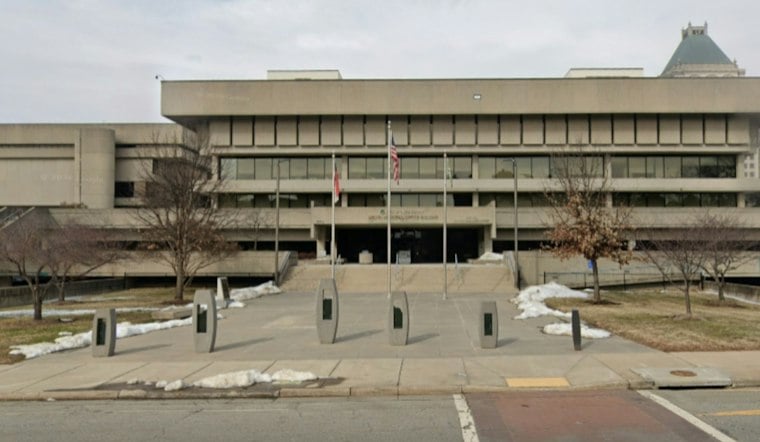
Greensboro's City Council has signed off on a roughly $260 million contract with the Haskell Company to overhaul how the city filters PFAS, the so-called forever chemicals, out of its drinking water. The upgrade targets the Mitchell Water Treatment Plant, one of two facilities drawing from reservoirs the city says already contain the chemicals.
The council's vote, reported by WHQR, approved over $200 million for the city's ongoing efforts to remove the chemicals from local drinking water. Greensboro's water sources, including Lake Brandt and Lake Townsend, contain PFAS, according to the same report. A separate figure cited in that coverage pegs the combined cost of upgrading both the Mitchell and Townsend water treatment plants at $338 million, though it is not clear from available reporting whether that larger figure represents the same project scope as the $260 million Mitchell contract or a broader funding package.
City documents describe the chosen technology as a granular-activated carbon contactor system, selected after a yearlong pilot-testing initiative of multiple treatment options that wrapped up in 2022, according to the city's water resources department. The projects are intended to help Greensboro meet future PFAS regulatory requirements, the city's water resources page notes on its treatment projects page.
Basins of Carbon, Built Like a Giant Filter
The new permanent system will rely on large concrete basins packed with roughly 15 feet of activated carbon, per the WHQR report. Greensboro Water Resources Director Mike Borchers compared the setup to a household Brita filter, telling the outlet the system removes PFAS to near non-detect levels.
PFAS have been used in industry and consumer products since the 1940s, and the same report notes that research has tied the chemicals to negative health effects including cancer and reproductive issues. The improvements at Mitchell are expected to be completed in 2029.
How Greensboro's Price Tag Stacks Up
Costs for PFAS treatment vary enormously depending on plant size and water chemistry. In Siler City, TriRiver Water is planning a much smaller granular activated carbon project at its water filtration facility, with a preliminary estimated cost of approximately $20 million, according to TriRiver Water. That study was fully funded through a $400,000 North Carolina Emerging Contaminants Grant, and the state separately approved $5 million in principal-forgiveness funding for the Siler City project, which draws from the Rocky River and could break ground in 2028 with construction expected to take about 18 months.
At the other end of the scale, Fairfax Water in Virginia has estimated a GAC filter installation would run nearly $400 million, prompting the utility to weigh a less costly powdered activated carbon alternative instead, as reported by The New Lede. Greater Cincinnati Water Works, meanwhile, is preparing roughly $100 million in upgrades after PFOA and PFOS levels at a groundwater plant reached 4.7 and 6.1 parts per trillion respectively, the outlet reported. Tucson Water has taken a different mitigation route entirely, removing more than 40 wells from its system of over 240 wells rather than installing new filtration.
A Nationwide Push to Filter Forever Chemicals
Greensboro's project arrives amid a broader regulatory and funding push across the country. About 176 million people in the United States drink tap water contaminated with PFAS, according to recent EPA data cited by The New Lede, and a 2025 study by the Environmental Working Group found that most utilities lack advanced filtration systems for PFAS and other contaminants, with small rural communities facing the biggest disadvantage.
North Carolina's Department of Environmental Quality began sampling public water systems statewide for multiple PFAS compounds in 2022 to gauge contamination levels, according to the NC DEQ. The state's Local Government Commission approved more than $814 million in financing requests at its August meeting, including proposals supporting drinking-water and PFAS treatment projects, per the North Carolina State Treasurer's office. The EPA has identified activated carbon adsorption, ion exchange resins and high-pressure membranes as technologies capable of reducing PFAS in drinking water, the agency notes in its own materials.
For Greensboro residents, the bottom line is a multiyear construction project aimed at stripping PFAS from water pulled out of Lake Brandt and Lake Townsend, with officials targeting 2029 for completion at Mitchell.





