

























































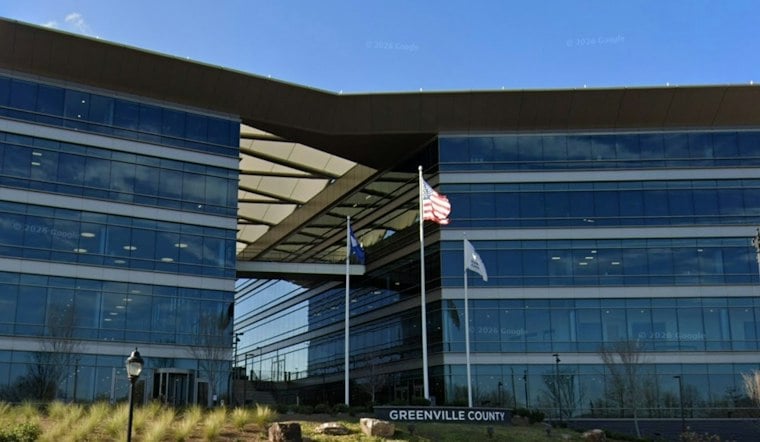
Greenville County has created a new zoning overlay that locks tighter development rules onto nearly 4,000 acres surrounding Paris Mountain, capping lot sizes and demanding wider green buffers for any major subdivision built in the watershed. The Mountain Creek Community Overlay District covers land near Wade Hampton Boulevard and Rutherford Road, along with much of the area near Paris Mountain and State Park Road, and it marks the end of a yearslong fight between residents and developers over how fast this corner of the county should grow.
According to FOX Carolina News, the district's rules include tighter regulations on minimum lot sizes, larger tree-buffer zones, and protections for tree canopies and streams, with the goal of keeping subdivisions in check while preserving green space. Draft ordinance documents submitted to county council under South Carolina Code § 6-29-720 spell out the specifics: a 50-foot undisturbed perimeter buffer, 100-foot riparian buffers along streams, and a requirement that at least half of any subdivided land be set aside as protected open space, according to Greenville County records. The same ordinance mandates that stormwater systems in the district be engineered to handle a 100-year storm event using Low Impact Development best management practices.
A Long Fight Over Fairways And Flooding
The push for stricter rules traces back to 2021, when the owner of the Pebble Creek Golf Club closed nine holes to make room for high-density residential subdivisions, setting off conflict with neighboring homeowners over density, traffic, and runoff, per The Post and Courier. Rapid growth and, later, flooding damage from Hurricane Helene pushed neighbors to keep demanding change, FOX Carolina News reported. Helene tore through Greenville County in late September 2024, and inside neighboring Paris Mountain State Park the storm washed away the amphitheater stage along Mountain Creek itself, forcing the park to close for a month, as Hoodline detailed in its coverage of the park's storm recovery.
County leaders initially considered a temporary fix. In September 2024, a county council committee rejected a resident-backed proposal for a nine-month development moratorium in Mountain Creek, opting instead to build consensus around a permanent zoning overlay, the Post and Courier reported at the time. That decision set the stage for the overlay ordinance that just passed, which Greenville County designed to align with Objective D-2 of Plan Greenville County, the county's 2020 Comprehensive Plan emphasizing preserved open space and natural habitat amid population growth.
Brenda Buchik, who supported the ordinance, said the district will benefit people living in the watershed area, per FOX Carolina News. She said the overlay is intended to provide more natural means to manage stormwater and more open space — and stressed that it is not meant to stop development altogether, the station reported.
Preserving A World War I Training Ground
Beyond stormwater and lot sizes, the overlay also carries historic preservation mandates for sites inside its boundary, including Camp Sevier, a World War I U.S. Army training camp established in 1917 where more than 100,000 soldiers trained, according to the Post and Courier. The camp originally spanned roughly 1,900 to 2,000 acres at the base of Paris Mountain, placing a significant chunk of that historic footprint inside the new district's protections.
County planning maps put the Mountain Creek study area at 3,941 acres, or about 6.88 square miles, stretching east of Paris Mountain State Park, north of Rutherford Road, and south of Reid School Road — an area that mixes established suburban neighborhoods with environmentally sensitive terrain, per Greenville County planning documents. The new district's rules apply specifically to new major subdivisions proposed within that footprint going forward.
Part Of A Countywide Shift On Growth
The Mountain Creek overlay does not stand alone. In July and August 2025, Greenville County Council enacted a 12-month countywide moratorium on new cluster residential developments so officials could overhaul open space and stormwater regulations, after county officials raised concerns that previous cluster development rules had allowed retention ponds to count toward required open space. Together, the moratorium and the new overlay reflect a broader shift in how Greenville County approaches growth near its most flood-prone and historically significant land.



