

























































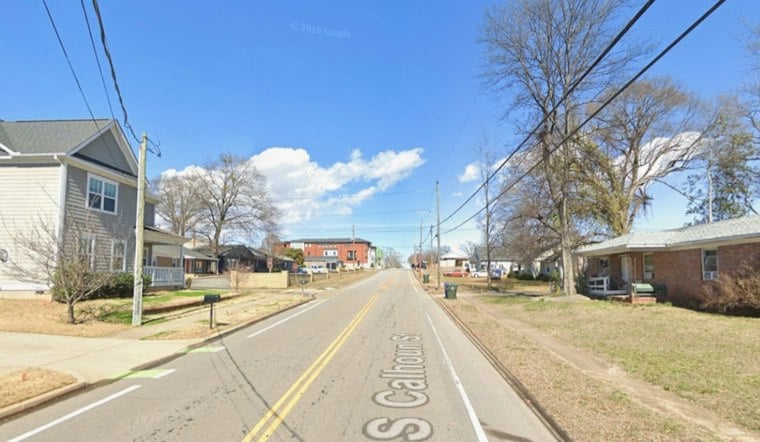
Greenville Housing Fund and The Sterling Land Trust have closed construction financing for a 10-home affordable rental development in the city's historic Sterling neighborhood, clearing the way for a groundbreaking ceremony set for November 5 at 11 a.m. The project, called The Huddle at Sterling, will rise on three parcels along Jenkins and South Calhoun streets, just off Dunbar Avenue.
The Huddle at Sterling has construction financing of $3.3 million, according to a release detailed by the Post and Courier. The homes will be arranged in five stacked duplexes and are described as a ground-up affordable rental joint venture between Greenville Housing Fund and The Sterling Land Trust. The station reports the homes are intended for individuals earning 60% to 80% of area median income, though a separate account from Greenville Housing Fund's own annual meeting coverage put the eligibility range at 30% to 100% of area median income — a discrepancy the available records don't resolve.
That same tension shows up in the project's price tag. The Post and Courier's reporting lists $3.3 million in construction financing, while the Greenville Journal described The Huddle at Sterling as a $2.6 million project during Greenville Housing Fund's annual meeting. Neither account clarifies whether the two figures represent different stages of the deal or overlapping totals.
A Land Trust Built to Keep Land in Sterling
Sterling Land Trust already owns the land beneath the project and will remain the landowner once construction wraps, continuing to strengthen the Sterling community by stewarding the property in perpetuity. Bon Secours St. Francis Health System supported the original land purchase through an initial pre-development grant, according to the seed reporting. Rental proceeds generated by the homes will be reinvested in community programming, and Greenville Housing Fund has separately said that 50% of net cash flow from the project will be shared with the land trust, according to the nonprofit's own account of a meeting update posted earlier this year.
Deborah McKetty, president and CEO of Greenville Housing Fund, said the neighborhood's greatest need was long-term affordable rental housing — a need the project is designed to meet directly with its 10 rental homes. The Bank of America Charitable Foundation awarded a $250,000 grant for the project in 2025, with the foundation saying the commitment underscores Bank of America's commitment to strengthening Greenville communities through affordable housing initiatives. The Huddle at Sterling will also accept tenant-based vouchers, widening the pool of renters who can qualify.
Waitlist Interest Already Building
As of March, Greenville Housing Fund and The Sterling Land Trust were expecting to close on construction financing that spring, and people interested in the homes were encouraged to contact Sterling Land Trust through its website to join the wait list. The land trust separately describes an active campaign to add three duplex-style homes near downtown Greenville, with plans for two- and three-bedroom units costing approximately $1.3 million, according to the land trust's own posting.
Why Greenville Keeps Chasing Rental Supply
The Huddle at Sterling adds to a short but growing list of projects Greenville Housing Fund has pushed through in the past two years. The nonprofit opened two new affordable housing complexes in 2025 and broke ground that same year on Southernside East, a $24.5 million senior affordable housing project near Unity Park, according to the Greenville Journal's reporting.
The need those projects are chasing is well documented. A 2018 study from the Greenville County Redevelopment Authority found a shortage of 9,432 housing units affordable to county households earning less than $25,000 a year, excluding the City of Greenville, with 8,505 of that gap concentrated in low-cost rentals. The same study estimated that 44,063 Greenville County households, or 24.1% of the county, earned under $25,000 annually as of 2016, when median monthly rent stood at $798 countywide.
Population growth is projected to deepen that pressure. Greenville County is expected to add 222,000 people by 2040, according to WYFF 4, and nearby West Greenville has already seen average home prices climb nearly 25% in a single year, pushing the median price to $509,000. Greenville County Council Chairman Pro-Tem Butch Kirven has pointed to the economics behind the shortfall, telling the station, “Nobody's building for profit in the affordable housing range. So, we have a shortage.” The city has responded by setting aside land for affordable housing developments while the county offers tax incentives to apartment complexes that reserve units for lower-income residents.



