

























































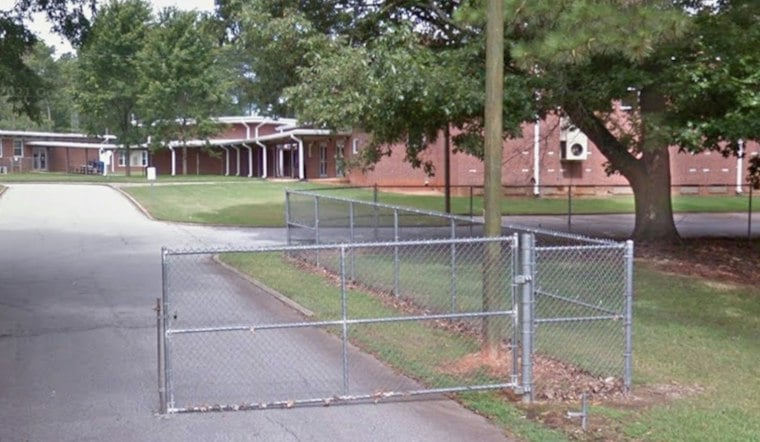
Greenwood School District 50 held its final town hall Monday evening before voters decide the fate of a $175 million bond referendum, with district officials warning that waiting on the projects could ultimately cost $100 million more. The session ran from 6 p.m. at the Genesis Education Center, giving residents one last chance to ask questions before the November 3 vote.
The referendum, as reported by WYFF, would let the district issue up to $175 million in general obligation bonds. According to the Greenwood School District 50 website, the money is meant to fund significant facility improvements and capital projects across the district, and the district says the funding cannot be used for salaries or daily operating expenses — only for facility improvements.
Superintendent Shane Goodwin said the timing gives the district an opportunity to complete the projects without a tax increase, per WYFF's reporting. He pointed to the financial math behind that claim: some existing bonds date from the 2000s, according to the Index-Journal.
Why Officials Say Delay Gets Expensive
Goodwin said waiting for those existing obligations to clear before starting new construction could make the projects cost $100 million more, according to WYFF's report. That warning lines up with district figures reported elsewhere: construction costs are rising 5% to 7% a year, the Index-Journal reported, a pace that compounds quickly on a facilities plan this large.
The district's debt-service millage currently brings in about $16 million a year, with roughly $9 million to $10 million of that going toward existing debt, per Here Greenwood. The district says its projections show the bond fitting within existing revenue without requiring a tax increase.
What the Bond Would Actually Build
The proposal's centerpiece is new construction: a new Benjamin E. Mays Elementary School and a new combined Lakeview-Pinecrest Elementary School, according to the district's own bond page. Rice Elementary and Hodges Elementary would see significant renovations and additions, and WYFF's reporting adds that the plan also includes a new administrative building, stage lighting at the Greenwood Performing Arts Center, modern classroom enhancements and new activity buses.
Other preliminary concepts floated during the district's planning process include a district services site and renovations at Greenwood High, along with districtwide needs like athletic turf, field lighting, classroom furniture, HVAC upgrades and cafeteria expansion, the Index-Journal reported. Project planning and design are already underway, and the district says renderings of the proposed projects are available for residents to view.
Cost estimates for the overall package have varied across reporting on the plan. The Index-Journal reported a $175 million ceiling and quoted Macke saying the district would strive to reduce the amount borrowed to $160 million if it could design the projects to fit that amount, while a separate town-hall account put new construction and renovation costs at about $155 million with an additional $20 million earmarked for districtwide needs — figures that sit alongside the $175 million bond authorization the district is formally asking voters to approve.
Timeline and Who Gets to Vote
If voters approve the measure, planning and design work already underway would move toward construction beginning in 2027, with the work expected to wrap up during the 2028-2029 school year, according to Here Greenwood. New school construction is projected to take about 18 months, while renovation projects may run somewhat longer, the Index-Journal reported.
Anyone who lives within Greenwood School District 50's boundaries is eligible to cast a ballot on the referendum, and polls will be open from 7 a.m. to 7 p.m. on Election Day, per the district's bond page. The district says it has posted additional information and a sample ballot question online for residents who want to review the exact wording before heading to the polls.
Bond referendums like this one are a standard tool nationally: they let school districts seek voter authorization to borrow for major construction and renovation projects, with proceeds generally reserved for long-lived capital assets rather than daily operations, according to American School & University. That same reporting notes that voter approval authorizes debt up to a stated amount but doesn't mean every dollar gets borrowed immediately or that every project begins the moment the election is certified — a distinction that could matter for how quickly Greenwood's plans move forward if the referendum passes.





