

























































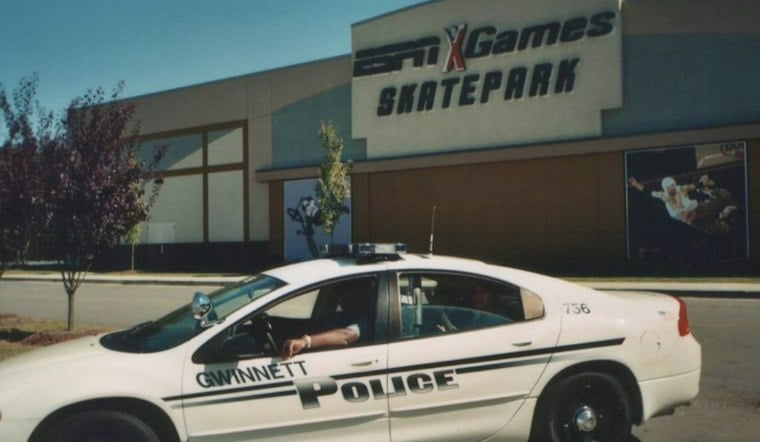
Gwinnett County Police Chief J.D. McClure is asking commissioners for more money to expand the department's Behavioral Health Unit, telling officials that hundreds of mental-health crisis calls come in when no clinician is on duty to respond. The request centers on hiring two additional contract clinicians to extend coverage hours for the unit, which pairs officers with licensed mental-health professionals on crisis calls.
According to the seed report from WSB-TV, McClure requested the two clinicians to expand coverage of the county's Behavioral Health Unit, which currently operates until 11 p.m. Per McClure, the unit identified more than 250 crisis calls in 2025 that came in during hours when a team could have responded had one been on duty. The chief told officials that officers previously had few tools for addressing mental-health crises on their own, and he has said plainly that mental-health issues cannot be solved through arrests.
What the Expansion Would Look Like
Per the same seed report, the two additional contract clinicians would cost about $126,000, and the expanded coverage would create nine behavioral-health teams working until 2 a.m. Later hours, officials say, would help first responders handling psychiatric and suicide calls, since co-responder teams can take over responsibility for evaluation and transportation once they arrive on scene, freeing up fire and emergency crews to return to service. The budget hearing where the request was raised ended with no decision, and Gwinnett County Commission Chair Nicole Love Hendrickson is set to present her proposed budget in November, with commissioners required to adopt a final budget in January and expected to decide on the expanded resources by 2027.
The nine-team figure attributed to the 2026 request marks a jump from staffing levels described in earlier county accounts. Gwinnett County said the Behavioral Health Unit was fully staffed with six teams and a program coordinator as of June 2024, pairing a licensed clinician with an officer at each police precinct. A separate account from WSB Radio reported that a $714,000 allocation would support seven fully staffed teams. The dossier does not reconcile these figures, so the exact current staffing level and budget tied to the 2026 request remain unclear.
A Program That Started With One Team
Gwinnett's co-responder model began in 2021 as a one-team pilot, according to the Gwinnett County government, which says the unit answered more than 160 mental-health crisis calls in that initial run. By 2023, the unit had grown to handle 4,800 total calls, including 2,650 crisis calls, and reported a 98 percent jail-diversion rate that year. County officials say the unit now handles an average of 15 to 20 calls daily, or roughly 300 calls a month, under the $714,000 contract extension approved in June 2024.
Per McClure, the same core purpose has guided the unit since its founding: keeping mental-health crises from turning violent, with teams credited with helping people avoid arrest. Gwinnett's co-responder teams currently alternate 8 a.m. and 11 p.m. shifts seven days a week, according to WABE, which also noted that a 2019 study found crisis-intervention teams expanded access to mental-health services but failed at one of their fundamental goals: deescalating and reducing violence.
Similar Efforts Spreading Across Metro Atlanta
Gwinnett isn't alone in leaning on co-responder models. WABE reports that Cobb, DeKalb, Forsyth and Athens-Clarke counties have built similar partnerships pairing police with mental-health professionals, and nearby Lawrenceville marked the first anniversary of its own Project F.I.R.S.T. co-responder program, according to the Gwinnett Daily Post.
Fulton County launched its own pilot in May 2026, pairing sheriff's deputies with licensed behavioral-health clinicians, according to Atlanta News First. That program, which currently covers five cities in South Fulton with hopes of expanding countywide, aims to connect people in crisis to treatment and divert them from the Fulton County Jail. In its first four months, the station reports the unit answered more than 500 calls and connected over 100 people to supportive resources and treatment services.
Back in Gwinnett, the fate of McClure's request now rests with the county budget process. Commissioners will weigh the chief's case against competing priorities when Hendrickson unveils her proposed budget in November, with a final vote required by January and a decision on the expanded behavioral-health resources expected by 2027.





