

























































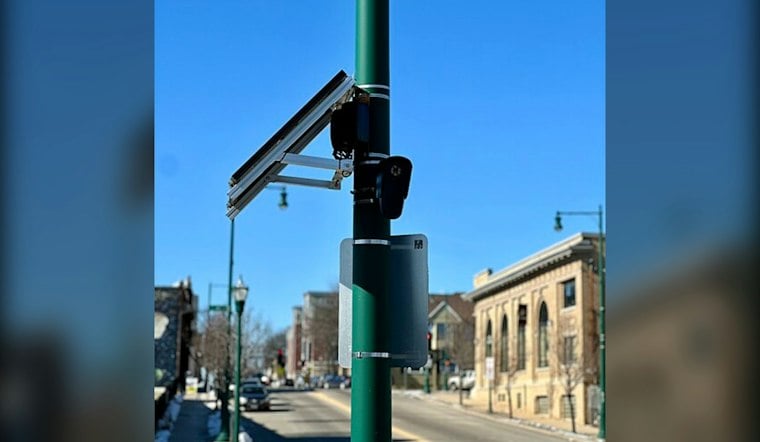
The Hamilton County Sheriff's Office has fully terminated its Flock license-plate reader program, shutting down all 75 cameras that made it the largest user of the technology in the Tri-State. Sheriff Charmaine McGuffey had initially paused the system in September while her office reviewed how the cameras' data was being accessed and shared, but that pause is now permanent.
“The Flock program is now fully terminated,” according to WLWT, which reported that the sheriff's office counted 75 total Flock cameras spread across the county and its townships. McGuffey said the technology had been useful for investigators, but added that residents raised fair concerns about how it was being used, the station reported. As WKRC reported, the sheriff's office said it would only use tools that meet its standards for privacy, transparency and full local control over sensitive information going forward.
McGuffey has been clear that no Hamilton County deputies misused the technology. “None of our deputies misused this technology,” she said, per the station's earlier report on the initial pause. Still, she had been pressing for answers about where vehicle data picked up by the cameras goes, who can access it and what safeguards prevent misuse, according to Axios.
Cameras Credited With Finding a Missing Girl and a Lost Dementia Patient
The decision to shut down the program is not a rejection of what the cameras could do. McGuffey has previously said Flock technology helped investigators track a vehicle carrying a missing girl, who had been taken out of state by an adult, all the way to Tennessee. She also credited the cameras with helping locate an older woman with dementia who had driven off and was missing for almost a day, the station's earlier report noted.
Hamilton County began building out its Flock network in 2022, starting with 25 grant-funded cameras before expanding to the full 75-camera system. The station's report pegged the annual cost of running the full network at roughly $225,000, based on an estimated $3,000 per camera per year — a bill the county will no longer pay now that the program is dead.
A Regional Retreat From License-Plate Surveillance
Hamilton County is far from alone. Newport, Independence, Fort Mitchell, Erlanger, Fort Thomas, Edgewood, Pierce Township and Oxford all announced an end to their Flock camera programs over the summer, the same report noted. Florence, Monroe, Dayton and Columbus have also ended their use of Flock cameras. Oxford's city council voted 6-1 to terminate its contract amid privacy and data-sharing concerns, Axios reported, while Monroe's city council voted to shut down its own Flock Safety system, according to WCPO.
Columbus's retreat came with its own red flag: the city paused its Flock system while investigating an officer's potential misuse, the earlier WLWT report said. Axios has also reported that two officers in Reynoldsburg, Ohio, have faced investigations over alleged misuse of Flock data, part of a pattern the outlet says is playing out nationwide. More broadly, Axios found that at least seven other Greater Cincinnati communities have ended or moved away from Flock programs amid growing public concern and perceived risk of abuse — even as an analysis of public records from more than 100 area police departments found more than 1,100 license plate readers still deployed across Greater Cincinnati.
Flock Responds With New Privacy Rules as Scrutiny Grows Statewide
Flock itself has responded to the backlash with policy changes, including reducing its recommended default data-retention period from 30 days to seven and making misuse detection mandatory for every customer, according to the earlier WLWT report. Those changes come as scrutiny of the technology spreads across Ohio. In central Ohio, the Columbus Division of Police had 38 Flock cameras under a contract that started in December 2024 and was set to run through the end of 2026, while 15 Franklin County police departments held contracts for 319 Flock Safety cameras worth nearly $2 million combined, according to WOSU.
Part of what makes the debate so fraught is how little the public can actually see. Ohio law specifically excludes images and data captured by automated license plate recognition systems and maintained in law-enforcement databases from the definition of a public record, according to Cleveland.com. The relevant section of the Ohio Revised Code separately defines “personal information” to include government-issued identification numbers, dates of birth, addresses, financial information or criminal justice information pulled from law-enforcement databases.





