

























































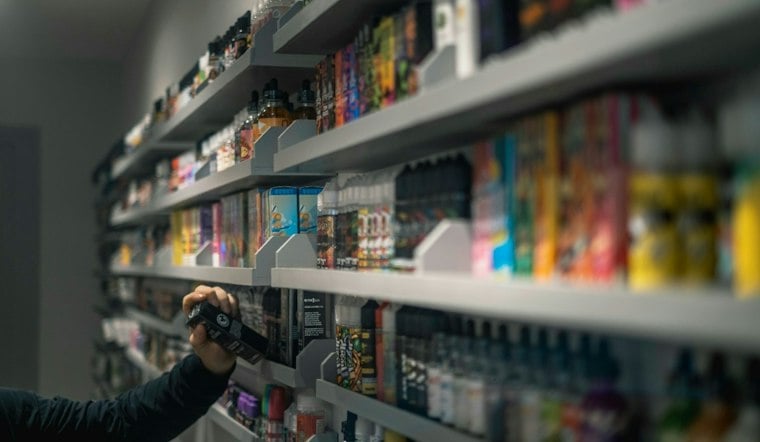
Hampton city leaders say the rules they put in place this year to rein in vape shops aren't working, and now the city wants state lawmakers to hand over more authority to finish the job. More than two dozen vape shops currently operate in Hampton, and officials say some are slipping past the city's restrictions by rebranding themselves as ordinary convenience stores selling tobacco products.
Hampton City Council voted unanimously on Wednesday to approve the final version of the city's legislative request, a package that includes a push for more control over tobacco and vape retailers, according to The Virginian-Pilot. The request comes less than a year after Hampton adopted its own local restrictions on where the shops can operate, restrictions that officials now admit have loopholes.
Hampton is asking state lawmakers for more authority over tobacco and vape retailers.
How Shops Are Getting Around the Rules
In January, Hampton limited vape shop hours to 9 a.m. to 8 p.m. and required tobacco or hemp shops to sit at least 1,000 feet from a school or child day care center. The ordinance also set a distance requirement between shops, though accounts of the exact buffer differ — the Pilot reported it as a half mile, while citizenportal.ai described the planning commission's buffer as one mile, adopted after public comment. Existing shops were grandfathered in, with the rules applying to new stores and to any shop that ceases operating for at least two years.
Bunting said some stores are getting around the distance restrictions because they present themselves as convenience stores rather than vape shops. Mayor Jimmy Gray and resident Aaron Weaver have raised concerns about vape-shop growth.
One example cited in reporting on the issue is Payless Tobacco Plus, located off Settlers Landing Road in Hampton. Hampton's city map showed a large cluster of vape shops along Mercury Boulevard when the January rules were adopted, per the Pilot's earlier coverage. For comparison, Newport News requires a 2,000-foot buffer between vape shops and schools or day cares, while Norfolk requires a specific use permit for vape shops.
Cannabis Rules Taking Shape Before Retail Sales Begin
Hampton is preparing for Virginia's retail cannabis market, which is set to launch on July 1, 2027. The state will oversee licensing for cannabis businesses.
Hampton has also considered zoning for medical cannabis. State rules will govern licensing for cannabis retailers.
A Statewide Pattern in Neighboring Localities
Hampton isn't alone in trying to get ahead of cannabis retail before it arrives. Hanover County's board of supervisors has advanced a proposed ordinance requiring marijuana-related businesses to sit at least a mile from other cannabis businesses, hospitals, schools, day care centers and public parks, according to WRIC. Hanover's proposal would also limit marijuana retail stores to operating 9 a.m. to 5 p.m. Monday through Friday.
Henrico County's proposed ordinance instead calls for a 1,000-foot buffer and would require marijuana-related businesses to have a county-approved crime prevention and security plan. Both counties' proposals would require cannabis-related businesses to obtain a conditional use permit involving additional county approval and public review. Localities statewide retain discretion over zoning, local tax rates, operating hours and the distance required between businesses, even though the state will oversee most regulations, including issuing licenses, once the marketplace launches.
The vape shop issue has also drawn state-level attention. Virginia Attorney General Jay Jones announced a Regulated Products Enforcement Unit to oversee vaping products, hemp-derived intoxicants, THC and kratom, according to Virginia Mercury. The outlet reported that the Virginia Department of Agriculture and Consumer Services found violations at 82% of the retailers it inspected in 2024. Separately, Virginia now requires a Retail Tobacco Permit to sell retail tobacco, vapor and nicotine products as of Oct. 1, according to Virginia ABC.
For now, Hampton's approach is a two-track effort: tightening what counts as a convenience store to close the loophole vape retailers have exploited, while trying to get zoning and permitting rules in place before cannabis sales begin next year. Whether the state grants Hampton's request for more authority over tobacco and vape retailers remains to be seen.





