

























































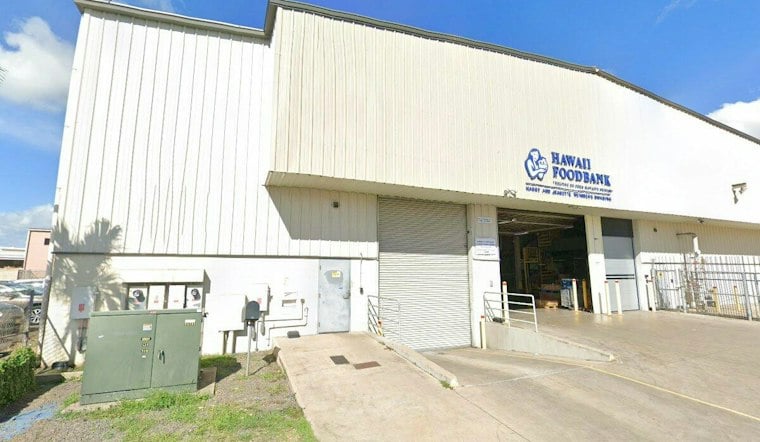
Hawaiʻi Foodbank is giving away free, shelf-stable emergency meal packs to Honolulu households Sunday, part of a push to get more families stocked up before the next disaster knocks out power or shuts down stores. The drive-through distribution runs from 8 a.m. to 10:30 a.m. at 2611 Kilihau Street in Māpunapuna, and there's no cap on how many cases a single household can take home.
The giveaway is meant to help residents build up emergency food supplies ahead of disasters that disrupt essential services, according to Hawaii News Now. The meals being handed out are called Survivor Daily Rations, or SDRs — shelf-stable, ready-to-eat pouches that require no cooking or refrigeration, according to KITV. Each individual pouch packs roughly 2,200 calories, enough to sustain one adult for 24 hours, and the vegetarian meals typically include two entrées plus items like crackers or flatbread, spreads, snacks and beverages, the station reports.
That timing isn't an accident. Hurricane Lowell left residents on Kauaʻi and Oʻahu without power for extended stretches, making it impossible to refrigerate or cook food, per Hawaii News Now. Commercial retailers also lost power, which further cut off access to food and water supplies for shoppers who might otherwise have restocked at a grocery store.
How the Drive-Through Works
Each case contains 10 individual ration packs, and the station's report notes Hawaiʻi Foodbank recommends households pick up at least one case per family member. There's no limit on the number of cases a household can receive, but the event is drive-through only — walk-up participants are not being accepted at this time, and anyone without a vehicle for pickup won't be served.
Advance registration through Eventbrite is required, and the same account notes each participating household needs its own separate QR code. Anyone picking up cases on behalf of multiple households must present a distinct code for each one. Registration links are available through Hawaiʻi Foodbank's Instagram and Facebook accounts, or at hawaiifoodbank.org by clicking the red emergency help button and then the Eventbrite link on the emergency assistance and resources page.
A Lead Role in Oʻahu's Emergency Feeding Network
Hawaiʻi Foodbank serves as the City and County of Honolulu's lead agency for emergency feeding on Oʻahu, according to its Disaster Response Program page, which also notes the organization launched its formal Disaster Planning and Response Program in 2023. That infrastructure has been put to heavy use this year: on Oʻahu alone, the Foodbank distributed 4.4 million pounds of food in August and September, as reported by Aloha State Daily.
The surge wasn't limited to Oʻahu. The outlet reports that food banks across the islands significantly increased distributions following Hurricanes Lala, Lowell and Nolo and Tropical Storm Moke. On Hawaiʻi Island, the Food Basket distributed nearly a million pounds of food in August, with its emergency response to Hurricane Lala reaching more than 30,000 people. Maui Food Bank moved more than 600,000 pounds of food per month across Maui, Molokaʻi and Lānaʻi in July, August and September, while ʻElepaio Social Services distributed about 337,000 pounds to more than 2,900 households across seven emergency distributions after Lala and Lowell.
Why Stockpiling Matters in Hawaiʻi
Part of the urgency comes down to geography. Hawaiʻi Foodbank has said it can take one to three weeks for food to reach the islands from the Mainland, depending on the source, per Aloha State Daily — a lag that turns ordinary supply disruptions into longer emergencies than residents elsewhere might face.
Yet most households aren't ready for that gap. A peer-reviewed study that surveyed 1,006 households across all the Hawaiian islands found only 12% met the state's recommended levels of emergency stockpiling for food, water and essential medicine, according to the University of Hawaiʻi. Researchers identified a gap between how prepared residents believed themselves to be and their actual stockpiling behavior. The state's own guidance calls for one gallon of water per person per day — 14 gallons per person for two weeks — according to the Hawaiʻi Emergency Management Agency.
The stakes were on vivid display after Hurricane Lowell skirted along the state’s western edge in September. Officials expected the storm's overall damage to Hawaiʻi's infrastructure, businesses and homes to be the worst from any storm since Hurricane Iniki, according to NBC News. That kind of disruption is exactly what the Survivor Daily Ration program was built for: it's a Defense Logistics Agency design, and each case contains 10 individual meal pouches. Feeding disaster survivors ranks among FEMA's core response capabilities and is typically one of the first resources requested at the onset of a disaster, per the U.S. Department of War.





