

























































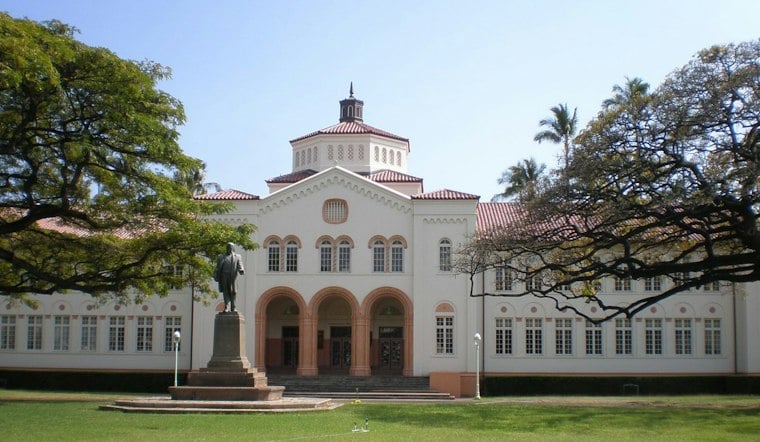
Hawaii taxpayers must pay $14,167,354 in damages plus 10% interest after the Hawaiʻi Supreme Court ruled the state bears full responsibility for the sexual abuse of a cognitively disabled student at McKinley High School, ending a legal battle that stretched on for well over a decade. The court held that school personnel knew the student, identified in court records as Amy, had significant cognitive disabilities and was vulnerable to exploitation, received repeated warning signs of abuse, and still failed to take reasonable preventive measures.
As reported by Hawaii News Now, the ruling closes out what the outlet describes as a 15-year legal battle between the state and Amy's family. Amy, now 32, had an IQ of 40 and the thinking ability of a five-year-old, according to court documents cited by the station, yet McKinley High School placed her in regular education classrooms. Family attorneys say at least a dozen boys sexually abused her over the years. The case formally began when abuse against Amy started at age 14, and she and her mother filed their original civil complaint in 2013, when Amy was 17, according to Honolulu Civil Beat, putting the span from filing to final judgment at 13 years.
Warnings Documented Years Before the Lawsuit
Court filings from January 2013 show that after a male student openly demanded in a classroom on January 4, 2011, that Amy meet him in a bathroom to perform a sexual act, McKinley High School administrators responded by suspending Amy rather than taking protective action, per Courthouse News Service. The outlet also reported that a required state education report written by Amy's special education teacher had explicitly noted that while Amy was pleasant, his “only concern I have is for peers not to take advantage of her” — documented staff awareness of her vulnerability years before the abuse spread. Attorney Susan Dorsey, who represents Amy, said Amy complied with what boys told her to do, and that more boys approached her as information spread among students, Hawaii News Now reports.
Amy's mother, Randi, who raised her daughter on her own, learned Amy had been hurt after her daughter told her a boy had hurt her. Amy was later hospitalized for three months following what Dorsey described as a catastrophic psychotic breakdown, and Randi said Amy wanted to end her life because of what had happened to her, according to the same station report. Dorsey and attorney Eric Ferrer took on Amy's case in 2011; Amy was later questioned under oath in depositions demanded by the attorney general, sitting for them in her early 20s while holding a stuffed monkey for comfort, the outlet reported.
How the Damages Broke Down
The $14.2 million total includes $7.9 million for Amy's future care and treatment, $4 million in general non-economic damages for Amy, and $200,000 for her past medical expenses, Civil Beat reported. The ruling also affirmed $2 million in general damages for Randi and $270,000 for her medical costs, with the court noting that few events are more distressing to a parent than the severe abuse of a child, per the same account. Attorneys for the family criticized state officials for prolonging litigation despite what they described as clear early evidence of liability, the outlet reported.
A Due Process Fight Over Who Pays
At trial, Judge Jeff Crabtree found the Department of Education negligent but ruled that the boys involved were responsible for one-third of the damages, shifting that share away from the state. Both sides appealed his ruling, according to Hawaii News Now. The Hawaiʻi Supreme Court found that Crabtree had violated the plaintiffs' constitutional due process rights by reducing the state's liability by 30% on his own initiative, without giving the family notice or a chance to be heard, according to Justia Law.
The high court went further, establishing that apportioning fault to non-party tortfeasors under Hawaiʻi Revised Statutes section 663-10.5 is an affirmative defense that the state must formally plead and prove — something it had not done at trial, where it instead pursued an unsuccessful claim of maternal negligence, per Justia Law. That procedural ruling means state agencies can no longer expect courts to shift blame onto absent third parties unless they raise and prove that defense themselves, setting precedent for future institutional liability cases. The Attorney General's Office said it is reviewing the implications of the ruling but declined to answer additional questions, Hawaii News Now reported. Randi said she was thankful for the ruling, according to the station.
Part of a Broader Pattern in Hawaii Schools
This case adds to a running list of costly abuse liabilities for Hawaii's public schools. In 2013, the state agreed to a $5.75 million class-action settlement over student-on-student sexual abuse at the Hawaii School for the Deaf and Blind, which legal observers at the time called the largest known settlement of its kind nationwide, according to Education Week. Separately, Honolulu's private Kamehameha Schools agreed in February 2018 to an $80 million settlement with 32 former students abused by a school psychiatrist between 1958 and 1985, one of the largest institutional abuse settlements in state history, per the Washington Post.
McKinley High School itself faced another negligence lawsuit in November 2022, alleging a ninth-grade student was assaulted in an unlocked, unmonitored campus restroom in February 2021 after administrators failed to follow lockdown protocols despite being notified a student was carrying a concealed airsoft gun, according to Heartlander News. And just months ago, as Hoodline reported, state lawmakers considered a $400,000 settlement over a 1979 Campbell High School rape case revived under a statutory look-back window for adult survivors. Whether the Department of Education will now pursue structural oversight changes at McKinley High following this latest ruling remains an open question.




