

























































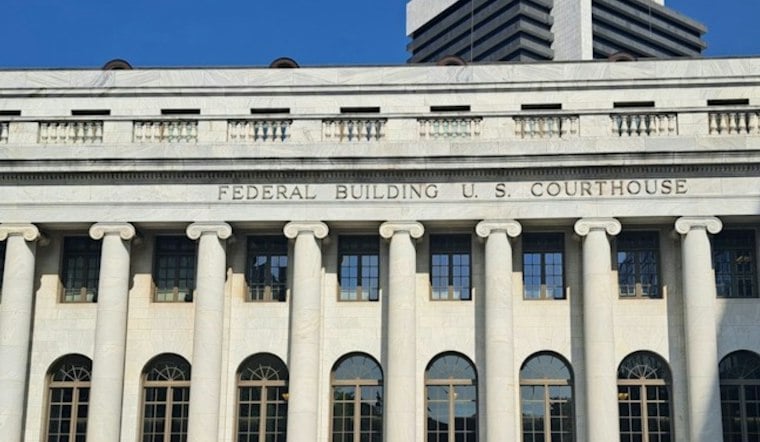
Dozens of people gathered outside Honolulu’s Prince Kuhio Federal Building on Friday, October 30, urging Hawaii’s congressional delegation to oppose two federal measures that could sharply limit climate-liability lawsuits against fossil-fuel companies. The rally, organized by the Sierra Club of Hawaii, put a local dispute over legal accountability in the context of cases already moving through Hawaii’s courts. Hawaii News Now reported that Adele Balderston of the Hawaii Alliance for Progressive Action delivered Rep. Jill Tokuda a letter opposing the bills, signed by 55 local organizations.
What the bills could mean for Hawaii cases
The measures, H.R. 8330 and S. 4340, are known as the Stop Climate Shakedowns Act. Hawaii News Now reported that the proposals would bar certain climate-liability claims against companies across the fossil-fuel supply chain, require dismissal of pending qualifying cases, and preempt some state energy-penalty laws. Those provisions could affect lawsuits alleging that fossil-fuel companies misled the public about climate risks. The bills’ prospects remain unclear; the rally’s organizers asked the delegation to keep Hawaii’s legal options open.
Hawaii’s court record shows why the distinction between a case proceeding and a company being found liable matters. In 2023, the Hawai‘i Supreme Court affirmed the denial of motions to dismiss in a separate case brought by Honolulu and the Honolulu Board of Water Supply. That allowed the claims to proceed; it did not decide whether the companies were liable, according to the court opinion. The state has also filed its own case, alleging deceptive conduct and failure to warn, the Hawai‘i Department of the Attorney General says.
A separate federal lawsuit seeking to block Hawaii’s state case was dismissed with prejudice on April 15, 2026, and the state case would proceed in state court, according to a later Attorney General’s Office release. That ruling concerned the attempt to block the state case; it was not a decision on the merits of the state’s allegations or on the proposed congressional bills.
Documented exposure is not a ruling on causation
The state’s hazard planning provides further context for the debate, but does not establish liability in any lawsuit. Hawai‘i’s 2023 State Hazard Mitigation Plan, citing NOAA data, reports that temperatures across the islands rose by about 2°F since 1950. It also lists 13 square miles—2.2% of Honolulu’s total area—in the plan’s 3.2-foot sea-level-rise exposure area. These are a reported temperature trend and a mapped exposure measure; by themselves, they do not show that climate change caused a particular wildfire, flood or drought. The state plan sets out those figures.
At the rally, participants argued that companies should face claims over alleged deception and help pay for climate-related costs, while critics of the bills warned that broad immunity could close off a route to accountability. The dispute now spans two arenas: Hawaii’s lawsuits, where allegations remain to be adjudicated, and Congress, where the measures’ future is uncertain. Hawaii News Now reported the bills’ sponsors as Sen. Ted Cruz and Rep. Harriet Hageman; Just The News reported Hageman’s argument that the legislation would prevent what she calls a climate shakedown. Neither that characterization nor the protesters’ claims is a judicial finding.





