

























































Beneath Sushi Sato in Lower Nob Hill, behind a door with no sign, a brewer is turning cardamom, molasses and cocoa nibs into beer that's quietly landing on taps from Fremont to Glen Ellen. 28 States Brewing makes more than a dozen beers built around the fruits and spices of owner Nitesh Kamboj's native India, and after a stretch of fast growth, the small operation is weighing its next move: a taproom of its own.
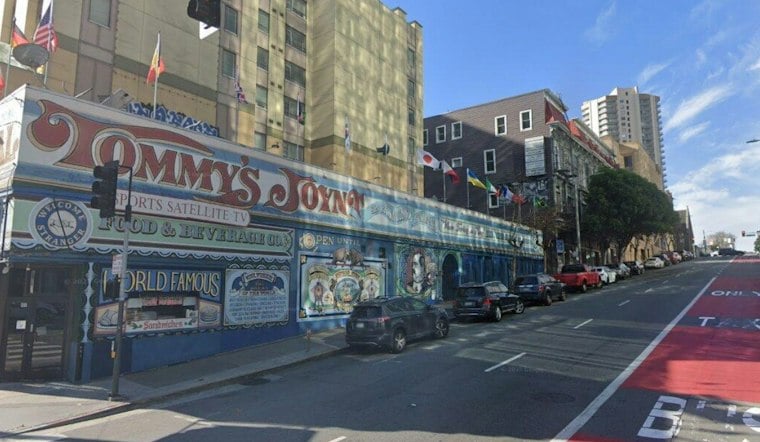
The brewery operates out of an unmarked basement beneath Sushi Sato, according to The San Francisco Standard, which reported on the operation. Kamboj runs it with sales partner Jordan Siskin, and together they've built a client list that includes Amsterdam Cafe, longtime North Beach dive Columbus Cafe, the classic hofbrau Tommy's Joynt, and East Bay Spice Company in Berkeley. For now, the Standard describes it as a wholesale-only operation, though a Yelp listing for the business states that it currently runs as a Monday pop-up at a shared brewpub — a discrepancy that points to a business model still in flux.
Cardamom Sours and Molasses Stouts
The beer list reads like a spice rack. The Mango Elaichi Sour leans on cardamom, while the Tandoori Stout is built around molasses, per the Standard's reporting. Desi Gaijin is a crisp rice lager finished with lemongrass notes, and the Haryana Weizen — a Bavarian-style hefeweizen named for a wheat-growing state in northern India — gets its clove and banana character from open fermentation rather than added spices.
The brewery's breakout hit, though, skips the spice rack almost entirely. Koko Singh, a Vienna-style lager brewed with cocoa nibs and vanilla beans sourced from Ecuador, quickly became the best seller at just 5.5% ABV. Kamboj told the Standard that the beer is approachable and goes with any kind of weather, a description that fits a broader pattern at 28 States Brewing, where most offerings stay on the lower end of the alcohol scale.
Indian Ingredients, Classic Styles
The brewery's lineup includes sours, stouts, lagers and wheat beers, with Indian spices and ingredients folded into familiar styles.
The Brewers Association reported that U.S. craft beer production fell 4% in 2025 to 22,034,000 barrels even as craft's share of the overall beer market by volume ticked up from 13.2% to 13.4%. The number of operating U.S. craft breweries dropped 2.9% to 9,578, and new brewery openings fell sharply to 300 from 518 the year before, while closures also declined. The trade group noted that hospitality-driven models like brewpubs and taprooms held up comparatively well amid the shakeout — relevant context for a brewery weighing whether to open a public-facing space of its own.
From Pandemic Hobby to Whole Foods Shelves
Kamboj's path into brewing started during the pandemic, according to the Standard's reporting, and has since scaled into something with real commercial traction. A 2025 collaboration with Bernal Heights' Barebottle Brewing secured distribution at Whole Foods, a notable jump for a brewery still working out of a basement. Barebottle itself was co-founded by Lester Koga, Michael Seitz and Ben Sterling as a crowd-inspired San Francisco craft brewery.
28 States Brewing's annual production now sits around 270 barrels, following what the Standard describes as dramatic sales growth over the preceding four months. Siskin is Kamboj's sales partner. The two are now looking to open a taproom at some point, though no timeline, location details beyond the brewery's 1122 Post St. address, or public hours have been confirmed.
A Small Club of Indian-Owned Breweries
28 States Brewing belongs to a notably small group nationally. VinePair has reported that of the close to 9,000 craft breweries in North America, barely more than a handful are owned by people of Asian-Indian descent — among them Other Desi Beer Co., founded by Ravi Patel in Branford, Connecticut, in 2019.
Those numbers frame what's happening in the basement under Sushi Sato as part of a narrow but growing lane within American craft beer — one where recipes built on family kitchens rather than hop bills are starting to find shelf space at Whole Foods and taps at North Beach dive bars alike.





