

























































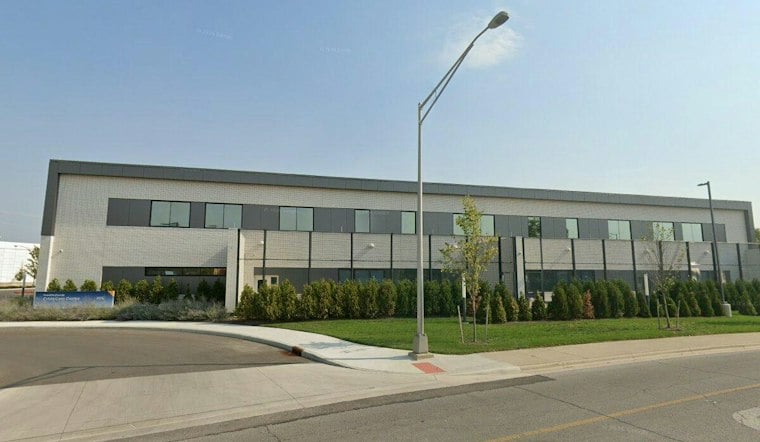
Foundations Group Recovery Centers Ohio has opened a new addiction and mental health treatment facility at 3499 Main Street in Hilliard, relocating from its former Upper Arlington location and expanding its footprint across the western Columbus suburbs. The facility opened its doors on Monday, October 19, with capacity to serve up to 150 clients and room for group programming, individual therapy, and medication management.
According to StreetInsider, the more than 12,000-square-foot facility holds a permanent license and will offer full-day and half-day mental health day treatment starting on opening day, alongside partial hospitalization and intensive outpatient levels of care. Those programs are designed for adults who need structured, clinically supported treatment while continuing to live at home. The company says its approach treats both substance use disorders and mental health conditions through individualized, evidence-based care, including medication-assisted treatment, aftercare planning, and family support, and the facility is accredited by the Joint Commission.
The Hilliard building itself has a long commercial history in the area. Constructed in 2004, the 11,891-square-foot property previously housed real estate offices, including HER Realtors, within the Heritage Lakes Planned Unit Development district, according to a LoopNet listing. The site sits along a major commercial corridor in western Franklin County, positioning the new center to draw clients from Dublin, Upper Arlington, Grove City, Powell, and Westerville, per the company's own description of the location's intended reach.
A National Provider Puts Down Roots in Central Ohio
Foundations Group Recovery Centers was founded in 2023 by CEO Mike Clancy, who also oversees the company's addiction and mental health day treatment programs in Mashpee on Cape Cod, Massachusetts, according to AddictionHelp.com. The Ohio operation is led locally by Keith Shaffer, director of marketing for Foundations Group Recovery Centers Ohio. The company accepts major private health insurance, Medicaid, Medicare, and TRICARE, and the same AddictionHelp.com profile notes specialized outpatient tracks for active-duty military personnel and adults between 26 and 64.
The public will get its first look at the new space during an open house on Wednesday, October 21, running from 2 p.m. to 7 p.m., with an official ribbon-cutting ceremony scheduled for 4:30 p.m., according to an Eventbrite listing for the event. The open house is billed as a chance for community members, referral partners, and healthcare and behavioral health professionals to tour the facility.
What Partial Hospitalization Actually Means
The programs Foundations Group is bringing to Hilliard carry specific regulatory weight in Ohio. Partial Hospitalization Programs are classified as Level 2.5 intensive care under Ohio Administrative Code and Ohio Department of Mental Health and Addiction Services rules, requiring five to six hours of structured clinical programming daily without overnight stays. That level of care functions as a step-down between 24-hour residential treatment and standard outpatient counseling, filling a gap many families encounter when a loved one leaves inpatient care but still needs more support than a weekly therapy appointment provides.
A County Where the Numbers Are Finally Moving in the Right Direction
The Hilliard opening lands at a moment when Franklin County's overdose numbers have shifted dramatically. Drug overdose deaths in the county dropped to 326 in 2025, down from 461 in 2024, 701 in 2023, and a peak above 800 in 2021, based on mortality data tracked by the ADAMH Board of Franklin County. Local deaths peaked during the COVID-19 pandemic before entering what the board describes as a multi-year decline.
Even as fatalities fall, demand for crisis-level mental health and addiction services has stayed high. The ADAMH Board reported in September that the 24/7 Franklin County Crisis Care Center logged more than 6,000 patient service presentations during its first year of operation after opening in September 2025. The center provides walk-in stabilization without requiring a pre-scheduled appointment, underscoring how many residents are still seeking help in moments of acute need.
That demand is playing out alongside financial strain at some of the county's longest-running providers. Hoodline reported in June that Maryhaven, which has operated inpatient and outpatient treatment in Central Ohio since the 1950s, faced financial turmoil that threatened county funding for safety-net addiction services. The county has also moved to expand lower-cost options: Franklin County Public Health launched a monthly naltrexone, or Vivitrol, injection program at its clinic in Union in March, aimed at helping residents leaving detox prevent relapse through medication that blocks opioid receptors and reduces cravings.
Regulators Tightening Scrutiny of Treatment Billing
The expansion also comes as state regulators ramp up oversight of addiction treatment billing practices. In September, the Ohio Attorney General indicted 18 healthcare providers in a $355,000 Medicaid fraud sweep that included a Columbus addiction center owner accused of inflating billing records over a seven-year span. That enforcement action reflects broader scrutiny state prosecutors are applying to behavioral health clinics across Central Ohio, a backdrop against which any new treatment provider now operates.
For Franklin County residents navigating that landscape, Foundations Group's Hilliard location adds another option for structured day treatment close to home, joining a patchwork of public and private efforts working to keep pace with ongoing demand even as the county's overdose death toll continues its multi-year retreat from pandemic-era highs.





