

























































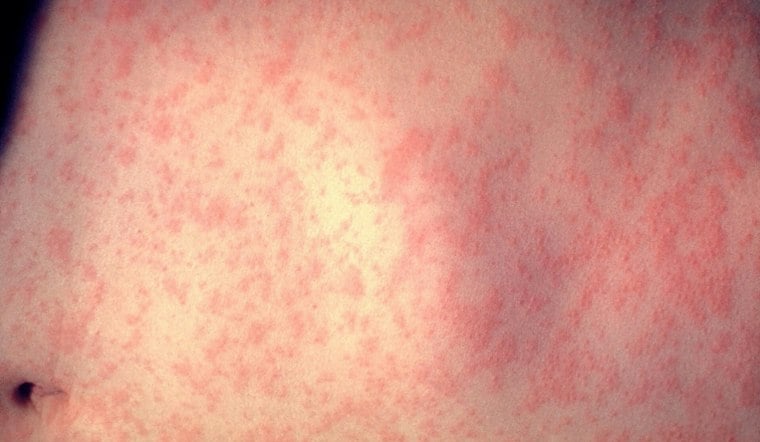
Measles is spreading across New York at a pace state officials haven't seen in years, and Governor Kathy Hochul has responded by declaring a State Disaster Emergency. New York City alone has confirmed seven measles cases so far this year, and state health officials say vaccination rates have slipped enough to leave communities vulnerable to outbreaks that used to be rare.
Governor's Order Targets Vaccination Gaps
Hochul declared the disaster emergency on Monday as measles cases continued to climb statewide, according to Spectrum News NY1. The declaration is meant to let healthcare professionals take additional steps to get more New Yorkers vaccinated and tested, per that report. Separately, executive order No. 63 declared a State Disaster Emergency effective September 25 for Bronx, Kings, Nassau, New York, Queens, Richmond, Suffolk, Westchester and contiguous counties in response to a forecast Nor’easter and storm-related risks, according to a notice posted by the Office of Governor Kathy Hochul.
New York City has recorded seven confirmed measles cases in 2026 as of September 25, according to the NYC Health Department. Statewide, New York had 51 confirmed measles cases as of September 12, 2026, per data cited by WRVO. By comparison, New York recorded 48 confirmed measles cases in all of 2025, split between 20 in New York City and 28 elsewhere in the state, according to the New York State Department of Health.
Health Commissioner Points to Adult Cases
Dr. James McDonald, New York's state health commissioner, joined Mornings On 1 to discuss the rise in cases, Spectrum News NY1 reported. Most of the measles cases reported in the state involve adults rather than children, the same outlet notes from WRVO's reporting, a detail that complicates the usual picture of measles as primarily a childhood illness. The risk among the unvaccinated remains severe: nine of 10 unvaccinated people exposed to an infected person will get measles, per WRVO.
New York has already rolled out a public service announcement for the general public and a briefing for medical providers aimed at raising the statewide vaccination rate, the station reported on September 17. The effort reflects a broader concern that countywide vaccination statistics can mask weak spots. A Cornell University study of more than 5,000 schools across 45 states found that countywide vaccination rates often hid the potential for an outbreak to start in a single school, per the same WRVO report. That research also found that vaccination coverage of 95% or higher was associated with outbreaks fizzling out rather than spreading widely.
New York's Numbers Fit a National Surge
New York's rising case count is part of a much larger national trend. More than 3,800 U.S. measles cases had been counted in 2026, making it the worst year for measles infections in the country since the early 1990s, according to NBC News. The Centers for Disease Control and Prevention recorded 48 measles outbreaks in 2025, up from just 16 in 2024, with 42 outbreaks reported so far in 2026, per the outlet's analysis of federal data. NBC News attributes the surge in part to declining childhood vaccination rates that have left communities vulnerable to the disease.
Pennsylvania has emerged as a particularly hard-hit example. The outbreak there grew to 890 cases across 39 counties in 2026, causing 173 hospitalizations and four measles-associated deaths, according to The New York Times. Separately, WRVO reported nearly 700 Pennsylvania cases and four deaths over the preceding six months; the two outlets' figures reflect different reporting windows. The Times also found that fewer than 1% of Pennsylvania's reported cases were among vaccinated people, while people under 18 accounted for 31% of cases. Further south, South Carolina experienced the largest U.S. measles outbreak in roughly 30 years between October 2025 and March 2026, with 997 reported cases, according to the CDC.
For now, state health officials are leaning on the new disaster declaration and public outreach campaign to try to keep New York's numbers from following that trajectory. With most cases in adults and unvaccinated people facing near-certain infection upon exposure, the state's push to raise vaccination rates is likely to remain the central front in its response in the weeks ahead.





