

























































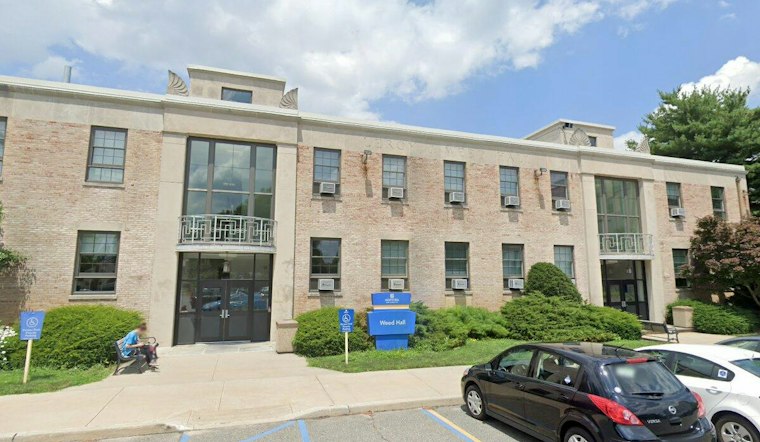
Mary Jane Jung says she went into cardiac arrest during the New York bar exam at Hofstra University's Hempstead campus, losing consciousness and turning blue as the test continued around her. Now Hofstra is asking a judge to throw out her lawsuit entirely, arguing in a new court filing that it never owed her any legal duty to come to her aid in the first place.
A Collapse on the Second Day of Testing
Jung, a 36-year-old graduate of Fordham Law School, suffered the cardiac arrest shortly before the lunch break on July 30, 2025, during the second day of the exam, according to Newsday. In her complaint, Jung alleges proctors and other testing officials failed to help her as she lost consciousness, and that emergency services, CPR and an AED were not promptly deployed while the exam kept running, as detailed by Bloomberg Law. She contends the delay led to a brain injury and that doctors later implanted a defibrillator in her chest, per the same Newsday report.
Jung has sued both Hofstra University and New York State, including the New York State Board of Law Examiners, which administers the bar exam. On October 16, Hofstra filed a motion asking a New York state judge to dismiss her case against it, arguing the university owed her no legal duty to provide first aid, according to ABA Journal.
Hofstra's No-Duty Argument
Hofstra's filing states plainly that Jung was not its student and that the university therefore had no relationship with her, per Bloomberg Law. The university does acknowledge it has a landowner's obligation to maintain and operate its property in a reasonably safe condition, but it argues that obligation does not translate into a duty to personally render aid during someone else's medical emergency, the outlet reports. Hofstra also says its own public safety officers provided CPR and defibrillation until paramedics arrived and took Jung to a local hospital, according to the same filing summary.
The university's position carries implications well beyond this one case. Bloomberg Law notes that if a judge agrees with Hofstra's reasoning, it would signal to law schools and other bar exam test-taking centers that they are not responsible for the welfare of examinees during testing.
Conflicting Timelines on the Emergency Response
Exactly how fast help arrived is now disputed. New York's attorney general has said state employees were at Jung's side providing assistance within approximately one minute of being notified, with additional help arriving roughly ninety seconds after that, according to Newsday's reporting on the state's own court filing. Separately, a timeline cited by the chair of the Board of Law Examiners put Hofstra security's response at two and a half minutes after Jung slumped over at her desk, Newsday reported. The state has said responders delivered CPR and used an AED twice during the incident, citing surveillance footage it says disproves Jung's account, and the attorney general's office has asked the New York Court of Claims to dismiss her lawsuit against the state and the board, per Newsday.
Push for Standardized Emergency Rules
Jung's case has become a flashpoint in a broader debate over how New York handles medical emergencies during its bar exam, which draws more test-takers than any other jurisdiction — 10,392 sat for the July 2024 exam alone, according to ABA Journal. The New York State Bar Association has pointed out that during the July 2025 emergency, the exam continued throughout while Jung was treated by paramedics, and no additional time was granted to test-takers. The group has also flagged a separate incident in February 2026, when a Washington Heights test site closed on the first day of the exam because of a blizzard while other New York City locations stayed open, raising its own questions about exam fairness.
In response, the state bar association's governing body adopted a report from its Young Lawyers Section recommending new emergency-management procedures, including standards requiring staff to immediately summon emergency medical services and giving proctors authority to pause a testing session during a medical emergency. The report also calls for test-security protocols covering paused sessions and a broader risk-management plan addressing natural disasters, severe weather and medical emergencies. The group notes that New York's standard bar exam protocols have not been updated since 1991.
State lawmakers have introduced the Clock Should Stop Act, which would require New York's bar-exam agency to create formal emergency plans, though the measure has not passed, according to Bloomberg Law. Whether Jung's lawsuits against Hofstra and the state will proceed to trial, settle, or be dismissed remains for the courts to decide.



