

























































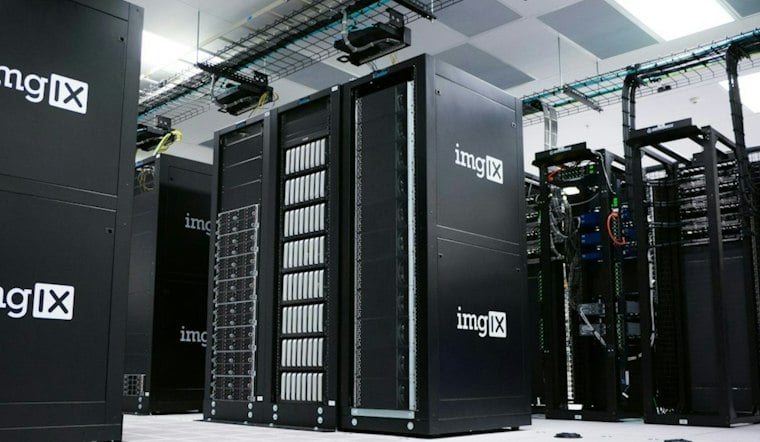
A more than $10 billion data center could be headed to a 423-acre stretch of land in Holt, but the companies behind the idea say they haven't picked a tenant, submitted any plans, or locked in a final design. The Lansing Economic Area Partnership and a Colorado-based firm called Lighthouse Sustainability are proposing community engagement over the coming months as they consider what, if anything, might be built.
A Massive Site With No Buyer Yet
The property sits between College Road and Cedar Street in Holt, within Delhi Township, and is owned by DTN Development, according to The Detroit News. The Lansing Economic Area Partnership, known as LEAP, controls the land through an option agreement and has already received $6.5 million in state site-readiness funding, per the Holt Economic Opportunity Park website. The site, listed at 1375 College Road, spans the full 423 acres and was designated by the Michigan Economic Development Corporation as one of just 19 Featured Development Sites statewide, the same site notes.
Lighthouse Sustainability, based in Colorado, was chosen after a national search for a development partner, as reported by MLive. As the Lansing State Journal reported, the project is positioned just south of Lansing in Delhi Township, with an estimated investment topping $10 billion. Notably, no project plans have been submitted and no end user has been identified, the same MLive report states.
Community Input Before Any Commitment
Rather than pitching a finished proposal, LEAP and Lighthouse say they plan to spend the next six months working with residents to build a framework for what an acceptable data center — if any — would even look like, according to The Detroit News. That process unfolds while Delhi Township's moratorium on such development remains in effect. As part of its pitch, Lighthouse's involvement carries a roughly $20 million community benefits package, the newspaper reports.
The companies have also floated a partnership with Resilience Energy that would give households in and around Holt free home solar and battery installations, per MLive's reporting. Lighthouse separately says it intends to run the facility on 100% clean energy annually, with on-site battery storage included, according to Bridge Michigan. On its own website, Lighthouse Sustainability says its projects use closed-loop cooling systems and careful siting to limit water use.
Conflicting Numbers on Power and Tax Impact
Exactly how big the facility would be depends on which account you read. Bridge Michigan describes a roughly $10 billion project with capacity up to 1 gigawatt, while WKAR reports the Lansing State Journal's figure of a 700-megawatt data center at the same site. The tax picture is similarly murky: The Detroit News reports the group estimates Delhi Township's tax revenue could rise from $23 million to $76 million, while MLive cites a separate projection of more than $53 million in annual local property tax revenue by 2029, including $16 million for Holt and Mason schools. Neither outlet clarifies whether those figures measure the same thing.
Two independent studies evaluating the project's economic effects are expected out in November, according to WKAR. Those studies will model potential tax revenue, job creation, construction investment, truck traffic, utilities impact and overall economic output using modeled scenarios, the station reports. Lighthouse itself has not completed a data center project before, though it says it has 2 gigawatts of projects in its pipeline, per Bridge Michigan.
A Pattern Playing Out Statewide and Beyond
Holt isn't the only Michigan community wrestling with this. A smaller data center proposal in downtown Lansing was scrapped in April, while a separate proposal near Mason has run into strong local opposition, according to MLive. Meanwhile, contract conditions for a 1.4-gigawatt data center project in Saline Township have been approved or accepted.
That same Union of Concerned Scientists report projects that data centers could drive 40% of Michigan's electricity demand growth by 2030 under its mid-level scenario, and warns that without stronger ratepayer protections, the buildout could add $18 billion in electricity-system costs for residents over the next 25 years. Nationally, local pushback and other obstacles blocked or delayed roughly $130 billion worth of data center projects in the first quarter of 2026 alone, Bridge Michigan reports.
Michigan isn't the only state watching projects like this fall apart or stall. In Wisconsin, an out-of-state developer proposed a $10 billion AI data center 35 miles north of Madison in Columbia County, promising 400 permanent jobs and a 2027 opening, according to Wisconsin Watch.





