

























































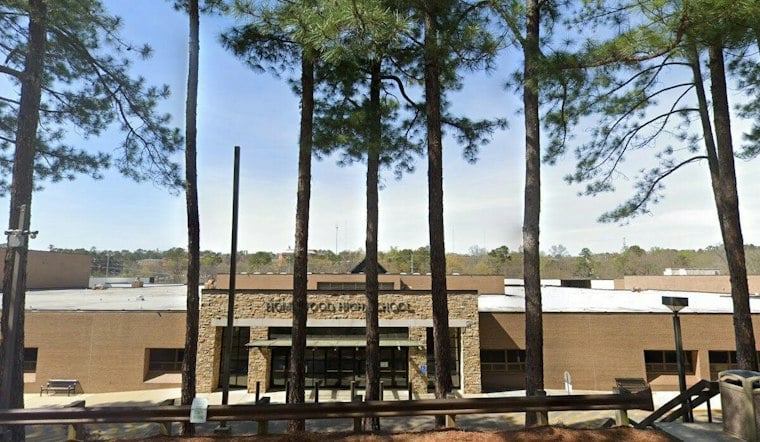
A new grading system at Homewood High School has triggered a petition with more than 675 signatures from parents who say the change is confusing their kids and adding unnecessary stress — even as the district insists nothing about college transcripts is actually changing. The school began phasing in what it calls Evidence-Based Grading this year, replacing traditional point averages with a model built around student proficiency, and not everyone in the top-ranked district is on board.
According to AL.com, Homewood High began exploring the framework two years before this month's rollout, per district spokesperson McCall Hardison, before a volunteer team of teachers launched it in select classrooms this school year. Hardison, who serves as Homewood City Schools' Director of Communications, said the goal is to give students clearer feedback and build skills that carry over into college and careers. The district maintains that final report cards will still show the traditional letter grades and GPAs that colleges and scholarship committees expect.
The Change.org petition calls on district leaders to return to the previous grading system, arguing the new approach has increased stress for students and teachers alike and made grades harder for families to understand, according to the same AL.com report. Commenters on the petition described the system as confusing and worried that students may have fewer chances to recover from low proficiency ratings. Others questioned why a high-performing system needed to change its grading model at all.
Parents Push Back on Fewer Second Chances
Among the petition signers, a commenter identified as Jordan, writing from Pelham, argued the new system could discourage students with learning differences despite their best efforts, saying traditional grading allowed those students to improve and pass without being held to rigid criteria. A commenter identified as Jack, writing from Birmingham, wrote that the new grading system tried to solve an issue that did not need fixing and ended up making it worse, per the same account.
The district's response has centered on how skills are actually measured. Under the Evidence-Based Grading policy posted on Homewood High School's website, student proficiency is evaluated with attention to consistency and recency. Students are rated on a four-tier rubric of Exceeding, Meeting, Approaching and Developing, rather than through a running percentage average of grades.
Students can demonstrate growth through later assessments. Homework and practice work is tracked separately in what the school calls a preparation log, which records completion, readiness and work habits — but those logs do not factor directly into a student's final course grade. Math students are assessed on solving problems, representing concepts in different ways, and explaining their reasoning; English courses focus on reading, analysis and writing; and science courses center on investigation, reasoning and communicating scientific ideas.
A First for Alabama High Schools
Hardison told AL.com that, to her knowledge, Homewood High is the first high school in Alabama to move toward an evidence-based grading framework. Homewood City Schools' own assessment policy, posted at homewood.k12.al.us, notes that while elementary schools in the district have used standards-based grading practices for years, the district had kept traditional A-F letter grades in grades 6-12 because high schools, as the policy puts it, do not exist in an academic vacuum separate from secondary transcript expectations.
A November 2023 research brief from the University of Rochester says Guskey and colleagues (2020) characterized high-school implementation of standards-based grading as being in its infancy.
Pressure of a Top-Ranked District
The stakes feel higher in Homewood because of just how much the district has riding on its academic reputation. Niche ranked Homewood City Schools the top public school district in Alabama and 18th nationally. Homewood High ranked fourth statewide among traditional public high schools. In the 2026-2027 U.S. News & World Report rankings published in August, Homewood High jumped to 212th nationally — up from 363rd the year before — and ranked second among all Alabama public high schools.
Homewood High's neighboring academic rivals include Mountain Brook High School, ranked 215th nationally, and Vestavia Hills, ranked 533rd. Mountain Brook High School's grading scale uses percentages.
How the District Is Communicating the Change
Homewood High says it has tried to educate families through student presentations, parent information sessions and online resources, and students enrolled in Evidence-Based Grading courses attended informational sessions during study hall. Parents can attend ongoing coffee talks and check updated materials on the school's grading website for details on how the system works.
Homewood High's 2025-2026 Teacher of the Year was also named Homewood City Schools' Secondary Teacher of the Year. The framework centers on three major skills in each subject area, tracked through preparation, academic progress and proficiency measures, with academic progress gauging whether students are on pace toward course milestones and proficiency measuring mastery of key skills.
Homewood City Schools says it currently has no plans for districtwide grading changes beyond the high school, and the rollout at Homewood High is expected to expand gradually over five years. For now, the district says students struggling early in a semester can still demonstrate growth through later assessments — the same recency-based principle at the center of both the new policy and the parent pushback against it.





