

























































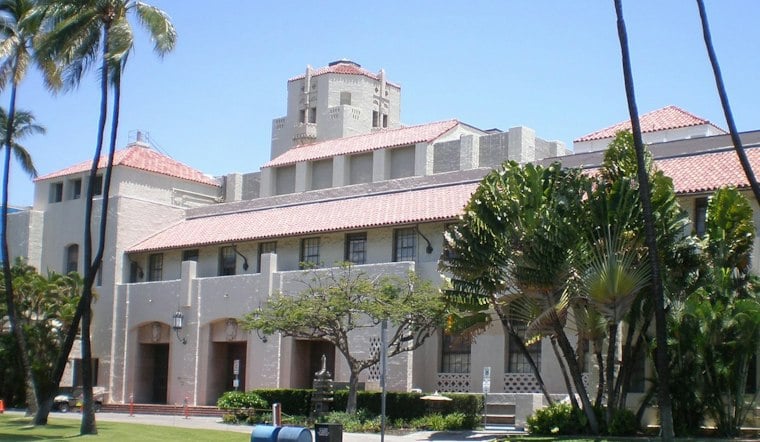
Honolulu voters will decide next month whether elected officials who get impeached — or resign to dodge one — should face the same two-year timeout from city office that recalled officials already face. Question 20, one of twenty proposed charter amendments on the November 3 general election ballot, would close a decades-old gap in the city charter that has let impeached politicians walk away clean.
A Gap Decades in the Making
The idea came from David Callies, a retired University of Hawaiʻi William S. Richardson School of Law professor who submitted a couple of charter amendment proposals after retiring, according to Honolulu Civil Beat. Callies has argued the mismatch between recall and impeachment penalties should be corrected, noting that recalled officials can be removed for comparatively minor reasons while impeachment requires more serious offenses involving misuse of office or violation of public trust. The city charter functions as the equivalent of Honolulu County's constitution, and under its existing recall process, removed officials are already barred from holding elected or appointed city office for two years. Impeachment, by contrast, has imposed no such penalty barring a removed official from running again.
Question 20 would change that by preventing impeached elected officials from holding elected or appointed Honolulu city office for two years after impeachment. Crucially, the measure also extends that two-year ban to officials who resign after an impeachment petition is filed, according to Ballotpedia, closing a loophole that let politicians step down before facing consequences.
The Mansho Precedent
That loophole is not hypothetical. Honolulu voters submitted an impeachment petition targeting then-council member Rene Mansho in 2001 after she admitted to misusing campaign funds and having council staff work on her campaign during their day jobs, the same Civil Beat report notes. Mansho resigned before the state Supreme Court proceeded further, escaping any formal penalty tied to the impeachment process itself.
A similar, though unsuccessful, effort unfolded nearly two decades later. Honolulu voters submitted a petition to impeach then-prosecuting attorney Keith Kaneshiro in 2018 after he received a target letter from federal investigators examining local law enforcement corruption. The Hawaiʻi Supreme Court ultimately dismissed that impeachment petition on procedural grounds, and Kaneshiro was later acquitted of the federal charges. In the charter's more than 50-year history, no Honolulu elected official has actually been impeached.
How Impeachment and Recall Differ
The two removal mechanisms work very differently. An impeachment petition requires a threshold of registered Honolulu voters that varies by office, and any resulting hearings on an official's removal fall under the jurisdiction of Hawaiʻi's courts. Unlike impeachment, which demands specific allegations of official misconduct or breach of public trust, Hawaii law allows citizens to initiate a municipal recall petition for any reason without proving legal cause, according to Ballotpedia. A recall petition also requires a threshold of registered voters determined by a separate formula and is submitted to the city clerk to initiate a recall election.
Hawaii's constitution already treats state-level impeachment more harshly than the city charter treats its own officials. Article III, Section 19 of the Hawaii State Constitution allows state-level impeachment convictions to include disqualification from holding any office of honor, trust, or profit under the state, according to FindLaw — a disqualification rule the city charter has lacked for county officials, which Question 20 would add.
Honolulu's Most Famous Recall
Honolulu's Most Famous Recall The gap Question 20 aims to fix traces back to one of Honolulu's most dramatic political episodes. In 1985, council members Rudy Pacarro, George Akahane and Toraki Matsumoto switched parties midway through their terms after then-Mayor Frank Fasi switched from Democrat to Republican to run for mayor and defeat Eileen Anderson. Fasi then lobbied council members to change parties and present a united Republican front, according to an account republished by DOKUMEN.PUB.
Patsy Mink led a recall campaign against the three council members, and Reagan made a last-minute television appeal pleading with Oʻahu voters not to remove them. The appeal failed. Akahane lost his recall election by a margin of 2-to-1, Pacarro lost by fewer than 100 votes, and Matsumoto lost by about 1,000 votes, all three ultimately removed from office. None of them returned to city office. Less than a decade later, Honolulu voters amended the city charter to make all city elected positions nonpartisan.
A Crowded Ballot and a Tricky Threshold
Question 20 reached the ballot through the Honolulu Charter Commission, a 13-member volunteer body appointed jointly by the mayor and city council once every decade to review municipal operations and propose structural changes directly to voters. The 2025–2026 commission evaluated roughly 300 public and agency proposals before narrowing the field to the 20 questions now before voters, according to the Honolulu City Council.
Question 20 shares the ballot with measures including Question 1, which would create a dedicated Food Security Fund funded by real property taxes, and Question 5, which would introduce ranked-choice voting for municipal offices.
When Oʻahu Voters Can Cast Ballots
Hawaii conducts all its elections by mail, and Oʻahu voters will begin receiving their 2026 general election ballots on October 16. Voter service centers will open for in-person voting from October 20 through Election Day on November 3, per the State of Hawaii Office of Elections. Registered voters automatically receive mail ballots at their home address, giving them weeks to weigh Question 20 alongside the rest of the charter questions before returning them.



