

























































Caroline Huff’s treatment in Honolulu illustrates how imaging and tumor-specific testing can shape decisions about surgery. After pain she thought might be appendicitis led to the discovery of a large, bleeding stomach tumor, her care team had to determine whether an operation was an option and what treatment might help.
Huff's tumor was identified as a gastrointestinal stromal tumor, or GIST, a type of cancer that originates in the wall of the stomach. “Mrs. Huff had what's called a gastrointestinal stromal tumor. It arose from the stomach, from the wall of it,” her physician, Dr. Shane Morita, told Hawaii News Now. After the initial finding, Morita ordered new scans and a genetic test to better understand what the family was up against.
Roughly two weeks after those tests were ordered, Huff was hit with excruciating pain. Her husband, Daryl Huff — an HNN political and government reporter — rushed her to the emergency room, where doctors discovered the tumor had grown and begun bleeding. It was the kind of moment that might normally push a medical team straight into the operating room.
Why the Team Waited for Staging Results
Rather than proceed immediately to surgery, Morita recommended waiting for a PET scan, HNN reported. The scan could provide information that might change the treatment plan. The tumor was growing and bleeding, so the delay came amid a serious and uncertain situation.
The PET scan indicated that the cancer appeared too advanced for surgery at that point. According to the American Cancer Society, PET scans can help determine whether surgery is an option for GIST patients, while CT imaging can help show a tumor’s location and size and whether it has spread.
The genetic test Morita had ordered provided another treatment clue. HNN reported that its results helped him identify a drug that showed promise against Huff’s tumor. He told the family they should pray as treatment began and they waited to see whether it would work.
Targeted Treatment Before Surgery
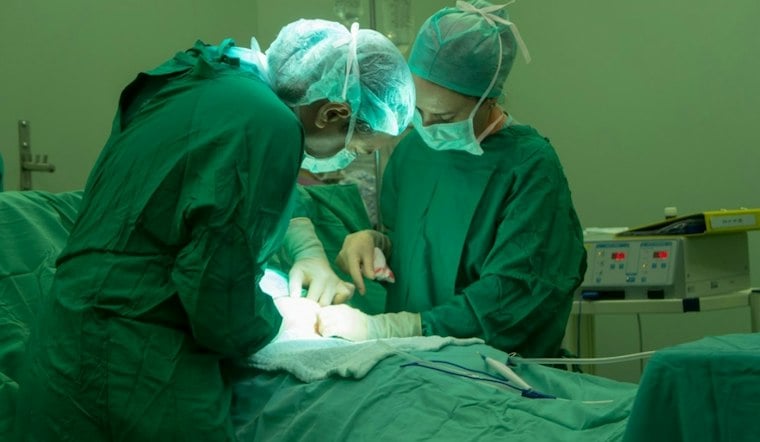
The treatment reduced the tumor’s metabolic activity and shrank it, according to HNN’s account. When surgeons later operated, the tumor could be removed without taking Huff’s entire stomach—a different prospect from the one suggested by the earlier scan.
The treatment strategy is also used in some cases beyond Huff’s. Tyrosine kinase inhibitors, a class of targeted drugs, block signals tumors need to grow and are sometimes used to shrink GISTs enough to make them operable, according to the National Cancer Institute. Research on neoadjuvant therapy in GIST notes that it may prolong progression-free survival for select patients treated with such a drug, according to findings in the ASCO Educational Book.
A phase II study of large gastric GISTs found that preoperative imatinib achieved its best tumor-shrinking results after 24 weeks or more. Of 56 enrolled patients, 48 ultimately underwent complete surgical resection, according to research published in Gastric Cancer. The study reported five-year overall survival of 94.3% and progression-free survival of 61.6%. It also noted that large gastric GISTs can be friable and carry an increased risk of rupture, sometimes requiring removal of the entire stomach or nearby organs.
What Hawaii’s Cancer Registry Can Tell Readers
SEER Registries lists Hawaii’s registry coverage as the entire state, with 1975 as its first full year of data. That establishes the geographic scope and history of the registry, but this information alone does not give GIST-specific counts or establish whether Hawaii’s rates can be compared directly with national figures.
Huff’s Experience and Morita’s Connection to Hawaii
Huff later credited the time spent gathering information with making a difference in her outcome, HNN reported. She nominated Morita for a Hawaii Healthcare Hero recognition and said she valued being treated as a person rather than a number.
HNN’s profile of Morita describes his personal ties to the islands: he grew up in Waiakea on Hawaii Island and met his wife while attending medical school at the University of Hawaii. His father died from cancer at Queen’s Medical Center, and his mother received treatment there for Alzheimer’s—the same hospital system where he now treats patients.
Morita told HNN that he loves serving the community he calls home and that patients can receive quality care in Hawaii. Huff’s case shows how a treatment plan can change as clinicians receive more information about a tumor.





