

























































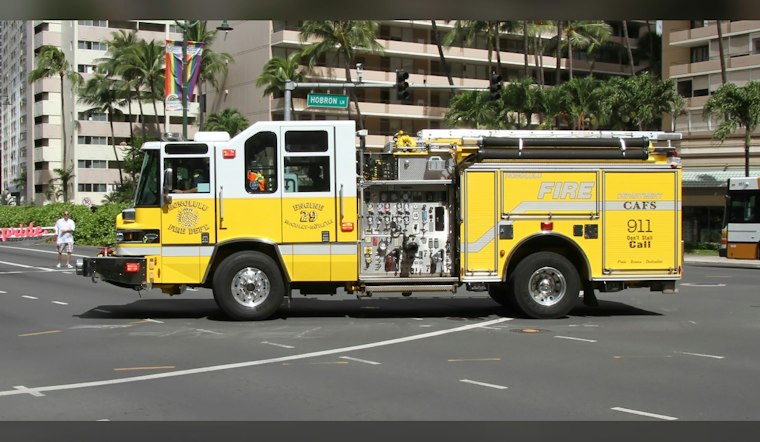
The Honolulu Fire Department has budgeted $22 million for overtime in fiscal year 2026, up nearly 25% from $17 million the year before, as some firefighters work more than 100 extra days a year to keep stations staffed around the clock. One firefighter, Arno Reynolds, worked more than 138 days worth of overtime in 2023 alone, ranking first among Honolulu firefighters that year, while six others topped 100 extra days of overtime in the same period.
The scale of the overtime reliance goes beyond individual standouts. According to Honolulu Civil Beat, some city firefighters logged extensive overtime in 2023. Firefighters typically work 10 full-day shifts a month on a rotation of one day on, one day off, three workdays, then four days off, and they earn time-and-a-half pay for overtime work.
Why Every Vacant Shift Must Be Filled
Bobby Lee said keeping stations staffed at all times is crucial, and that meeting minimum staffing levels has become increasingly challenging. HFD assigns overtime shifts based on sign-ups and prioritizes firefighters already working at the station that needs coverage, and the department sets no maximum overtime limit for individual firefighters. Sheldon Kalani Hao said the overtime assignment system is changing to direct extra shifts toward firefighters who have worked fewer hours, an adjustment aimed at spreading the burden more evenly.
That staffing pressure is not new. Lee said staffing has been an issue for the past couple of decades, pointing to retirement benefit reductions as a contributing factor to the department's difficulties filling positions. He also said people are less committed to careers than in the past, noting that recruits now drop out — something he said did not happen in his day.
A Vacancy Rate That Will Not Budge
HFD has maintained a vacancy rate around 15% of funded positions over the past five years, though Hao said that figure does not account for roughly 100 recruits joining each year. For fiscal year 2026, the department was allocated 1,192.5 total positions, including 1,191 permanent roles, according to City and County of Honolulu budget documents — up only slightly from 1,190.5 positions the prior year. The department's overall operating budget climbed to $159.9 million for fiscal year 2026 from $156.0 million in fiscal year 2025, meaning the $22 million overtime line item alone accounts for nearly 14% of total operating costs.
Recruitment numbers tell a similar story of decline. Hao said firefighter recruitment has dropped sharply over the past 15 years: HFD used to open applications every three years and receive 5,000 applicants, but the department now opens applications every two years and receives fewer than 2,500.
Pension Rules Reshaped Who Signs Up
Part of the retention squeeze traces back to statewide pension reforms. Under rules enacted for public safety workers hired after June 30, 2012, Tier 2 firefighters must contribute 14.2% of base salary compared with 12.2% for pre-2012 hires, face a 10-year vesting period instead of five years, and cannot count overtime toward their pension calculations, per the Employees' Retirement System of the State of Hawaii. Those changes followed a period when overtime-driven pension spiking among pre-2012 retirees created more than $400 million in unexpected state and county pension liabilities, prompting lawmakers to strip overtime out of future pension formulas, Honolulu Civil Beat has reported separately. Hawaii public employers are also required to pay a mandatory 41% contribution rate on firefighter and police payroll into the retirement system for fiscal year 2021 and beyond, according to the Employees' Retirement System.
Contractual rules add another layer of cost. The Maui County Fire Department's Rank-for-Rank Recall program requires absent ranked officers to be replaced by off-duty firefighters of equivalent rank, according to Maui Now. Under that program, a missing captain or lieutenant can only be covered by another captain or lieutenant working overtime, regardless of whether lower-ranked firefighters are available.
Not All Overtime Means Extra Shifts
Management tries to avoid having workers exceed 36 consecutive hours, after which firefighters receive double their usual pay rate, since Hao said the physical toll of long hours can accumulate. Lee added that continuous exposure to harmful materials is another reason to monitor firefighters' work hours closely.
National safety standards set minimum staffing levels for career fire departments. NFPA Standard 1710 calls for a minimum of four firefighters per engine company and initial structure-fire deployments of 17, 28 and 43 firefighters for low-, medium- and high-hazard incidents, according to the National Fire Protection Association.
Broader Staffing Fixes Under Discussion
The overtime crunch is unfolding alongside other structural changes to Honolulu's public safety departments. After Mayor Rick Blangiardi separated Ocean Safety into its own standalone department in May 2024, the Honolulu City Council Public Safety Committee passed a resolution in November 2024 creating a task force to evaluate merging Emergency Medical Services with the fire department, as Hoodline previously reported in its coverage of EMS capacity bottlenecks at Oahu hospitals. Lee described firefighters who frequently work overtime as a blessing to the department even as he and Hao both point to deeper, decades-long causes behind the staffing shortfall that no single policy fix appears likely to resolve quickly.


