

























































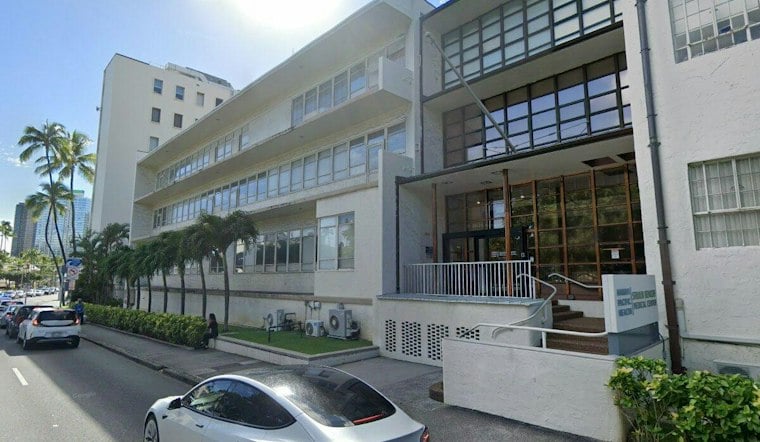
A Honolulu man identified only as Nate was rushed to the emergency room at Straub Benioff Medical Center with chest pain in early February, and before doctors could even get him into surgery, his heart stopped three separate times. He coded again while his gurney was being wheeled to the cardiac catheterization lab, forcing a nurse to perform chest compressions on him while the bed kept rolling. He survived a type of heart attack so dangerous it has earned the grim nickname “the widowmaker.”
Nate asked to remain anonymous, according to Hawaii News Now, but his family has been open about how close he came to not making it. The medical team that worked to keep him alive included nurses, physicians, and Dr. James Ham, an emergency medicine physician at Straub Benioff Medical Center. A widowmaker is an informal term for a heart attack caused by a complete blockage of the left anterior descending artery, as Michigan Medicine explains, and it is considered extremely life-threatening.
Coding en Route, CPR on a Moving Gurney
The station's report describes the harrowing moment Nate coded while being rushed toward the cath lab, with the medical team performing CPR even as his bed was in motion. Nate is expected to recover, but he has no memory of who helped him through those critical minutes — he was unconscious for the worst of it, and the details of that night exist now only in what his family and caregivers have pieced together.
Nate's sister, Kelly Golden, who lives in Missouri, said her family believes Dr. Ham saved her brother's life. She described him as someone who brings comfort and peace in high-stress situations, and said he remained a constant presence in the emergency room throughout the ordeal. Those details, reported in the same account, capture a family trying to make sense of how close they came to losing him.
A Reunion Months Later
Nate and his parents eventually got the chance to meet Dr. Ham and the rest of the medical team in person during a follow-up exam. Golden said the meeting gave her mother a sense of peace and closure, along with the rare opportunity to thank, face to face, the people who had kept her son alive. She added that for Dr. Ham, the work isn't simply a job — it's a vocation and a calling.
A Doctor's Long History of Service Abroad
Dr. Ham was recognized at the Hawaii Healthcare Heroes event for his role in the case, though he said he didn't feel he personally deserved the award and accepted it instead on behalf of his team and his organization. That instinct to deflect credit traces back to years of humanitarian work he's done far from Honolulu's hospitals. For years, Dr. Ham has volunteered his skills in Papua New Guinea, where travel alone often takes more than 24 hours by air and land.
There, he has helped spearhead multiple projects, including teaching first aid to local police officers, helping build infrastructure for clean water, and bringing prosthetic hands to amputees. Dr. Ham is the founder of Water Hands Hope, a nonprofit dedicated to helping people in Papua New Guinea access clean water, which Hawaii News Now previously reported began its efforts in the country back in 2014 at a medical clinic.
A Common but Deadly Threat in Hawaiʻi
Nate's case is a stark reminder of just how high the stakes are when a widowmaker heart attack strikes. Heart disease remained the leading cause of death in Hawaiʻi in 2023, according to the Hawaiʻi Health Data Warehouse, with 3.6% of adults in the state reporting they had experienced a heart attack that year. The same data shows 32.4% of adults had high blood pressure, while 83.3% had gotten a cholesterol test within the previous five years.
For Nate's family, those statistics are no longer abstract. They are now simply grateful that, on a night in early February, the right team was standing by his gurney when his heart gave out — not once, but three times.





