

























































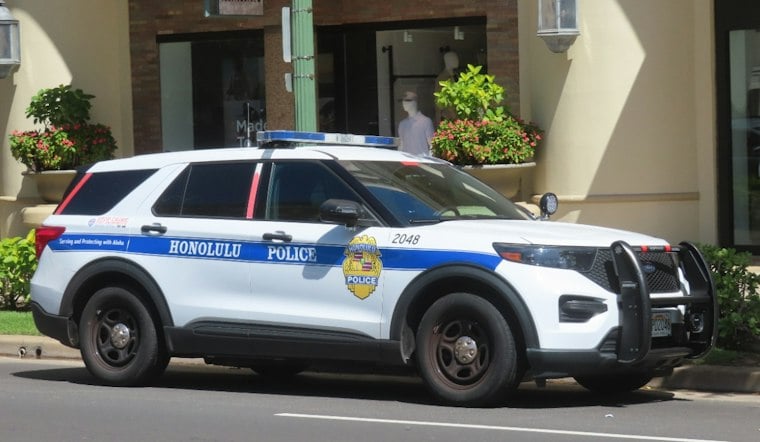
The Honolulu Police Department quietly let Internal Revenue Service agents dig through its license plate camera data more than 2,000 times this year before new Chief David Lazar shut the arrangement down just weeks into his tenure. The agreement, signed in September 2025 and formally co-signed by the IRS that December, gave federal tax investigators a backdoor into vehicle detection reports gathered off Oʻahu streets — reports that include plate numbers, vehicle images, dates, times, and locations.
According to Honolulu Civil Beat, the IRS Criminal Investigation Division requested the memorandum of understanding, which was signed by Rade Vanic on the HPD side. Per Lazar, the division could use the vehicle data for tax evasion, suspected money laundering, and other offenses. Civil Beat reports the IRS reviewed 2,036 files recorded between May and September 2026, and that HPD had only this one license plate data-sharing agreement in place. The IRS did not respond to emailed questions about its use of the vehicle information, according to the outlet.
Lazar, sworn in as chief on July 2, ended the data-sharing agreement shortly after taking over, saying HPD is shutting off IRS access and will not share data with anyone. He arrived in Honolulu after serving as an assistant chief with the San Francisco Police Department, making him HPD's first police chief hired from outside Hawaii in more than 90 years, per Civil Beat.
A Familiar Fight From San Francisco
Lazar's old department has been wrestling with nearly identical problems. San Francisco officials disclosed in September that an internal audit found 299 improper searches of the city's Flock ALPR network by out-of-state and federal agencies, a discovery that pushed Mayor Daniel Lurie to slash SFPD's data-retention window from 12 months down to 30 days, as reported by NBC Bay Area. California law already bars local police from sharing ALPR data with federal entities without a state court warrant.
Wookie Kim said the IRS's access to HPD's data is alarming, and that data safeguards are important whenever surveillance technologies get deployed locally, per the Civil Beat report. HPD attorney Brian Lynch said the department is avoiding Flock Safety altogether, even though HPD ran a technology trial with the company's cameras between September and December 2025. The department initially tested three Flock cameras, ultimately returned all of them, and never signed a contract with the company.
What HPD's Own Cameras Are Doing Now
HPD currently relies on 70 Motorola-manufactured cameras rather than Flock's, including 10 fixed cameras in Waikīkī and 60 mobile units deployed around Oʻahu — a mobile camera program that has operated since 2012, according to Civil Beat. The department purges its camera data every 90 days. The Honolulu City Council has also authorized 10 additional Waikīkī cameras for overt public-safety use during December's Honolulu Marathon, and HPD is seeking to activate license plate capability on 20 existing Chinatown cameras. Since 2020, the department's camera network has led to 28 arrests, per the same report.
Lynch said HPD is still writing its no-sharing policy. The Honolulu Police Commission intends to seek assurance that HPD will actually follow through on its new data-sharing rules, Civil Beat notes. Under the emerging policy, individuals will be able to request their own vehicle detection reports but will not be permitted to request reports on other people.
A Statewide Camera Buildout Continues
Even as HPD tightens its own rules, Hawaiʻi's Department of Law Enforcement is pushing ahead with a much larger camera buildout. The state agency plans to install up to 400 license plate cameras statewide, including as many as 200 on Oʻahu alone, and has already placed cameras in ʻEwa Beach for more than a year along with installations at Kalihi Valley Homes, Hālawa, and Kūhiō Park Terrace, according to Civil Beat. Iwalani Laybon-McBrayer, a homestead association vice-president, has spoken about community safety. Hawaiʻi's Department of Law Enforcement, established in 2024, has arranged nearly $30 million in technology contracts over multiple years, nearly a third of its $100 million annual operating budget, according to Civil Beat.
Hawaiʻi's neighbor islands are taking varied approaches of their own. Maui County uses 32 Motorola cameras and its County Council's Disaster Recovery, International Affairs and Planning Committee voted 7-1 in September to advance Bill 113, which would ban the sale of ALPR data and force county vendors to stick to strict contract limits, as Hoodline previously reported. Kauaʻi police are testing Motorola cameras at Līhuʻe and Hanalei, while Hawaiʻi County police currently have no license plate cameras in operation at all.
Part of a Bigger National Reckoning
Honolulu's about-face lands amid a broader national reckoning over who gets to see license plate data once it is collected. A proposed class action lawsuit was filed against Motorola Solutions on May 27, 2026. Its proposed class includes individuals in the United States whose identifying information was captured by Motorola through its California ALPR cameras. The lawsuit cited public records showing IRS Criminal Investigation, Customs and Border Protection, and the U.S. Secret Service had systematically accessed municipal ALPR databases built on Motorola systems, according to ClassAction.org. The lawsuit also alleged that UC Merced shared ALPR data with federal agencies.
Lawmakers are responding on multiple fronts. San Francisco Mayor Daniel Lurie would partner with California Assemblymember Matt Haney and District Attorney Brooke Jenkins to seek stiffer penalties over improper ALPR data access or sharing, according to Mayor Daniel Lurie's office.



