

























































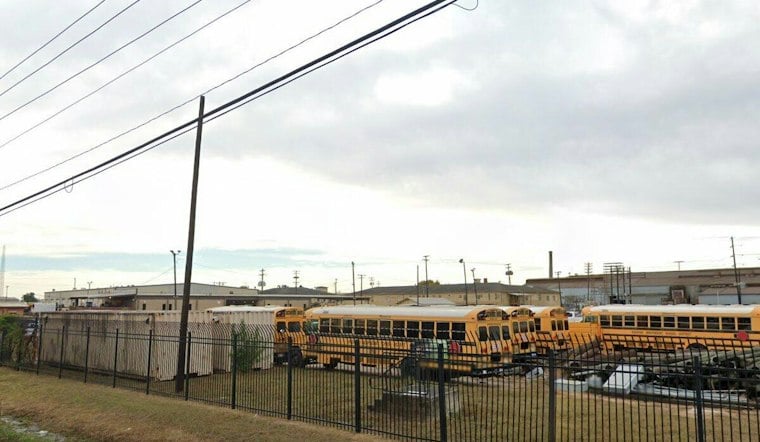
Clarence Lenton has driven commercial vehicles for nearly 30 years, and this month he decided he would not get behind the wheel of his assigned IDEA Public Schools bus until its anti-lock braking system was fixed. The bus, which carries children as young as four along his daily route, has displayed an active ABS warning light since August, according to Lenton, and he says the defect was never resolved despite his repeated reports to supervisors.
Lenton works as a driver for IDEA Public Schools, and he told FOX 26 Houston that he reported the ABS issue to his supervisors well before he ultimately refused to operate the vehicle. Text messages obtained by the station show a supervisor acknowledged that Lenton's assigned bus had an active ABS warning light but claimed the bus was safe to operate anyway — a claim Lenton disputed. An ABS malfunction can cause heavy vehicle wheels to lock during an emergency stop, increasing the risk of skidding or losing control, and per FMCSA standards, an active ABS warning light qualifies as a mandatory out-of-service condition for commercial passenger vehicles.
“The bus gives you [a] warning and, if you don't pay attention to that, something's going to happen to someone in the community and the bus driver is going to be the only one that is responsible,” Lenton said. He maintains he followed established procedures but that the reported defect remained unresolved. Lenton said he could not in good conscience drive a bus that could put students and himself at risk.
Federal Law Shields Drivers Who Refuse Unsafe Equipment
Federal law gives Lenton more cover than it might first appear. Under Section 31105 of the Surface Transportation Assistance Act, commercial motor vehicle drivers are protected from retaliation or termination for refusing to operate equipment that violates federal safety standards or presents a reasonable risk of serious injury, according to the Occupational Safety and Health Administration. Drivers facing retaliatory discipline can file an OSHA complaint within 180 days, a process that can result in reinstatement, back pay, and punitive damages up to $250,000.
Federal rules are also specific about the equipment itself. Under 49 CFR § 393.55, commercial motor vehicles with anti-lock braking systems are subject to signal-failure detection requirements; the rule also discusses externally visible ABS malfunction lamps for trailers, according to research compiled by Arnold & Itkin. Brake system failures already account for the largest share of mechanical violations found during roadside commercial vehicle inspections, representing 41.1% of all vehicle out-of-service orders, per Commercial Vehicle Safety Alliance data cited by the same source.
“I'm going to bed now with a better conscience knowing that what I did is going to save people in this community,” Lenton said. “Whatever happens to me, I just have to deal with the consequences and the repercussions of being truthful.”
IDEA Says Inspection Protocols Are in Place
In a written statement, IDEA Public Schools said vehicles with defects compromising safe operation must be addressed before returning to student transportation service. The charter network said it requires drivers to complete daily pre-trip and post-trip inspections and to report mechanical concerns through its electronic inspection system, which feeds into a review process using qualified maintenance personnel to evaluate reported issues. The statement said IDEA is reviewing concerns related to transportation inspection documentation and adherence to those protocols. The network has not yet responded to the station's follow-up inquiries about Lenton's specific claims.
Some districts, including Cy-Fair ISD, use electronic pre-trip inspections and maintenance practices for school buses, as Click2Houston reported.
A Growing Charter Network Under Scrutiny Before
Lenton is assigned to IDEA Lake Houston, which serves 1,378 students in grades K through 11, according to IDEA Public Schools. The charter operator, founded in Donna, Texas in 2000, has grown into a multi-state network running 143 tuition-free campuses across Texas, Florida, and Ohio and serving more than 80,000 students, per a job listing reviewed by ZipRecruiter.
The network has drawn state-level scrutiny before. In October 2020, the Texas Education Agency restricted IDEA's requested expansion and capped new campus openings following scrutiny into executive spending and administrative oversight, the Houston Chronicle reported at the time. A parent at another Houston-area IDEA campus, IDEA Hardy, also raised concerns about student safety and privacy oversight following a campus incident in a 2024 dispute.
The dispute over Lenton's bus also lands amid a run of rocky months for Houston-area school transportation. In September, Alief ISD students arrived nearly two hours late.
For now, key questions remain open: whether IDEA Public Schools has taken any formal action against Lenton, whether he has filed an OSHA whistleblower complaint or a Texas Workforce Commission claim, and how long the ABS defect sat unresolved in the electronic inspection logs before he refused to drive. IDEA's response to the station's specific follow-up questions is still pending.




