

























































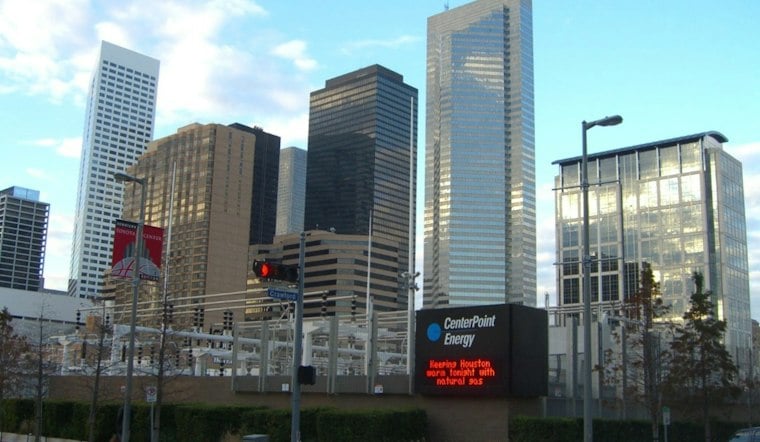
The U.S. Department of Energy announced a $50 million grid-resilience investment for the Greater Houston region Tuesday at CenterPoint Energy’s Greenspoint service center, alongside the Texas Division of Emergency Management and CenterPoint. The project is intended to ease transmission bottlenecks and make more capacity available from existing generation, with the aim of lowering electricity prices in the region.
The funding comes from DOE’s $1.9 billion SPARK program — Speed to Power through Accelerated Reconductoring and other Key Advanced Transmission Technology Upgrades — which is supporting 31 grid modernization projects across 26 states, according to the Click2Houston report. Financed under the Infrastructure Investment and Jobs Act, SPARK is designed to upgrade existing grid infrastructure rather than build new transmission corridors, according to the U.S. Department of Energy.
In Houston, the money will go toward what CenterPoint calls Project TALON — installing Siemens Energy transmission grid-stabilizing technology at area substations, work expected to create more than 500 local construction and installation jobs. Energy Capital HTX reports the technology is built to respond quickly to shifting electricity demand and squeeze more capacity out of circuits that already exist, rather than requiring new lines to be built from scratch.
A Federal Co-Investment Inside a Much Bigger Local Push
The $50 million federal award is a relatively small piece of a far larger, multi-billion-dollar grid overhaul already underway in Houston. The substation grant directly supports CenterPoint’s Greater Houston Resiliency Initiative, which as of late September had installed more than 83,500 storm-resilient poles, cleared over 14,000 miles of hazardous vegetation, and placed over 900 miles of power lines underground, according to T&D World’s reporting on the utility’s progress.
The initiative followed Hurricane Beryl, which knocked out power to 2.2 million Houston-area customers in July 2024 and prompted public and regulatory backlash, as the Houston Chronicle has reported. The Public Utility Commission of Texas said its investigation of Greater Houston utilities’ extreme-weather preparedness and response followed both Beryl and the May 2024 derecho, separate storm events that left more than two million utility customers without power for multiple days.
In January 2025, CenterPoint submitted a $5.75 billion 2026–2028 Systemwide Resiliency Plan to the Public Utility Commission of Texas — the plan focuses on flood protection, pole hardening, and undergrounding, according to CenterPoint Energy. The plan was filed under PUC Docket No. 57579.
How TALON Fits the Resiliency Plan
The Public Utility Commission of Texas approved CenterPoint’s 2026–2028 system resiliency plan as modified by an agreement and the commission’s order. The $5.75 billion plan, filed in January 2025, covers systemwide work focused on flood protection, pole hardening and undergrounding, according to the commission’s order. Project TALON is a separate substation technology project within the broader local grid effort. The U.S. Department of Energy’s selected-applications document lists $50 million in requested federal funds for TALON and a total project value of $176,694,221.
Houston and the Broader Grid
Nationally, the SPARK initiative targets unlocking more than 23 gigawatts of additional grid capacity by rebuilding or reconducting over 1,500 miles of transmission lines and deploying grid-enhancing technologies across nearly 21,000 miles, Utility Dive reports. The goal is to ease congestion and lower consumer electricity costs — a national strategy that Houston’s substation upgrade now feeds into.
A senior DOE official said transmission constraints can limit how much power reaches customers from generation facilities that already exist, a challenge the department says its grid investments are intended to address.
Broader Energy Context From the DOE Announcement
The same official expressed confidence that the United States can grow liquefied natural gas exports and domestic electricity production while keeping natural gas prices down, pointing out that the U.S. was the world’s largest natural gas importer 20 years ago, in 2006, when nominal natural gas prices were more than twice today’s levels. Growth in natural gas production scale has driven those lower costs, the official said, contrasting that trend with California, New York and Massachusetts, which have reduced electricity production over the past decade and continue to struggle with high electricity prices.
The official also addressed fuel markets beyond the grid, saying global conflicts have impacted energy markets, particularly diesel, and that diesel and gasoline prices peaked last month. The U.S. administration is pursuing strategies to lower fuel prices, including seeking increased refinery throughput, working with allies in India to boost refinery output, and coordinating with European partners on a potential release of diesel stores — a coordinated European diesel release, the official said, could provide meaningful price relief. The official added that the Russia-Ukraine conflict could affect Russia’s diesel exports to global markets, and that any resolution or reduction of that conflict could increase Russian diesel exports and offer additional relief.
What the Grant Won't Fix
Substation automation and grid-stabilizing technology address one layer of Houston’s power reliability problem, but not all of it. Advanced substation tech can help reroute power dynamically, while localized outages during major storms can also stem from physical vegetation damage.
That distinction has played out repeatedly in Houston neighborhoods this year. Hoodline has previously reported that CenterPoint’s published safety guidelines place responsibility for customer-owned equipment like weatherheads, risers, or main breaker panels on property owners, and require a licensed electrician to complete repairs before re-energization — a rule that has stretched some residential outages into multi-day ordeals even when utility main lines were intact. Under Texas’s deregulated electricity market, CenterPoint operates solely as the transmission and distribution utility for roughly 2.8 million metered customers in Greater Houston, while separate retail energy providers handle billing and accounts.
The DOE-funded substation project will install grid-stabilizing technology at area substations, while physical repairs and vegetation clearing continue across the region.





