

























































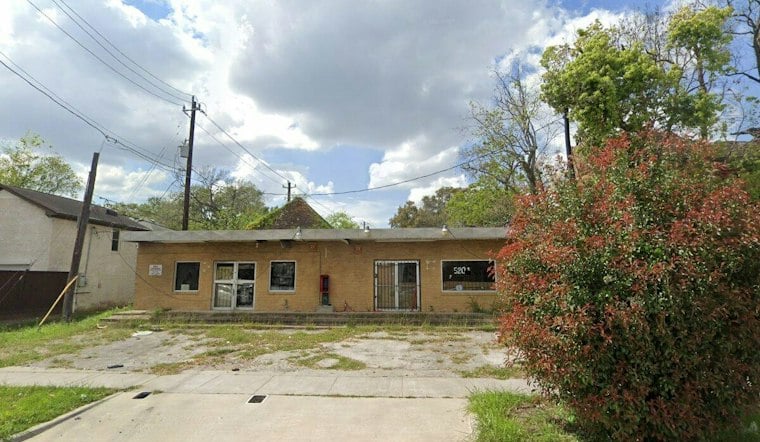
Houston officials unveiled a proposed ordinance this week that would make it significantly harder to build new gas stations in neighborhoods packed with homes, after reviewing 188 fuel-station applications submitted over the past four years. The plan would generally disqualify a proposed site if 50 percent or more of the surrounding area is residential, unless a developer successfully requests a variance.
City officials presented the proposed Retail Fuel Station Ordinance to the Economic Development Council Committee on Wednesday, October 21, according to fox26houston.com. Of the 188 applications reviewed in the Houston-Harris County area, 95 percent, or 178 applications, were located on major thoroughfares, while 52 percent, or 98 applications, had homes within 50 to 100 feet of the proposed site, the station reported.
Under the proposed framework, new fuel stations on major thoroughfares wider than 80 feet would generally qualify without further location review. But for stations proposed on narrower roads — 80 feet wide or less, which accounted for 27 percent of the applications reviewed — the city would take a closer look at what surrounds the site. If that review finds 50 percent or more of the surrounding area is residential, the location would not qualify unless the developer successfully obtains a variance.
Two Houston Sites Illustrate the New Math
City officials used two real Houston addresses to show how the formula would play out. A hypothetical station at 5204 Live Oak Street near Southmore Boulevard would not qualify without a variance, since the area surrounding that location is 100 percent residential within both 50 feet and 100 feet, per the same account from fox26houston.com.
A proposed site at 1909 Washington Avenue tells a more complicated story. Washington Avenue qualifies as an 80-foot major thoroughfare, but the area within 50 feet of the site was 80 percent residential, and the area within 100 feet was still 57 percent residential — meaning it would proceed to the ordinance's second review step rather than clearing automatically. Crucially, the rule would not reach backward: it would apply to new applications moving forward rather than automatically affecting existing gas stations already operating in those same neighborhoods.
Why City Hall Is Untangling Three Separate Approval Lanes
Part of what makes the issue thorny is that no single agency controls whether a gas station gets built. Marlene Gafrick, a senior adviser to the mayor's office, said the approval process is split among the Texas Department of Licensing and Regulation, the City of Houston, and the Texas Commission on Environmental Quality, with all three running their reviews simultaneously and independently. Gafrick said the agencies' parallel processes have no interconnection and examine different things, and she noted that most retail fueling stations are on major thoroughfares as intended, though some have ended up located close to residential property.
The push for tighter rules traces back to a letter from District J Council Member Edward Pollard, who in July asked Mayor John Whitmire to impose a 90-day moratorium on approving new gas stations with fuel pumps within 200 feet of residential property lines, according to chron.com. Pollard said residents, civic organizations and neighborhood leaders had repeatedly raised concerns about clusters of gas stations appearing close to residential neighborhoods, and he argued that concentrations of multiple stations in one area can create conditions associated with higher public-safety concerns.
Pollard Pushed for a Pause, Then a Formula
Pollard framed his original request as a way to buy time rather than block development outright. He said the temporary pause would let the city fully evaluate available data, engage residents and industry stakeholders, and determine whether additional safeguards or policy changes were appropriate. Per a separate account from communityimpact.com, Pollard said a limited 90-day moratorium would allow the administration, City Council, the Houston Health Department, neighborhood representatives and industry stakeholders to work collaboratively on development policies.
Pollard said community groups and residents across the city had raised similar concerns about gas stations near homes, and he had initially considered pursuing a ballot proposition to address the issue before the city's ordinance proposal emerged. He praised the mayor's office for making the issue a priority and described the proposed residential-area formula as creative and promising, even while acknowledging the difficulty of designing a one-size-fits-all approach for a city as sprawling as Houston, which famously operates without conventional zoning and instead relies on development regulations managed through the Houston Planning and Development Department.
Council Member Warns of a Rush to Beat the Deadline
At-Large Position 1 Council Member Julian Ramirez questioned how quickly the ordinance could move through city approval and warned that developers could rush to file applications before new restrictions take effect.
As it stands, the proposed ordinance is scheduled for presentation to the Houston Planning Commission on November 12, followed by a Planning Commission public hearing on December 17. From there, Houston City Council could consider the ordinance at its January 13, 2027, public hearing, with additional consideration scheduled for January 20, 2027. The ordinance has not yet been approved, and city officials have not said how the November and December proceedings will resolve the questions Ramirez and Pollard have raised. Readers can track the full Code of Ordinances through the City of Houston eGovernment Center as the proposal advances.


