

























































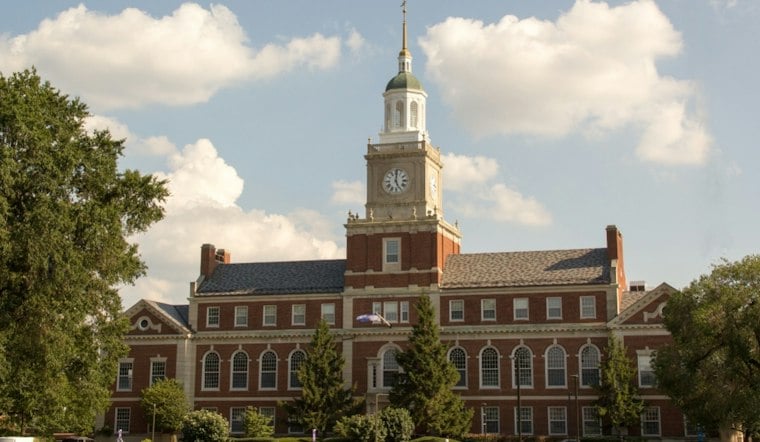
Howard University students planned to walk out of classes and work Tuesday afternoon as part of a coordinated demonstration at more than 50 college campuses nationwide demanding an immediate freeze on artificial intelligence development until the public has a say in how it is built and deployed. The Howard rally was scheduled to begin at 12:30 p.m., part of a wave of walkouts organizers say stretched from coast to coast.
According to FOX 5 DC, protesters are calling for an economic stake in the benefits of artificial intelligence along with safeguards to protect the public from catastrophic risks. The demonstration draws its information from Irreplaceable, the organizing group behind what it has branded the National Walkout to Freeze AI. Beyond Howard, the planned action was part of a national walkout, according to TechRound.
Irreplaceable was launched in late August by executive director Phil Aroneanu, a co-founder of the global climate movement 350.org, per the same outlet's reporting. The group modeled its strategy explicitly on the 1982 nuclear freeze movement, invoking the historic Central Park rally that drew roughly one million participants pushing for a pause in weapons proliferation. Organizers say that same full-stop approach, rather than incremental regulatory asks, is why they are demanding a freeze rather than a slower policy fix.
A Coalition Built From Climate, Labor and Civil Rights Groups
The walkout coalition drew support from a wide swath of progressive, environmental and labor organizations, including the Sunrise Movement, Women's March, Public Citizen and National Nurses United, the report notes. That breadth reflects how concerns over AI's physical footprint have started to intersect with movements historically focused on climate, labor rights and civil liberties rather than tech policy alone.
The Washington, D.C. location of Tuesday's Howard rally is not incidental. The nation's capital sits immediately next to Northern Virginia's so-called Data Center Alley, which remains the world's largest data center market and surpassed 4,000 megawatts of total capacity by late 2025, according to CBRE. ROC Telecom puts the share of global internet traffic handled there at roughly 70 percent.
Power Demands Strain the Regional Grid
Those sprawling server farms carry a steep energy cost. Data centers consumed approximately 25 percent of all electricity in Virginia in 2025, and industry projections suggest that share could climb to 46 percent by 2030, per ROC Telecom. PJM Interconnection, the grid operator covering Washington, D.C. and 13 states, had projected data center electricity demand could grow by up to 30 gigawatts between 2025 and 2030 — though its independent market monitor reported that, as of September 21, 42 percent of forecast data-center demand growth between the 2026/27 and 2028/29 delivery years had been delayed or canceled, according to reporting via Forbes.
Federal regulators have also started pushing back on how the costs of that growth get distributed. The Federal Energy Regulatory Commission accepted a PJM proposal in principle last month, suspended it until February 2027, and ordered a hearing on cost-allocation questions, according to the same Forbes report citing FERC. The order leaves those questions for the hearing.
Local Moratoriums Spread Across the Country
Municipal governments have increasingly moved on their own to slow construction. In Lexington, Kentucky, the Urban County Council voted this month to extend its local data center construction moratorium through October 31, 2027, according to a press release from No AI in KY. That decision mirrors a pattern playing out in other communities, including Hoodline's own coverage of Patterson's nearly year-long freeze over water and power concerns.
Hoodline has also reported on Springfield teachers demanding their own AI moratorium following backlash over an Alpha School software pilot, underscoring how skepticism toward rapid AI deployment has been building across both campuses and classrooms. For now, organizers behind the national walkout say their immediate goal remains unchanged: a pause on AI development until the public has more say in where, and how, it expands.




