

























































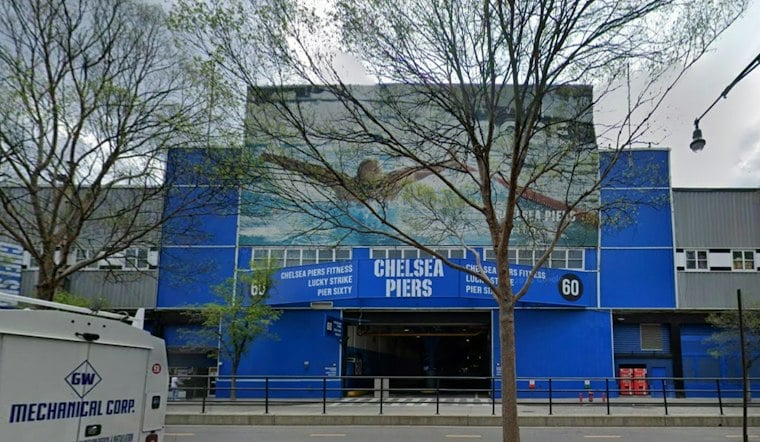
Hudson River Park Friends raised $2.2 million at its annual gala on Oct. 8, transforming Pier Sixty at Chelsea Piers into a 1970s disco fantasy under the theme “Made in NYC.” The fundraiser drew former Mayor Michael Bloomberg, financier Diana Taylor, comedian Ronny Chieng, Rep. Jerry Nadler, jewelry designer Jennifer Fisher, and real estate broker Ryan Serhant along with his wife Emilia Serhant, all mingling under a soundtrack inspired by the sounds that once filled David Mancuso's Loft.
A Night Built Around Disco's Roots
As reported by amNewYork, the gala's organizers leaned into the genre's origins, tracing New York's early disco scene to Black and gay communities and to Mancuso's Loft, which in 1970 opened as a dance gathering space welcoming a multiracial mix of guests. The outlet reported that the night featured performances from On The Move Entertainment and, in a nod to the waterfront setting, an appearance by the FDNY Marine Division fireboat. Auctioneer Gabriel Butu ran the cash call and live auction, with items including seven nights in a private Tuscan villa, a stay in the Hudson River Suite at Faena New York, and a session on Ryan Serhant's pitching, negotiating and closing techniques.
The gala also served as a recognition ceremony. Honorees included Citi, Gansevoort Square Partners — the team led by Douglaston Development alongside Kinwood Partners, CetraRuddy and MVRDV — and Ryan Serhant, founder and CEO of Serhant. Gansevoort Square Partners' honor followed a concrete milestone: the article notes that the New York City Economic Development Corporation had announced its selection of the team to develop 590 mixed-income housing units in the Meatpacking District, with up to 55 percent permanently affordable without city housing subsidies, according to NYCEDC. The project site sits adjacent to the Whitney Museum, the High Line, and Hudson River Park itself, per The Architect's Newspaper.
Where the Money Actually Goes
Connie Fishman, executive director of Hudson River Park Friends, oversees an organization that functions as the park's independent fundraising and advocacy partner, working alongside the Hudson River Park Trust, which manages the 550-acre property as a partnership between New York City and New York State. Public resources principally cover the park's design and construction, while day-to-day operations and maintenance are sustained by rents, fees, sponsorships, grants and private contributions. Gala proceeds are earmarked to support more than 400 free events and programs, along with landscape care, STEM education, marine science research, habitat restoration and essential upkeep.
That funding model matters because of the sheer scale of what it supports. Hudson River Park stretches four miles along the river and includes a 400-acre protected Estuarine Sanctuary that provides habitat for fish and wildlife, according to the Hudson River Park Trust. As Manhattan's second-largest park after Central Park, it draws between 17 million and 20 million visits annually. Since 2021, the Trust has installed 35 million oysters across that sanctuary.
Recent Capital Projects Along the Waterfront
The park's physical growth has been rapid in recent years. Hudson River Park opened the 5.5-acre Gansevoort Peninsula, creating Manhattan's first public beach with 1,200 tons of sand, a sports field, a salt marsh, and 20 million juvenile oysters seeded into its intertidal zone, as reported by AIA New York. Built on solid ground once used by the Department of Sanitation, the peninsula allows non-motorized boat access, though swimming remains prohibited. In January 2024, the park added the 4,000-square-foot Pier 26 Science Play Area in Tribeca, where climbable structures are modeled after Atlantic and shortnose sturgeon, according to Secret NYC.
Commercial development has followed a similar pattern of pairing with public waterfront upgrades. In early 2026, Sunset Pier 94 Studios opened as Manhattan's first purpose-built film and television production campus, a 232,000-square-foot facility developed by Vornado, Hudson Pacific Properties, and Blackstone that included dedicated public infrastructure improvements for Hudson River Park, Hoodline previously reported. Pier 76, a former NYPD tow pound converted into parkland, hosted the EEEEEATSCON NYC food festival with more than 25 local vendors this month, continuing the park's use for large civic gatherings.
A Legacy Born From a Canceled Highway
The park's existence traces back to a fight over what the Hudson River waterfront should become. The Hudson River Park Act of 1998 established the framework for transforming Manhattan's deteriorating maritime waterfront into public landscape, according to Rutgers University Press. Community advocacy for the park was part of that effort, a history that underscores how far the waterfront has come from its industrial past.
The gala itself continued a tradition of drawing high-profile supporters; past events have featured Robert De Niro, Claire Danes, Hugh Jackman, and Sarah Jessica Parker. This year's co-chairs, Bloomberg and Taylor, helped steer the evening's celebratory tone even as the park continues to manage the everyday demands of hosting tens of millions of visitors along one of the city's busiest and most actively developed corridors. The Hudson River Greenway runs through the park.





