

























































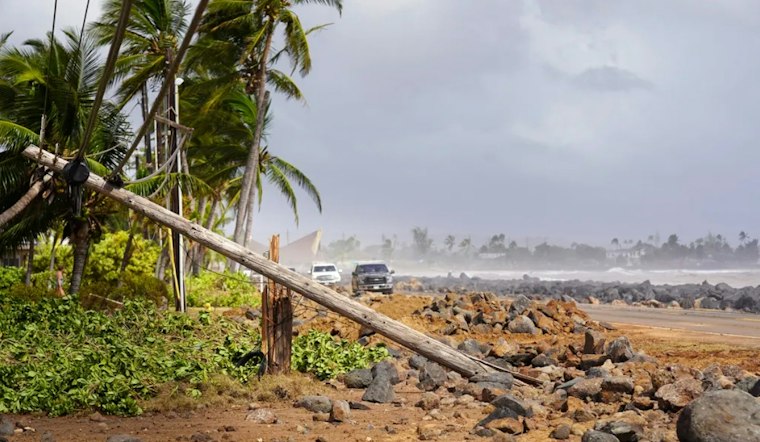
Hurricane Lowell tore through the protective sand dunes guarding Hanapepe's ancient salt ponds on Kauai, pushing loose sand into the earthen beds where more than 20 local families have gathered paʻakai, or Hawaiian salt, for generations. The damage threatens a cultural tradition that cannot be replicated anywhere else in the islands.
According to KITV, the storm destroyed the dunes that had long shielded the salt-making area, and the resulting sand intrusion now imperils the Native Hawaiian salt-making practice itself. Hurricane Lowell passed near Kauai on September 7-8 as a Category 2 storm, marking the first direct hurricane hit on Kauai County since Hurricane Iniki in 1992, according to Wikipedia, which notes the storm reached Category 5 intensity twice in the Central Pacific before weakening as it approached the island and caused an estimated $400 million in statewide damage.
The Hanapepe salt patch is the last remaining location in Hawaii where Native Hawaiians still harvest sea salt using traditional earthen clay beds fed by underground saltwater wells, a process detailed by AP News. The multi-step harvesting method relies on deep wells called puna, holding pools known as wai kū, and black clay-lined shallow beds called loʻi paʻakai. The area is also included on the State inventory of historic sites.
A Tradition That Can't Be Bought or Sold
Unlike most agricultural products, paʻakai harvested at Hanapepe cannot be bought or sold for commercial profit under Native Hawaiian cultural protocol. Modern Farmer reports the salt may only be traded or given away as a gift, and roughly 22 Native Hawaiian families have practiced salt-making for generations and steward the salt patch. That distinction means Hurricane Lowell's damage does not ripple through commercial supply chains, but it does strike directly at a sacred spiritual and agricultural practice passed down through families for generations.
The salt's significance extends well beyond Kauai. Following the August 2023 wildfires on Maui, spiritual practitioners specifically requested white paʻakai from Hanapepe to perform traditional Hawaiian cleansing and blessing rituals across the traumatized areas, per the same KHON2 account. In Native Hawaiian tradition, sacred sea salt is used for spiritual protection, healing, and rituals, making the loss of harvestable dune-protected beds a concern that reaches communities across the state.
Volunteers Mobilize Ahead of Weekend Workday
Organizers with Hui Hana Paʻakai o Hanapēpē have scheduled a community volunteer workday for Saturday to clear storm debris, redistribute sand, and rebuild the protective dunes at Salt Pond Beach Park, the report notes. The park was closed after Hurricane Lowell caused coastal damage across West Kauai, and the weekend effort represents the community's most direct attempt yet to reverse the storm's damage to the salt beds before another weather event strikes.
The Hanapepe cleanup follows a string of similar community-led restoration efforts across Kauai since Hurricane Lowell made landfall. More than 100 volunteers previously dug out Lydgate Park, while the storm also forced Kauai Shrimp to wind down its Kekaha farm and knocked out power to roughly 90% of Kauai Island Utility Cooperative customers at its peak, according to the Chamber of Commerce Hawaii. The agency has since partnered with state economic agencies to launch a $2 million emergency grant program supporting small non-agricultural businesses hit by the storm.
Chronic Pressures Predate the Storm
Hurricane Lowell's acute damage lands on top of environmental stresses the salt ponds already faced. Before the storm, the University of Hawaii Sea Grant College Program conducted research commissioned by Kauai County to study ways to protect the salt ponds from sea level rise, coastal erosion, and beachgoer traffic.
Watershed runoff has also been an ongoing concern in the area. In January, state health regulators fined a major Honolulu construction firm $390,000 for unpermitted land grading in Hanapepe that sent sediment and vegetation runoff into local gulches, Hoodline reported, noting the Clean Water Branch ordered the contractor to install stormwater pollution controls. Separately, discussion has focused on a helicopter-facility expansion and a cesspool concern at Burns Field.
For now, the path forward centers on Saturday's hands-on repair work rather than any long-term engineering fix. Families who have tended these beds for generations are counting on volunteers to help redistribute sand and rebuild the dunes before the salt-making tradition faces further setbacks.





