

























































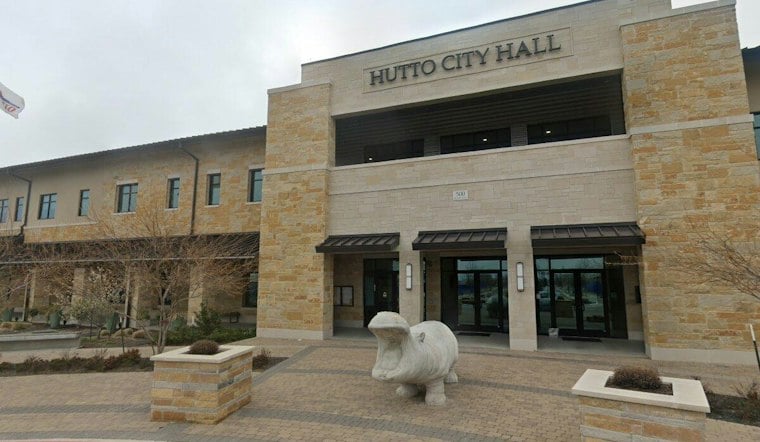
Hutto City Council has told city staff to figure out whether three Tesla Cybertrucks could actually save the city money if added to its police and municipal vehicle fleet. No purchase has been approved, no trial date has been set, and officials have been clear that the idea is still just that — an idea under review.
The council directed staff to conduct a cost comparison for a three-vehicle test of Tesla Cybertrucks, according to Community Impact, which first reported on the council discussion. The review calls for comparing the electric pickups against Hutto's current patrol vehicles, looking at fuel and maintenance costs, safety features, and longevity, per the outlet's report. Staff will also dig into costs tied to charging infrastructure, repair and parts availability, warranties, data privacy, liability, and insurance — a far broader scope than simply pricing out a truck.
Council member Jerrel Reynolds, who said he bought a Cybertruck in April, told fellow council members he found the vehicle to be low maintenance once he weighed fuel costs, oil changes and basic upkeep against what he was used to. Reynolds pointed to the Las Vegas Police Department, which he said operates 10 Cybertrucks, as a model worth studying for how a public-safety agency might put the trucks to work.
What Las Vegas and a Texas Coastal Town Have Tried
Reynolds isn't wrong that Las Vegas has gone further than almost anyone. The Las Vegas Metropolitan Police Department unveiled 10 Tesla Cybertrucks for patrol use across the valley on October 28, 2025, outfitted with tactical tools for calls like barricades and shootings. Those trucks weren't bought with tax dollars — a donation from Ben and Felicia Horowitz covered the cost, the department says.
The economics of that donation are notable on their own. Each Cybertruck in the Las Vegas fleet is valued at somewhere between $80,000 and $115,000, according to CNBC, and roughly 400 officers were trained to operate the trucks, which rely on public charging stations. CNBC also reported that U.S. regulators recalled more than 46,000 Cybertrucks over a windshield-side panel that could detach while driving, and Tesla issued a separate recall of more than 63,000 trucks because their front lights were too bright. A Las Vegas police spokesperson told the outlet that all of Tesla's recalls would be dealt with before the Cybertrucks hit the streets.
Closer to a Hutto-scale test, the Kemah Police Department in Texas ran a 30-day trial of a single Cybertruck to see whether the all-electric pickup could function as a patrol vehicle, according to Drive Tesla Canada. Officers there were set to assess charging time, operational reliability and overall suitability compared with gasoline or hybrid patrol vehicles — and by the outlet's account, no decision had been made on whether Kemah would keep the truck once the evaluation period ended.
Hutto Leaders Say It Comes Down to Dollars and Data
Hutto Mayor Mike Snyder said the city's decision will ultimately hinge on a straightforward comparison. “It's going to come down to what is the cost of the vehicles side by side,” Snyder said, according to Community Impact, adding that whether Hutto is ready to adopt the vehicles immediately remains uncertain. Snyder also pointed to collision avoidance assistance as a feature that could be especially valuable for police vehicles.
Council member Corina Zepeda struck a similar note, saying she backs the review in principle but wants the numbers to actually pencil out. “I'm in favor any time we can save money and improve safety,” Zepeda said, per the same report, while calling for staff to weigh charging and maintenance costs against any measurable public-safety benefits before the city commits to anything.
The Broader Case for and Against Electric Patrol Vehicles
The debate playing out in Hutto mirrors a national conversation among fleet managers. Electric vehicles generally cost less to operate per mile than gas-powered ones and tend to eliminate routine oil changes and tune-ups, according to Government Fleet. But the outlet also lists real drawbacks for police use: higher upfront purchase prices, limited range, charging time that doubles as vehicle downtime, and the absence of any pursuit-rated electric vehicle currently on the market. Fleets considering the switch should weigh duty cycle, charge time, take-home vehicle policies, available electric power, and funding or grants before moving forward, the outlet notes.
Other departments that have already gone electric report encouraging results. Four departments surveyed by Police1 said their EVs had the range, speed and ruggedness to serve as regular patrol cars, and all planned to buy more. Bargersville Police Department, for instance, runs five Tesla Model 3s and five Model Ys within its 17-vehicle fleet. Boulder County reported that driving a Model Y 10,657 miles cost just $247 in electricity, compared with an estimated $1,852 in gasoline for a Ford Police Interceptor covering similar mileage.
For now, Hutto officials have not announced a final purchase decision or a trial implementation schedule. The city's review will determine whether the Cybertrucks' operating characteristics and safety features justify the municipal cost — but until that comparison is finished, the three trucks remain a question on paper rather than a fixture in the fleet.



