

























































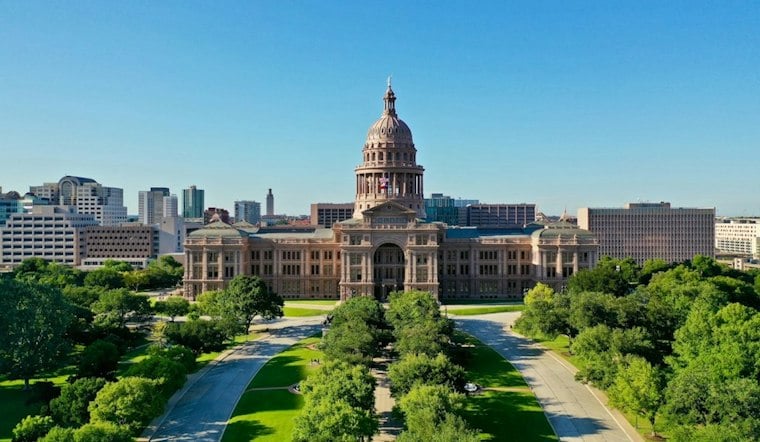
Texas lawmakers have again proposed removing a ban on homosexual conduct from the state code, more than two decades after the U.S. Supreme Court ruled it unconstitutional. Rep. Venton Jones, D-Dallas, filed House Bill 653, and Sen. José Menéndez, D-San Antonio, filed Senate Bill 143 ahead of the 2027 legislative session, KXAN reports.
A ruling did not erase the statute
The distinction at the heart of the renewed effort is between a law that cannot be enforced and one formally removed from state statutes. In Lawrence v. Texas, the Supreme Court held that the Texas statute criminalizing certain intimate conduct between people of the same sex violated the Due Process Clause. The text of Section 21.06 nevertheless remained in the code; the Texas Legislature’s record notes the ruling declaring it unconstitutional.
The bills address related but not identical provisions. KXAN reports that Jones’s HB 653 would repeal Penal Code Section 21.06 and remove references to related criminal offenses from two Health and Safety Code sections. Menéndez’s SB 143 would remove statutes concerning homosexual conduct and recognition of certain same-sex relationships. The proposals seek to change what remains written in state law; the Supreme Court ruling already established that the conduct statute is unconstitutional.
A narrow precedent, and an unresolved path
Texas is not the only state to repeal a sodomy ban after a court had already invalidated it. Windy City Times reported that Minnesota Gov. Tim Walz signed a public-safety bill on May 19, 2023, repealing several state-code provisions, including an unconstitutional sodomy ban. That is a precedent for removing obsolete language from a state code, not evidence that Texas’s bills will advance or that the states’ legislative circumstances are the same.
The Texas effort has encountered legislative resistance before. KXAN reports that Jones’s 2025 repeal bill, HB 1738, passed the House but stalled in the Senate, and that at least 60 repeal bills have been filed since the 1980s without success. The renewed proposals therefore face a legislative question, not a question about whether Section 21.06 is enforceable.
The political backdrop has changed since that House vote, but the Senate remains a potential obstacle. The Houston Chronicle reported that Democrats Gina Hinojosa and James Talarico won the governor’s and U.S. Senate races in the Nov. 3 election, and that Democrats won all four Texas Supreme Court seats on the ballot. Republicans retained 19 of the 31 Texas Senate seats, KXAN reports.
Texas’s 90th legislative session is scheduled to run from Jan. 12 through May 31, 2027, according to KXAN. Whether either bill can clear both chambers—and what provisions ultimately would be removed if one becomes law—remains unresolved.





