

























































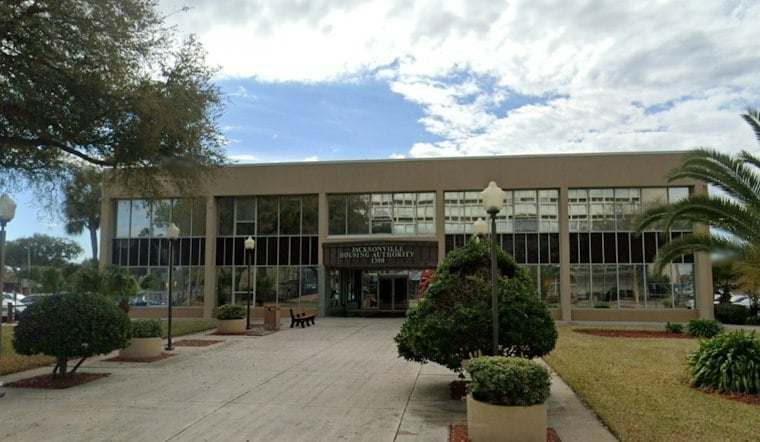
The Jacksonville Housing Authority board rejected a proposal Monday from CEO Cheron Corbett Waller that would have given her and other senior leaders a cut of developer fees flowing into the agency, with one example showing the CEO could have pocketed $240,000 from a single $2 million fee on top of her existing $300,000 salary.
Waller had proposed a 12% share of developer fees for the CEO role, plus an additional share for senior leadership, according to Action News Jax. Under the example cited in that reporting, if JHA received a $2 million developer fee, $1.6 million would go to the authority while the CEO would receive 12% of that remainder, or $240,000. The board voted down the draft proposal on Monday, October 19, 2026.
Board Presses Waller on Salary Before the Vote
Before rejecting the plan, board members questioned Waller about her current salary and how it compares with other public officials, the outlet reports. One board member directly asked whether her salary was $300,000 a year, and Waller confirmed that figure was her base pay.
Waller said her $300,000 base salary reflected her subject-matter expertise and her educational and professional background, per the same report. She also said salaries at public housing authorities elsewhere in the country can reach the upper $600,000 range, and argued that people should be evaluated and assessed based on their skills. Waller added that the money proposed under the developer-fee plan would not have come from federal funds, the station notes.
What JHA Has Built and Who's Still Waiting
Waller took over as JHA's CEO in April 2025. The agency has also discussed expanding and preserving affordable housing. According to News4JAX, the agency has built five single-family Daisy Homes in the historic Durkeeville neighborhood, with plans to build more, and is working to redevelop Franklin Arms on Jacksonville's Eastside into affordable senior housing.
Even with that progress, the need remains steep. The combined waiting list for JHA's public housing and Housing Choice Voucher programs fell from about 47,300 people to roughly 30,300 by September 10, a decrease of more than 17,000 people, according to the same report. JHA previously approved a $44.5 million plan with two for-profit development firms to build 152 single-family homes in Duval County, per the Jacksonville Daily Record.
How Other Housing Authorities Handle Developer Money
JHA's rejected proposal lands amid broader, varied practices around the country when it comes to fees tied to affordable-housing development. Houston's housing authority has collected more than $86 million in fees and interest from tax-break deals since 2018, according to the Houston Chronicle. Roughly $60 million of that total has already gone toward land, affordable housing, repairs, legal fees and other expenses, with the funds also used to pay developer, bank, broker, lawyer and consultant fees, the Chronicle reports.
Executive pay at public housing agencies has drawn scrutiny elsewhere, too. The city manager of the Housing Authority of Santa Monica earned $353,484 in 2013 compensation without Section 8 or Section 9 funds being used for the salary, according to Government Executive. In San Diego, meanwhile, the local housing commission charges a compliance-monitoring fee of $163 per unit per year on certain affordable-housing projects — an amount that could run nearly $50,000 annually and more than $7 million over nearly 55 years of rent restrictions for a 300-unit project, per the San Diego Union-Tribune.
Florida law places its own limits on how housing authority funds can be used. Under Chapter 421 of the Florida Statutes, liabilities arising from a housing authority's operation of its housing projects may not be paid from funds other than the projects' rents, fees or revenues and any grants or subsidies paid to the authority, according to the Florida Senate's published statute. Separately, HUD has said it will collect public housing authority compensation data once every three years, per a notice from the U.S. Department of Housing and Urban Development.
For now, JHA's board has closed the door on Waller's developer-fee plan, leaving her $300,000 base salary unchanged as the agency continues its redevelopment work and works through its still-sizable waiting list.





