

























































Jacksonville rolled out its first comprehensive Food Plan Monday, a 32-action, 79-subaction roadmap aimed at getting fresh, affordable food within reach of more residents and shoring up the city against the kind of disruptions that have rattled grocery shelves before. City officials unveiled the plan at Feeding Northeast Florida, framing it as a long-term guide rather than a direct-aid program that would put food in anyone's hands right away.
Mayor Donna Deegan said the plan is meant to pull together groups that haven't always worked in sync. According to First Coast News, Deegan said the plan brings disparate organizations and entities together to address food insecurity and improve the food system, and that the city is preparing for future food-supply disruptions, pointing to the COVID-19 pandemic as a prior example. She also said, per the outlet, that one in five children in Jacksonville currently experience food insecurity.
The scale of the challenge is stark. Nearly one in seven Jacksonville residents experience food insecurity, including one in five children, and about 30% of residents live more than a mile from a grocery store, according to News4JAX. The station also reports that Feeding Northeast Florida expects to distribute about 48 million pounds of food this year, up from 38 million pounds in 2025 — a jump that underscores just how much demand has grown even before the new plan takes effect.
Four Pillars, Dozens of Actions
The Food Plan organizes its work around food production, distribution, access and recovery, per News4JAX's account of Monday's launch — though an earlier description of the initiative framed the same effort around production, processing and distribution, access and waste reduction. Either way, the plan provides actions and commitments meant to guide the city and community partners on food-related issues over time, with implementation expected to unfold gradually as different groups take on different elements, First Coast News reports.
Jacksonville's chief resilience officer, Anne Coglianese, said the plan was shaped partly by residents' input, according to First Coast News. She added that the food plan should improve access and affordability and help create a culinary landscape that drives economic growth — tying the effort not just to hunger relief but to the city's broader economy, a connection the plan explicitly aims to support.
The plan is also meant to help local growers get more produce into the market and to build a safety-net network for residents facing food insecurity, addressing neighborhoods with limited grocery options along the way. Jax Today notes the plan promises yearly updates documenting actions taken and revisions made, and describes it plainly as a guideline for potential actions rather than a finished program — one that still faces open questions around collaboration, regulatory hurdles and funding.
A Zoning Bill Moves Through City Council
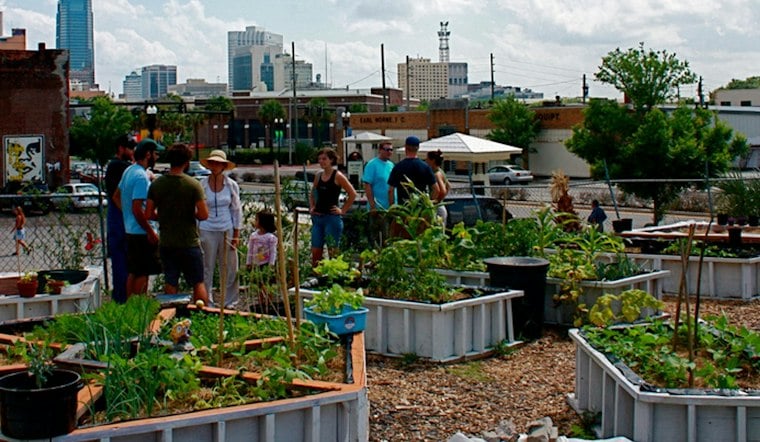
Running alongside the Food Plan's rollout is a separate piece of legislation: the Pathways to Urban Agriculture bill, which is moving through Jacksonville City Council and was introduced on October 13. The bill would change portions of the city's zoning code to address community gardens, market gardens and urban agriculture, making it easier for certain gardens to operate and sell food. It's scheduled for a second reading at Monday's city council meeting.
Deegan said the legislation could help local growers sell their food in the marketplace, First Coast News reports. Coglianese, in turn, said the bill would reduce barriers for residents participating in urban agriculture — a goal that dovetails with the Food Plan's production-focused push to help farmers expand and improve market access, as described by Action News Jax. That outlet also reports the plan was developed with community stakeholders, experts, public agencies and city staff, and notes that recent events such as the COVID-19 pandemic and a cyclospora outbreak exposed weaknesses in the local food system.
The Land, the Waste, and the Bigger Picture
Jacksonville has roughly 20,000 acres of active agricultural production land, and more than 79% of Duval County farms are smaller than 50 acres, according to Jax Today's earlier reporting — context that helps explain why the Food Plan leans so heavily on supporting small growers rather than assuming large-scale farming capacity already exists. City staff modeled portions of the broader food-system work on an equitable food system framework adopted by Austin, Texas, officials in October 2024, per the same Jax Today report.
Food waste looms large in the plan's fourth pillar. Jacksonville generates roughly 500 million pounds of food waste annually, according to BioCycle, which reports that local composting operators say capturing that volume will take time and coordination. The outlet points to Compost Jax, which has thousands of tons of capacity for processing pre- and postconsumer food waste, and notes that Gainesville's model — combining curbside Pay-As-You-Throw with curbside composting — offers one comparison point for how another Florida city has tackled the same problem.
Jacksonville is also piloting an oyster-shell recycling effort with the Parks Department and university partners, with shells potentially reused for coastal restoration instead of ending up in a landfill, per News4JAX. Rising grocery costs add urgency to the whole push: food-at-home prices in August were 2.2% higher than a year earlier, according to federal data cited by WUSF, which also reported that families carrying medical debt were four times more likely to face food insecurity than those without it.
Deegan said national and state policy have the most influence over food prices, but that Jacksonville can still pursue local food-security solutions through locally grown food and coordinated resources, First Coast News reports. Asked what success would look like a year from now, she said it would mean a robust network of local growers and a safety net in place for residents during difficult times.





