

























































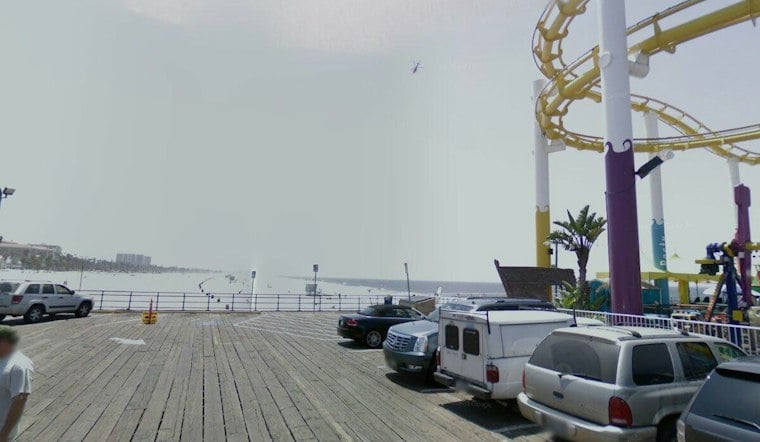
A Japanese traveler pedaling an old, heavy bicycle across the country rolled through Albuquerque this fall, nursing sore hands and a tight schedule as he chases a birthday deadline on the other end of historic Route 66. Ryo Murata is cycling from Chicago to Los Angeles along the Mother Road, racing to reach Santa Monica by November 11 — his birthday — as the highway marks its 100th year.
Murata told KOAT that this isn't his first attempt at the cross-country ride. He began a cross-country bicycle trip a few years earlier but was unable to finish it during his three-month stay in the United States, leaving his bicycle behind in Chicago before coming back to pick up where he left off and continue west. This time he's doing it on an older, heavy bike, a choice he made deliberately to show what determination can make possible, according to the station's report.
That determination has been tested. Hills in Missouri forced Murata off the bike entirely, and he had to push the heavy frame uphill by hand, the outlet reported. Pain in his hands has sometimes made it difficult to even grip the handlebars, and on the toughest days he still has to cover 50 to 60 miles just to stay on schedule.
Strangers and a Police Escort Keep Him Moving
Murata has leaned on the kindness of people he meets along the way to keep going, per the same account. At one point a police officer steered him away from a dangerous highway and helped move his heavy bicycle back to a safer road; another time, after he got a flat tire after dark, a stranger came back to help him reach his destination.
“I have to never give up, so I keep pushing and keep going,” Murata said, according to the station's report. He admitted the trip has worn on him. “It's so hard, but so many people cheering me,” he said, adding: “Sometimes I want to give up, but so many Americans love me. I can do it.”
He said he'd heard warnings about Albuquerque before arriving, but found the opposite once he got there — people in the city offered assistance and made him feel welcome, per the same report. The experience fits into a broader shift Murata says the road has given him: before the trip he associated happiness with having money, but he has since come to value love, kindness and human connection through the generosity he's encountered. “Love is happiness,” he said.
A Documentary, a Book and a Centennial Backdrop
Murata is recording the journey for a documentary he plans to produce himself and is also writing a book about the people he's met, the lessons he's learned and how the travel has changed his outlook, the station reported. He's sharing updates on Instagram and TikTok under the handle @human__revo. “Spread happiness through my journey. It's my purpose,” he said.
His ride lands squarely within Route 66's centennial year — the highway was established in 1926 — and Albuquerque has been leaning into the milestone in its own way. City officials, Visit Albuquerque and the Department of Arts and Culture have outlined plans for the city's 18-mile stretch of the historic route that include an event website, immersive art installations and augmented-reality experiences, according to KRQE. Mayor Tim Keller has said the city wants to use the centennial as a push to address crime, problem hotels and trash along the corridor, while Visit Albuquerque President and CEO Tania Armenta has pointed to the roughly 6.7 million overnight visitors who contribute an estimated $2.6 billion to the local economy and support more than 45,000 jobs.
Murata's slow, grinding ride is a different kind of centennial tribute than some of the other efforts marking the road's 100th year. A Route 66 centennial caravan of roughly 70 drivers set out on a 2,448-mile, 20-day journey from Santa Monica to Chicago, as the Los Angeles Times reported, while cyclist Joe Barr set a Guinness World Record by covering the same distance west to east in just 10 days, 6 hours and 27 minutes, according to SoCalCycling.com, which also noted a documentary on his ride is expected in early 2027.
Murata's approach is slower and more personal by design, built around the roadside encounters that have become part of the route's identity. Route 66 has turned into a nostalgic destination of motels, diners, trading posts, historic markers and vintage cars, as the Washington Post's road-trip coverage of the anniversary described. For Murata, somewhere between the hand pain and the hills, that same stretch of pavement has become the setting for the story he hopes to tell once he reaches the pier.





