

























































Jefferson County Public Schools agreed to pay $291,690 for virtual therapy services through Hazel Health, a contract meant to reach more than 19,000 students at schools serving a high share of low-income households. By the time the contract ended in June 2026, just six students had completed therapy sessions, according to figures reported by the district.
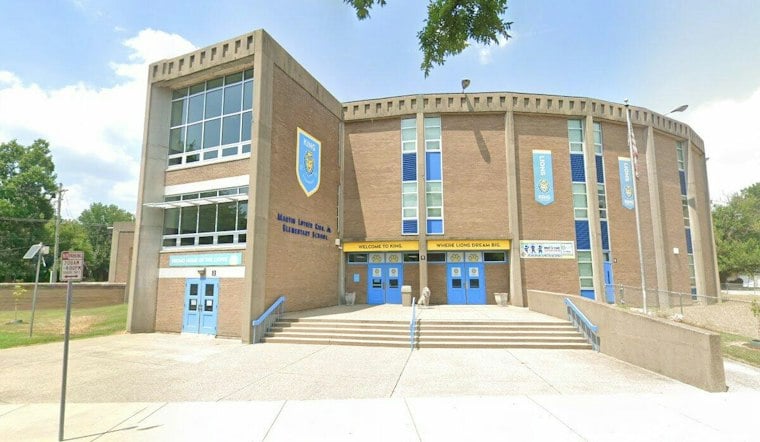
The gap between promise and outcome is detailed in reporting from Louisville Public Media, which found that school staff referred 17 students to the platform, but only six ultimately received services across 43 total therapy sessions. Most of those sessions took place in students' homes, with just two held at school. The eight schools that referred students included King Elementary School, whose staff referred six students on their own, the most of any school in the district.
A Contract Built on Big Promises, Small Results
The Jefferson County Board of Education approved the Hazel Health contract in February 2025, with the company agreeing to provide virtual behavioral assessments and therapy sessions at no cost to families. District officials expected the service to reduce truancy-related illness, increase student retention and improve academic performance, according to the contract terms cited in the reporting. JCPS was also one of 663 ed-tech products approved for use in the district, per the same report.
Hazel Health required parental consent before providing therapy to any student, a requirement that appears to have significantly limited how many of the referred students ultimately received care. When the original contract lapsed, the Jefferson County Board of Education approved a no-cost extension through June 2026 in December 2025, continuing telehealth access across 33 schools without additional district payment.
JCPS had reportedly lined up an unnamed third party ready to extend Hazel Health's services to an additional 46,500 students, a move that would have brought the district a donation of nearly $700,000. That donation never materialized, according to a JCPS spokesperson cited in the reporting.
District Declines to Renew Amid Service Complaints
JCPS ultimately chose not to renew the Hazel Health contract, citing technical and customer-service challenges as the reasons, according to a district spokesperson. Tracey Roberts said mental health practitioners employed directly by the district counsel students, de-escalate outbursts and strategize with school staff in ways that distinguish their role from a virtual vendor. Danielle Ruffin, who referred two students to Hazel Health alongside another staff member, said neither of those two students ultimately received services through the platform.
The low usage numbers landed during a period of acute financial stress for JCPS. The district approved a 2025-26 working budget carrying a $188.5 million deficit, and finance officials warned that cash reserves would reach zero by October 2026 without significant cuts, according to WHAS11. The district has spent at least $41 million on software since the 2022-2023 school year, per the LPM report, even as a mental health practitioner with a bachelor's degree earns around $50,000 a year on staff.
Superintendent's Staffing Plan Sparked Backlash
Dr. Brian Yearwood proposed in January 2026 cutting all but 70 of the district's mental health practitioner positions as part of a broader plan to address $142 million in planned cuts. Yearwood reversed course after public outcry, according to Manual RedEye, with the school board instead opting to cut funding for central office academic instructional coaches to protect school-level counselors.
JCPS later formed a Revenue Advisory Task Force to address its deficit.
Data Privacy Questions Linger Over Vendor Agreement
Questions also surfaced over how student data collected through Hazel Health would be protected. JCPS allowed Hazel Health to use its own data privacy agreement, subject to parental consent, rather than the district's standard agreement.
Hazel Health said that school-originated information is protected by FERPA while clinical-session information falls under HIPAA, per a company statement. The Chicago Board of Education ended its no-cost Hazel Health contract earlier in 2026.
The company said it uses aggregated patient information for research and product improvement, and that its privacy notice allows use of personal health information to develop, test and validate analytics and AI tools for healthcare operations. Hazel Health also said it had no business relationship or agreement with Palantir, and a JCPS spokesperson said the district had no involvement with UnitedHealthcare, after Hazel Health had separately announced plans to work with UnitedHealthcare to bring virtual mental health services to students in 14 states.
A Company Under Its Own Financial Strain
Hazel Health's struggles in Jefferson County mirrored turmoil at the company level. Founded in 2015 and expanded into therapy and mental health services in 2021, the company says it has served more than 5 million students in over 200 school districts, including Los Angeles Unified School District, Clark County Schools and Chicago Public Schools. But in February 2026, the company laid off 135 employees, about half of them clinicians, marking its second major workforce reduction in four months, according to Behavioral Health Business.
The outlet's reporting also noted that Hazel Health appointed former Iris Telehealth executive Alexandrea Fair as CEO in June 2026, succeeding interim CEO Iyah Romm following founding CEO Josh Golomb's resignation in October 2025. The executive turnover followed two rounds of layoffs and an incomplete sales process, the same report found.
The challenge in Jefferson County appears to have been getting students through the door, or onto the screen, in the first place.



