

























































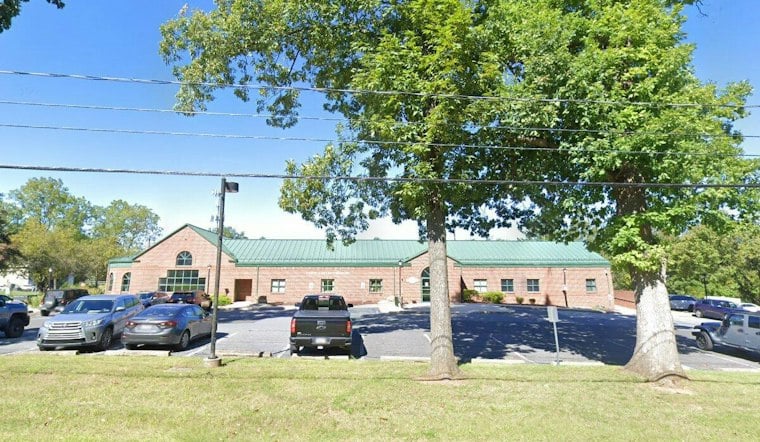
Jefferson Health officials broke ground Tuesday on Lehigh Valley Hospital–Coopersburg, a planned acute-care facility near the intersection of W. Passer Road and Route 309 in Upper Saucon Township, just north of Coopersburg. The project is set to become the health system's fifth neighborhood hospital in the region, bringing a 24/7 emergency room and inpatient beds to southeastern Lehigh County.
The planned hospital will be an accredited and licensed acute-care facility featuring a 24/7 full-service emergency room with 11 bays and 10 inpatient beds, according to mcall.com. A separate health center will also go up on the same site, and as Saucon Source reports, that facility will house specialty practices including adult rehabilitation, primary care and rheumatology.
Jefferson Health plans to develop the two buildings as a combined healthcare campus spanning Upper Saucon Township and Coopersburg borough, per the outlet's reporting. The project site itself covers 6.80 combined acres along Passer Road, North Main Street and Route 309, according to a public notice from Upper Saucon Township, which also shows that a zoning hearing board appeal over the project's setback and wetlands-buffer relief was scheduled for March 2025.
Fifth Hospital in a Growing Regional Network
Jefferson Health and community leaders gathered for the groundbreaking ceremony Tuesday morning, as lvb.com reports. The new facility would join LVH–Macungie and LVH–Gilbertsville, which opened in 2024, and LVH–Pocono Creek, which opened in January 2026 — all part of what the outlet describes as Jefferson's expanding neighborhood hospital model. A fourth facility, LVH–Hellertown, is planned near Interstate 78 at the north end of Hellertown.
Timing for the area projects varies by facility. Lvb.com reports the new Coopersburg hospital is expected to open in late 2027, while Jefferson Health officials speaking at the Coopersburg groundbreaking gave an early 2027 estimate for the separate Hellertown facility. The estimates concern different projects, not conflicting opening estimates for Coopersburg.
Hospital officials say the Coopersburg campus will create a needed health care hub in the southeastern part of the county, according to wfmz.com. The broader Lehigh Valley Health Network and Jefferson Health system now spans 33 hospitals and more than 700 sites of care, the network has said.
Leaders Point to Faster Care, Better Outcomes
At the ceremony, Jefferson Health's Baligh Yehia called the fifth neighborhood hospital an exciting milestone that will bring leading-edge care closer to home, and said the project reflects the system's effort to anticipate and respond to changing community healthcare needs, per the Saucon Source account. Brian Nester told attendees that people are more likely to seek treatment when a healthcare facility is close to home.
Holly Badali said neighborhood hospitals have helped identify potentially life-threatening illnesses, citing a 50-year-old patient who arrived with an abdominal aortic aneurysm and was transferred to Lehigh Valley Hospital–Cedar Crest, where the condition was successfully treated. That patient went home three days after surgery, according to the same account.
Eric Bean said people love neighborhood hospitals, noting that patients are often surprised by how quickly they are seen and that smaller facilities can feel less overwhelming to children and senior citizens. He added that neighborhood hospitals deliver critical care faster and improve outcomes for patients experiencing heart attacks, strokes and other emergencies.
What the Model Looks Like Elsewhere
Jefferson's neighborhood hospitals are generally built as compact, round-the-clock facilities. LVH–Pocono Creek, for instance, is roughly 22,000 square feet and includes a full-service ER, radiology suite and laboratory, with a Health Center on the same campus offering lab medicine, cardiology, family medicine and physical therapy, according to network materials. Nationally, about 80 percent of hospital ER patients are treated and released the same day, per the network.
The planned Hellertown facility, by comparison, is designed as a three-story, 90,000-square-foot building with the hospital on the first floor and medical offices above, featuring the same 11 ER beds and 10 inpatient beds planned for Coopersburg. A separate neighborhood hospital project in Tannersville, expected to open in winter 2026, follows the identical bed configuration and will include its own adjoining health center for physician practices, rehabilitation and cardiology.



